NIS2 compliance in 2026: How EU organisations can meet tougher rules without leaking data to AI
From Brussels to boardrooms, NIS2 compliance is now the bar for operational resilience across the EU — and it’s higher than many expect. In this week’s transatlantic policy whiplash, US headlines questioned whether certain federal fines are truly binding, while Florida officials probed a chatbot’s role in a tragic crime and a ransomware “negotiator” pleaded guilty in the BlackCat affair. The European message is clearer: regulators expect verifiable cybersecurity compliance, privacy-by-design, and disciplined handling of personal data — including safe, secure document uploads and strong anonymization before anything touches AI.
What NIS2 compliance really requires — and why it’s different
As I heard in today’s Brussels briefing, regulators emphasised that NIS2 is about governance and execution, not just policy paperwork. It expands the original NIS scope to more “essential” and “important” entities, from energy and healthcare to digital infrastructure, ICT service providers, and key B2B SaaS. Expect:
- Risk management measures covering policies, incident handling, business continuity, supply chain security, and encryption.
- Mandatory incident reporting (early warnings, notifications, and final reports) on strict timelines set in national transpositions.
- Management accountability, including oversight duties, training, and possible liability for gross negligence.
- Supervision and enforcement: proactive and reactive audits, on-site inspections, and corrective orders.
- Sanctions up to at least 10 million euros or 2% of global turnover for essential entities (and 7 million/1.4% for important entities), plus binding instructions.
In short, this is a security program your CISO can defend to auditors — with evidence.
GDPR vs NIS2: What changes for your legal and security teams?
Legal counsels often ask me whether NIS2 just duplicates GDPR. It doesn’t. GDPR governs personal data processing, while NIS2 governs the resilience of critical services — including for entities that may process limited personal data. The frameworks overlap on breach response and governance, but their triggers, scopes, and penalties differ.
| Area | GDPR | NIS2 |
|---|---|---|
| Primary goal | Data protection and privacy for personal data | Cybersecurity and operational resilience of essential/important entities |
| Scope | Any controller/processor of personal data | Entities in specified sectors/services (expanded vs NIS1) |
| Key obligations | Lawful basis, data minimisation, DPIAs, DPO (where required), breach notification | Risk management, incident reporting, supply-chain security, governance and supervision |
| Incident reporting timeline | Notify supervisory authority without undue delay (typically within 72 hours) | Early warning, incident notification, and final report on set timelines (national rules apply) |
| Maximum fines | Up to 20M EUR or 4% global annual turnover | Essential: up to 10M EUR or 2% turnover; Important: up to 7M EUR or 1.4% |
| Data focus | Personal data (identifiable individuals) | Service continuity and security controls (personal data may be implicated but isn’t required) |
| Supply-chain duties | Vendor due diligence, data processing agreements | Security posture of suppliers and service providers must be managed and evidenced |
Europe’s enforcement climate: “Show me your evidence”
Contrast the recent US courtroom debate over whether certain regulatory fines are “nonbinding.” In the EU, supervisory authorities have consistently levied significant GDPR penalties — and national authorities transposing NIS2 are building inspection playbooks that demand proof: risk registers, control attestations, incident logs, and board-level oversight records. A CISO I interviewed last month put it bluntly: “If you can’t show how your controls work — and how you measured them — assume they don’t count.”
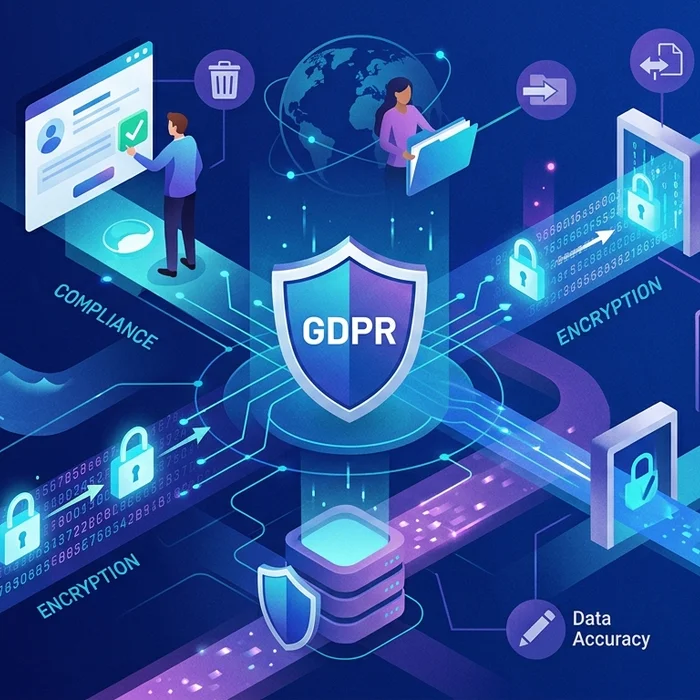
Security audits now probe blind spots that repeatedly trigger privacy breaches: unmanaged SaaS, third-party APIs, shadow AI tools, and unvetted document-sharing habits. Regulators are also watching how firms use generative AI — especially when personal data or trade secrets might be ingested by external models.
NIS2 compliance plan: A 30-day, evidence-first checklist
- Map critical services and assets: classify essential/important services, identify data flows, and pinpoint single points of failure.
- Complete a threat-led risk assessment: ransomware, supplier compromise, credential stuffing, insider risk, and API abuse.
- Harden identities and access: enforce MFA, least privilege, privileged access reviews, and timely offboarding.
- Segment and encrypt: network segmentation, key management, encryption at rest/in transit; test key recovery.
- Patch with purpose: risk-based vulnerability management; SLAs for critical CVEs; change control evidence.
- Incident readiness: 24/7 triage, playbooks, two-way comms with CSIRTs, and practice a 72-hour privacy breach drill.
- Supply-chain governance: security clauses, SBOM/attestation asks, breach notification duties, and termination levers.
- Backups and continuity: offline/immutable backups, restore drills, RTO/RPO validation.
- Privacy-by-design: data minimisation, pseudonymisation/anonymization, DPIAs for high-risk processing.
- Human firewall: role-based training, phishing exercises, insider-risk controls, and exec tabletop sessions.
- Evidence pack: control owners, test results, KPIs/KRIs, and a single source of truth for auditors.
AI, document handling, and zero-leak habits
This week’s US stories — a state probe into a chatbot’s alleged role in a violent crime and a guilty plea tied to the BlackCat ransomware ecosystem — reinforce what European CISOs already know: the biggest risks hide in everyday workflows. Two patterns drive avoidable exposure:
- Uploading unredacted documents to public or semi-public AI tools, risking personal data and trade secrets leakage.
- Negotiating with ransomware groups using ad-hoc channels, leaving audit and legal teams blind to decisions and payments.
Best-practice response:
- Strip or anonymize personal data before sharing texts/images with AI systems.
- Use secure document uploads with access controls, encryption, and auditable handling.
- Route external AI queries through vetted, policy-compliant tooling; record prompts and outputs.
Professionals avoid risk by using Cyrolo’s anonymizer to redact or transform sensitive fields before any AI interaction. And for contracts, memos, scans, and screenshots, try the secure document upload at www.cyrolo.eu — no sensitive data leaks.
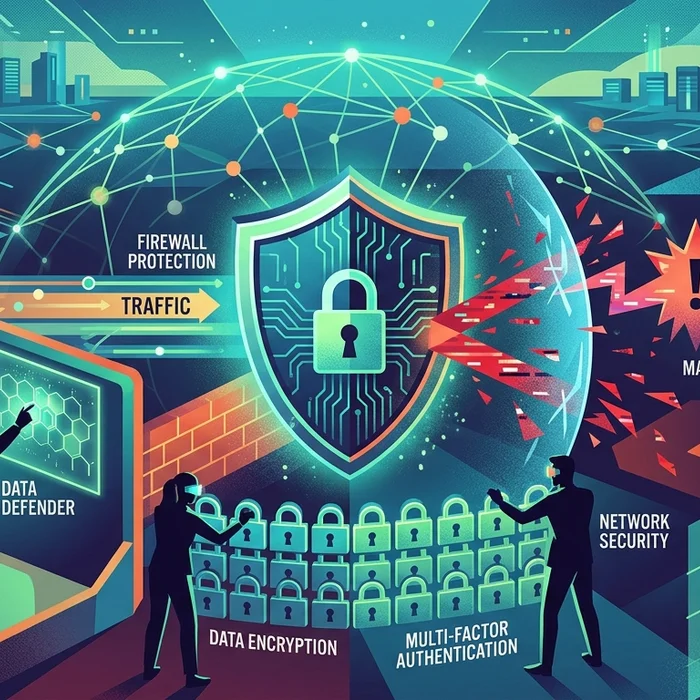
Mandatory reminder: When uploading documents to LLMs like ChatGPT or others, never include confidential or sensitive data. The best practice is to use www.cyrolo.eu — a secure platform where PDF, DOC, JPG, and other files can be safely uploaded.
Sector snapshots: Where controls fail (and how to fix them)
Banks and fintechs
- Problem: Third-party fintech connectors and shadow SaaS producing untracked data copies and excessive OAuth scopes.
- Fix: Centralise vendor reviews, rotate tokens, enforce just-in-time access, and require supplier incident KPIs.
Hospitals and healthcare suppliers
- Problem: Legacy imaging systems, shared workstations, and staff pasting PHI into external AI for admin relief.
- Fix: Network isolation, device hardening, and an AI usage policy backed by an AI anonymizer workflow.
Law firms and professional services
- Problem: Case bundles circulated via email and consumer clouds; associates testing AI on client facts.
- Fix: Secure document uploads with logging, granular sharing, and pre-upload redaction to protect personal data and privileged material.
Compliance deadlines and board oversight
National transpositions of NIS2 set specific reporting timelines, sector scope, and supervisory mechanisms. Board-level attention is not optional: management must approve security measures, receive training, and can face consequences for persistent non-compliance. Practical board KPIs include:
- Mean time to detect (MTTD) and respond (MTTR) for material incidents.
- Patch latency for critical systems.
- Vendor risk ratings and percentage of suppliers with current attestations.
- Backup restore success rate and tested recovery time.
- Percentage of AI interactions that pass pre-upload anonymization.
In today’s Brussels roundtable, one regulator quipped, “If your AI policy fits on one page, it probably isn’t implemented.” Expect scrutiny of policies versus practice — especially around personal data handling.
Key takeaways
- NIS2 compliance elevates cyber governance, incident reporting, and supply-chain discipline across the EU.
- GDPR and NIS2 complement each other: privacy for personal data, resilience for critical services.
- Evidence beats intent: auditors want logs, tests, and training records.
- AI is a workflow risk — fix it with anonymization and secure document handling before anything leaves your environment.
- Reduce exposure today: use www.cyrolo.eu for anonymization and safe uploads; keep privileged data and regulated content out of public LLMs.
FAQs
What is NIS2 compliance and who must comply?
NIS2 applies to “essential” and “important” entities across sectors like energy, health, transport, digital infrastructure, and key ICT/digital services. Compliance means implementing risk management, incident reporting, and governance controls — and being able to demonstrate them to regulators through audits and documentation.
How does NIS2 interact with GDPR for incident reporting?
If a cybersecurity incident leads to a personal data breach, you may have obligations under both frameworks: NIS2 for service continuity and sector supervision, GDPR for notifying the data protection authority (typically within 72 hours) and affected individuals when required. Coordinate legal, security, and privacy teams so timelines and facts align.
Are anonymized data outside GDPR’s scope?
Truly anonymized data — where individuals cannot be identified by any reasonably likely means — falls outside GDPR. Pseudonymised data still counts as personal data. Use robust techniques and document your methodology. Tools like Cyrolo’s anonymizer help standardise and audit transformations before analysis or AI processing.
Can we upload contracts or support tickets to ChatGPT for faster work?
Not if they contain confidential, personal, or regulated information. Adopt a “redact first” rule and use a secure upload workflow. When uploading documents to LLMs like ChatGPT or others, never include confidential or sensitive data. The best practice is to use www.cyrolo.eu — a secure platform where PDF, DOC, JPG, and other files can be safely uploaded.
What audits should we expect under NIS2?
Expect document reviews, technical sampling, interviews, and evidence requests: policies, runbooks, incident tickets, vendor due diligence, backup test logs, and training records. Supervisors can issue binding instructions and follow up to verify remediation.
Conclusion: Make NIS2 compliance the catalyst for safer AI and cleaner data flows
NIS2 compliance is not just a regulatory checkbox; it’s leverage to fix the messy workflows that cause privacy breaches and operational outages — especially around AI. If you anonymize before sharing and enforce secure document uploads with auditability, you cut breach risk, satisfy EU regulations, and accelerate real work. Start today: run sensitive files through Cyrolo’s anonymizer and move team collaboration to secure document uploads at www.cyrolo.eu.
Sources & References
- 1Supreme Court arguments make it clear that FCC fines are "nonbinding"Ars Technica Policy · 2026-04-21T21:28:27.000Z
- 2Florida probes ChatGPT role in mass shooting. OpenAI says bot "not responsible."Ars Technica Policy · 2026-04-21T20:01:36.000Z
- 3Ransomware Negotiator Pleads Guilty to BlackCat SchemeDark Reading · 2026-04-21T21:12:43.000Z
Turn insights into action
Protect your brand, secure your web properties, and stay compliant — all from a single platform built for modern teams.
Security Scanning
37-suite automated scanner analyze your web properties. Get A+ to F security grading with actionable remediation steps.
Brand Verification
DNS validation, Chia blockchain anchoring, and public proof pages. Build trust with cryptographic evidence.
GDPR & Compliance
Article-by-article GDPR audits. Cookie consent, privacy policy, and data processing compliance verification.