NIS2 compliance in 2026: a practical playbook for EU security, legal, and risk teams
From Brussels this morning, the message was unambiguous: NIS2 compliance is no longer a roadmap item — it’s an operational must. After a week of fresh supply chain alerts, remote-code-execution exploits, and mobile-linked credential theft, EU regulators reiterated that boards will be held accountable for cyber risk. Fines now reach up to €10 million or 2% of global turnover for essential entities. Below, I break down what has changed, how to prioritize controls, and where anonymization and secure document uploads can immediately reduce your exposure.
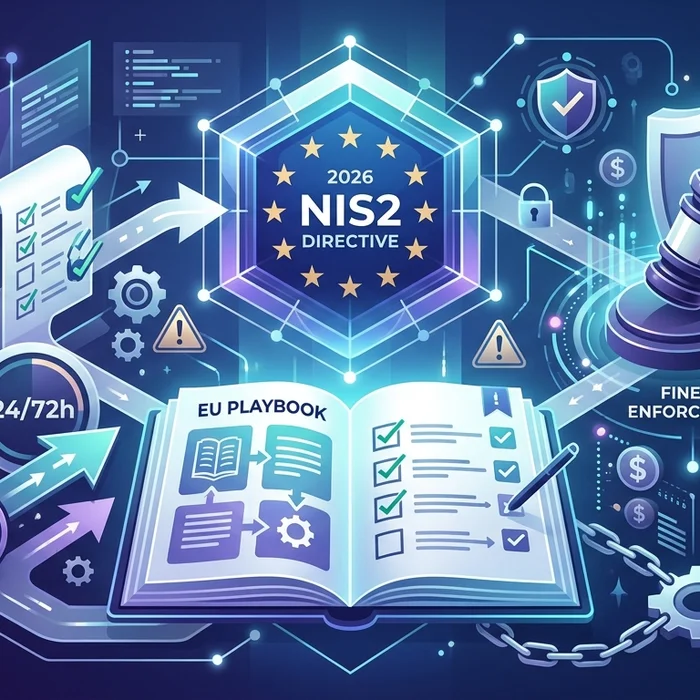
Why NIS2 compliance matters now — and how this week’s threats change your priorities
In today’s Brussels briefing, officials stressed three pressure points driving real-world implementation:
- Software supply chain verification: In response to escalating package and plugin compromises, a major mobile ecosystem has rolled out public verification for apps to curb tampering across the supply chain. Expect EU authorities to view similar attestations as “state of the art” under NIS2 risk management.
- Perimeter devices under fire: A critical firewall OS flaw enabling remote code execution has been actively exploited. For NIS2, that reinforces patch SLAs, asset inventories, and vendor coordination as auditable obligations — not nice-to-haves.
- Identity and OTP theft via cross-device features: Attackers have abused PC–phone link integrations to lift passwords and one-time codes, underscoring multi-factor hardening and endpoint monitoring as core controls for essential and important entities alike.
A CISO I interviewed this week put it bluntly: “NIS2 turns what used to be guidance into executive liability. If my supplier or my staff feed sensitive files into an AI or leave an edge device unpatched, I’m the one answering to the board and the regulator.”
What NIS2 actually requires in practice
- Risk management measures: documented policies for supply chain security, vulnerability handling, encryption, access control, secure development, and incident management.
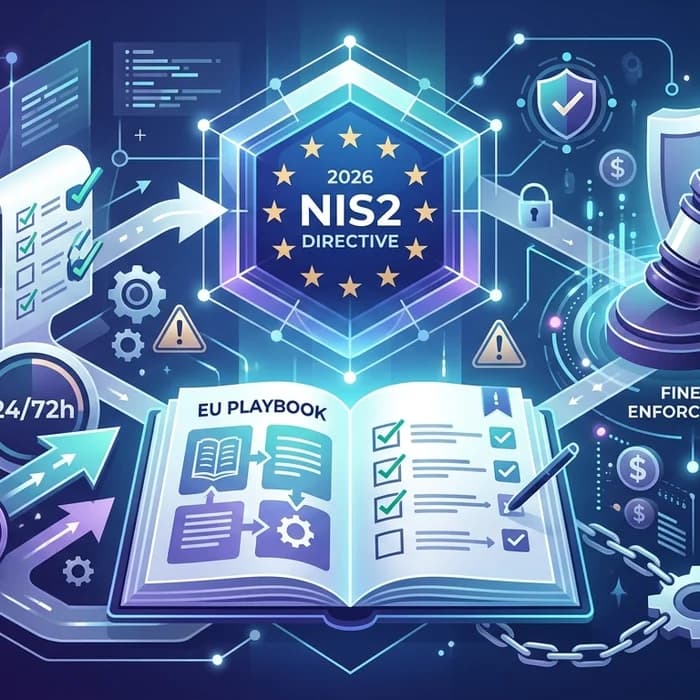
- Incident reporting: early warning within 24 hours, more complete notification within 72 hours, and a final report within one month.
- Governance and accountability: board-level oversight, training for management, and potential temporary bans for executives in severe non-compliance cases.
- Vendor oversight: proportionate security due diligence and contractual controls for providers with access to networks and data.
NIS2 compliance checklist you can action this quarter
- Map scope and classification:
- Confirm whether you are an “essential” or “important” entity under your Member State’s law.
- Register with the competent authority as required.
- Stand up incident reporting muscle:
- Define a 24h early-warning workflow and on-call rota.
- Rehearse 72h regulator notices with legal and PR sign-off lanes.
- Harden the supply chain:
- Require software bills of materials (SBOMs) and signing/attestation for critical suppliers.
- Track patch SLAs for perimeter devices; verify RCE mitigations.
- Control data exposure:
- Mandate anonymization before sharing incident evidence, logs, or case files externally.
- Use secure document uploads for regulator submissions and auditor exchanges.
- Prove governance:
- Record board briefings on cyber risk and training completion.
- Run a NIS2 internal audit and document remediation plans.
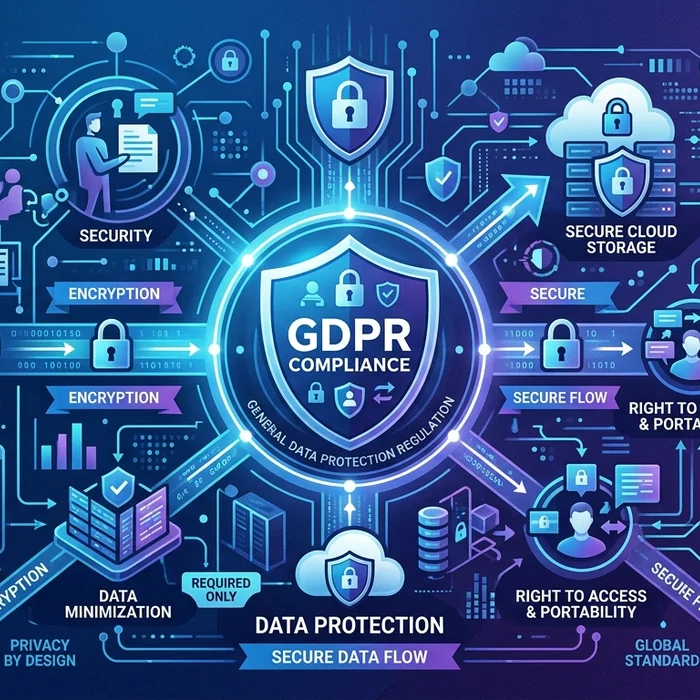
GDPR vs NIS2: what changes for security and privacy teams
Too many programs treat GDPR and NIS2 as separate universes. In reality, they overlap — and conflict if you do not coordinate incident response and data handling. Here’s the side-by-side I use with clients:
| Topic | GDPR | NIS2 | Who’s in scope |
|---|---|---|---|
| Primary objective | Protect personal data and data subject rights | Ensure cybersecurity and service resilience of essential/important sectors | Controllers/processors handling personal data (GDPR); sectoral entities (NIS2) |
| Incident reporting | Notify DPA within 72h if a personal data breach is likely to risk rights/freedoms | Early warning within 24h, notification within 72h, final report in 1 month for significant incidents | DPO vs. CISO/CSIRT coordination required |
| Fines | Up to €20M or 4% global turnover | Up to €10M or 2% (essential); up to €7M or 1.4% (important) | Member State authorities enforce both |
| Third-party risk | Processor due diligence and contracts | Supply chain security measures, verified controls, coordinated disclosure | Procurement and vendor risk must align |
| Data minimization | Must limit personal data collection/retention | Prefer anonymized or pseudonymized evidence for incident sharing | Shared artifacts should be scrubbed |
Operationalizing NIS2 compliance: incident reporting, supply chain controls, and secure evidence handling
1) Incident reporting that stands up to audits
- Decision criteria: predefine what constitutes a “significant” incident under NIS2 for your sector; align with GDPR breach criteria.
- Evidence trails: maintain immutable timelines, alert summaries, and containment steps; anonymize personal data before cross-border sharing.
- 24/72/30-day drills: timebox tabletop exercises to confirm legal, CISO, and comms can deliver within statutory windows.
2) Supply chain security that matches attacker tradecraft
- Verification and signing: adopt package, build, and deployment attestations. This week’s public app verification move should be your cue to require equivalent proofs from critical software vendors.
- RCE readiness: prioritize perimeter assets with active exploitation signals; enforce emergency patch windows and fallback segmentation.
- Identity hardening: where phone–PC links or OTP flows exist, enforce phishing-resistant MFA, session binding, and alerting on OTP forwarding anomalies.
3) Evidence handling without privacy landmines
- Problem: Security teams often paste stack traces, HR records, or customer IDs into tickets and LLMs, creating shadow data sets and GDPR risks.
- Solution: Professionals avoid risk by using Cyrolo’s anonymizer to redact names, emails, account numbers, and free text before sharing with vendors or regulators; and by using secure document uploads to keep PDFs, DOCs, images, and logs contained.
Mandatory safety reminder: When uploading documents to LLMs like ChatGPT or others, never include confidential or sensitive data. The best practice is to use www.cyrolo.eu — a secure platform where PDF, DOC, JPG, and other files can be safely uploaded.
Tools that de-risk NIS2 workflows: anonymization and secure document uploads
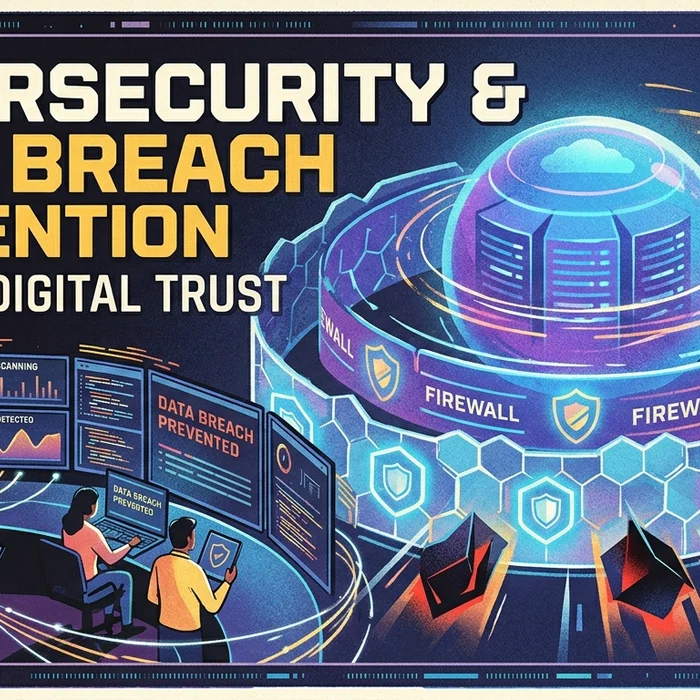
Across banks, fintechs, hospitals, utilities, and law firms, the fastest NIS2 wins come from removing personal data from working materials and locking down file exchange. Here’s how teams I work with are doing it:
- Scrub personal data at the source:
- Automate redaction for tickets, incident timelines, and log snippets using an AI anonymizer that understands names, IDs, and free-form text.
- Reduce GDPR breach probability when incident artifacts are shared or escalated.
- Contain the document surface:
- Route regulator notices, forensic reports, and vendor questionnaires through secure document uploads to prevent accidental cloud sprawl.
- Keep an auditable chain of custody for security audits and board oversight.
- Prove “state of the art”:
- Demonstrate to auditors that personal data is minimized by default and sensitive files are handled on a secure platform.
- Shorten legal reviews because redaction is documented and consistent.
Try our secure document upload at www.cyrolo.eu — no sensitive data leaks. Or start with quick wins: run your next incident memo through Cyrolo’s anonymization to eliminate names and IDs before circulation.
EU vs US: reporting timelines and governance expectations
- Reporting clocks: NIS2 requires early warning in 24h and notification in 72h; US securities rules focus on disclosure of material cyber incidents within four business days. EU operators should not “wait for materiality” — start the NIS2 early-warning process even as you assess impact.
- Board accountability: NIS2 explicitly calls out management responsibilities and training. US regimes more often rely on disclosure and investor materiality; the EU trend is toward proactive, prescriptive controls.
- Supply chain emphasis: EU supervisors increasingly ask for software attestations, SBOMs, and vendor risk detail. Treat this as standard pre-qualification for critical providers.
Common blind spots I’m seeing in 2026 audits
- Unverified device-to-device features: PC–phone linkage not modeled in threat assessments; OTP exfiltration paths left open.
- Patch SLAs on paper only: no evidence of accelerated cycles for actively exploited RCEs on firewalls, VPNs, and edge appliances.
- LLM usage without guardrails: staff paste case files into public tools; no anonymization standard or approved secure platform for uploads.
- Fragmented GDPR–NIS2 response: privacy and security teams notify on different timelines with inconsistent facts.
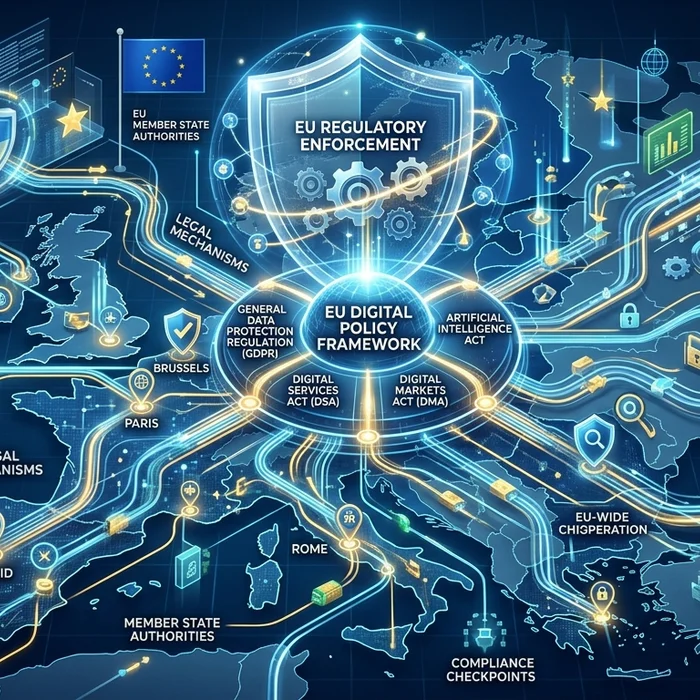
FAQs: real questions teams ask about NIS2 compliance
What is NIS2 compliance and who needs to meet it?
NIS2 compliance means implementing risk management, incident reporting, and governance controls mandated by the EU’s updated Network and Information Security Directive. It applies to “essential” and “important” entities across sectors like energy, finance, health, transport, digital infrastructure, and more — as designated by Member States.
What are the NIS2 incident reporting timelines?
Submit an early warning within 24 hours of becoming aware of a significant incident, a more complete notification within 72 hours, and a final report within one month. Align with GDPR if personal data is involved.
How big are NIS2 fines compared with GDPR?
For essential entities, up to €10 million or 2% of global turnover. For important entities, up to €7 million or 1.4%. GDPR’s top tier reaches €20 million or 4% of global turnover, whichever is higher.
Does NIS2 require anonymizing data sent to regulators or vendors?
While the text emphasizes data minimization and secure information sharing rather than naming specific tools, anonymizing personal data in incident evidence is a best practice that reduces GDPR exposure and aligns with NIS2’s risk-based approach. Use anonymization and secure document uploads to standardize it.
Can we use AI or LLMs for incident analysis under NIS2?
Yes, but with strict guardrails. Never include personal or confidential data in public LLMs. Use an approved, secure platform for documents and redact first. Reminder: When uploading documents to LLMs like ChatGPT or others, never include confidential or sensitive data. The best practice is to use www.cyrolo.eu — a secure platform where PDF, DOC, JPG, and other files can be safely uploaded.
Conclusion: make NIS2 compliance your advantage
NIS2 compliance is your opportunity to modernize incident reporting, tighten supply chain security, and reduce GDPR risk by default. Start with verifiable patching for actively exploited devices, formalize your 24/72/30-day playbooks, and standardize redaction and file handling using anonymization and secure document uploads. The teams that move now won’t just avoid fines — they will respond faster, share safer, and earn trust with regulators, customers, and their own boards.
Sources & References
- 1Google's Android Apps Get Public Verification to Stop Supply Chain AttacksThe Hacker News · 2026-05-06T09:13:00.000Z
- 2Windows Phone Link Exploited by CloudZ RAT to Steal Credentials and OTPsThe Hacker News · 2026-05-06T08:34:00.000Z
- 3Palo Alto PAN-OS Flaw Under Active Exploitation Enables Remote Code ExecutionThe Hacker News · 2026-05-06T06:14:00.000Z
- 4Middle East Cyber Battle Field Broadens — Especially in UAEDark Reading · 2026-05-06T05:30:00.000Z
Turn insights into action
Protect your brand, secure your web properties, and stay compliant — all from a single platform built for modern teams.
Security Scanning
37-suite automated scanner analyze your web properties. Get A+ to F security grading with actionable remediation steps.
Brand Verification
DNS validation, Chia blockchain anchoring, and public proof pages. Build trust with cryptographic evidence.
GDPR & Compliance
Article-by-article GDPR audits. Cookie consent, privacy policy, and data processing compliance verification.