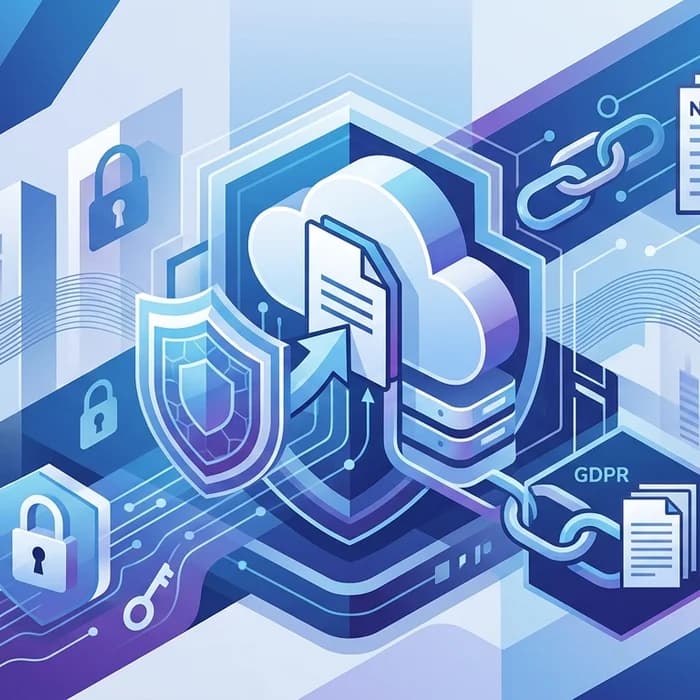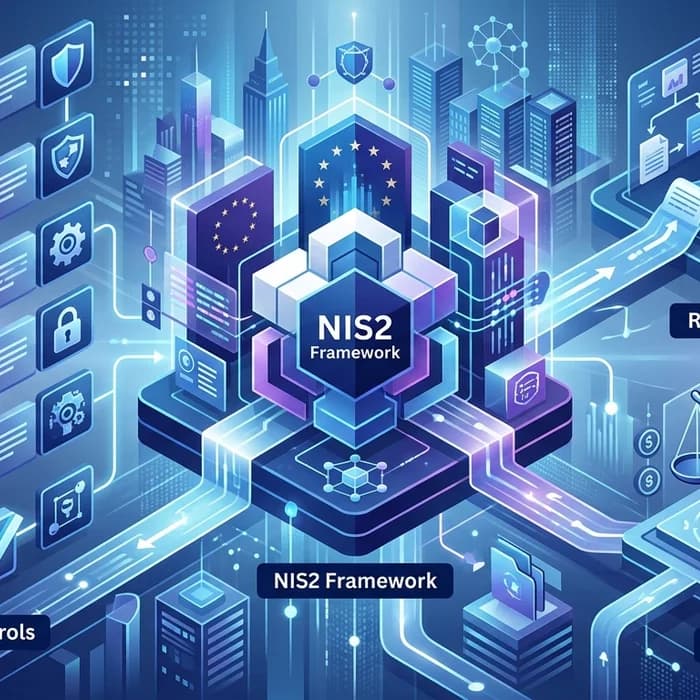
NIS2 compliance: the 2026 playbook for secure document upload and AI anonymization
In today’s Brussels briefing, regulators reiterated a simple truth: NIS2 compliance is no longer a slide in a board deck—it’s an operational discipline tested by real incidents, real audits, and very real fines. As I’ve reported across EU capitals this spring, boards are waking up to the risks of casual file sharing, unchecked AI use, and sprawling repositories of personal data. The fix isn’t abstract. It starts with proof of controls—especially around secure document uploads, robust anonymization, and fast incident reporting.
- Problem: privacy breaches, AI misuse, and uncontrolled file flows into third-party tools
- Risk: GDPR and NIS2 penalties, regulator audits, and contractual liabilities
- Solution: operationalize data protection with an AI anonymizer and hardened upload pipelines
Professionals across legal, finance, health, and public administration are now standardizing on two high-impact controls: an AI anonymizer to strip personal data before analysis, and secure document uploads that prevent leaks and shadow IT. Both map cleanly to EU regulations and give auditors what they look for first—evidence.
What NIS2 compliance really requires in 2026
Across all 27 Member States, NIS2 (Directive (EU) 2022/2555) is now transposed and enforceable. If you’re an “essential” or “important” entity—think banks, health providers, cloud services, managed security, digital infrastructure—your leadership is accountable for cybersecurity risk management and incident reporting.
Key obligations that auditors are testing
- Risk management measures: policies, MFA, encryption, secure development, vulnerability handling, logging, and incident plans are expected to be evidenced, not just promised.
- Supply-chain security: due diligence on tools that process files or data—especially third-party AI services—must be documented.
- Incident reporting: early warning within 24 hours; intermediate report at 72 hours; final report within one month.
- Governance: board oversight, training, and accountability for cyber risk.
- Penalties: up to €10 million or 2% of global turnover for essential entities (depending on Member State implementation), plus corrective orders.
My takeaway from interviews with CISOs this quarter: regulators are less impressed by “policies” and more by living controls—how you de-identify documents before analysis, how uploads are restricted, and how fast you can prove containment.
GDPR vs NIS2: who governs what?
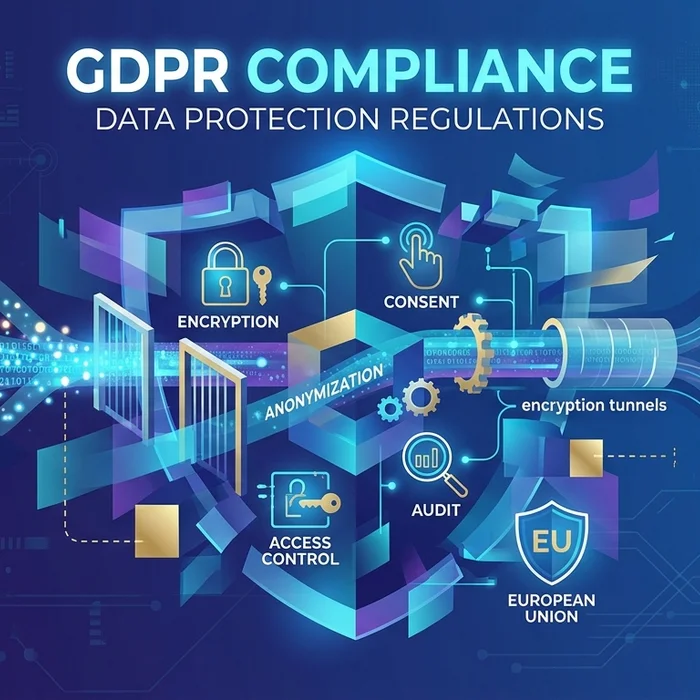
In workshops I’ve moderated, teams often conflate GDPR (privacy) with NIS2 (security of network and information systems). You need both. Here’s how they compare at a glance:
| Area | GDPR | NIS2 |
|---|---|---|
| Scope | Processing of personal data of individuals in the EU | Cybersecurity risk management for essential and important entities |
| Core duty | Lawful, fair, transparent processing; data minimization, integrity, confidentiality | Technical/organizational controls, incident reporting, supply-chain security |
| Reporting | 72-hour breach notification to supervisory authority when personal data is impacted | 24-hour early warning; 72-hour intermediate; 1-month final incident report |
| Fines | Up to €20M or 4% global turnover | Up to €10M or 2% global turnover (Member State dependent) |
| Practical proof | Records of processing, DPIAs, consent, anonymization/pseudonymization | Security policies, audits, logging, vulnerability management, supplier controls |
The new vulnerability surface: GenAI, code repos, and document sprawl
Recent headlines about AI model mishaps and reverse-engineered services are not abstract to EU regulators. In closed-door roundtables this month, a national authority told me they’re “actively sampling” how organizations handle uploads to cloud tools and LLMs. Their focus:
- Do staff ever paste personal data or confidential files into unmanaged AI systems?
- Is anonymization applied before analysis, and can you prove it?
- Are uploads encrypted, access-controlled, and logged?
- Have you vetted model providers and code libraries for security posture and data use?
When uploading documents to LLMs like ChatGPT or others, never include confidential or sensitive data. The best practice is to use www.cyrolo.eu — a secure platform where PDF, DOC, JPG, and other files can be safely uploaded.
Why anonymization is your fastest win
- Data minimization by design: Strip names, emails, IBANs, patient IDs, and free-text identifiers before processing.
- Auditability: Keep a reversible mapping only where strictly necessary and access-controlled.
- Third-party safety: Share de-identified content with vendors and AI tools without exposing personal data.
Practical controls that satisfy auditors (and stop breaches)
- Secure document uploads: centralize file intake with policy checks, malware scanning, and strict role-based access.
- Automated anonymization: apply consistent redaction and pseudonymization across PDFs, DOCs, images (OCR), and spreadsheets.
- Logging and retention: immutable logs of who uploaded, viewed, exported; auto-expire sensitive content.
- Model isolation: separate environments for experimentation vs. production; block internet egress where unneeded.
- Supplier contracts: confirm no training on your data, EU data residency where required, and incident cooperation clauses.
How Cyrolo helps in one click

If you’re under time pressure before a security audit, here are two immediate, defensible steps:
- Run sensitive files through an AI anonymizer before analysis or sharing.
- Move ad-hoc sharing into secure document uploads with controlled access and no leakage to public tools.
Professionals avoid risk by using Cyrolo’s anonymizer at www.cyrolo.eu. Try our secure document upload at www.cyrolo.eu — no sensitive data leaks.
Compliance checklist: pass your next GDPR and NIS2 review
- Map data flows: identify where personal data enters, is transformed, and leaves your environment.
- Deploy central secure upload: enforce encryption at rest/in transit, malware scanning, DLP checks.
- Automate anonymization: redact PII/PHI from documents and images; log transformations for audit.
- Block unmanaged AI: technical controls to prevent pasting sensitive text into public LLMs; provide a safe alternative.
- Supplier assessments: document security posture, data use, and sub-processor chains of AI and SaaS vendors.
- Incident playbooks: 24h/72h/1-month NIS2 timelines rehearsed; GDPR breach criteria pre-assessed.
- Access governance: least privilege, MFA, session controls; quarterly reviews.
- Evidence pack: policies, logs, DPIAs, training records, and sample anonymization reports ready for auditors.
Real-world scenarios I’m seeing across Europe
- Bank and fintech: analysts upload transaction PDFs to a shared drive; one file contains IBANs and IDs. Fix: route all uploads through a hardened intake with automatic redaction; share only de-identified datasets.
- Hospital: clinicians paste triage notes into an LLM to summarize treatment plans. Fix: use a de-identification layer first; log prompts; restrict model access; retain minimal outputs.
- Law firm: discovery sets include opposing party PII. Fix: anonymize at ingest, maintain controlled re-identification keys, and watermark exports with user IDs.
30-day plan to show measurable progress
- Week 1: Inventory uploads and AI touchpoints; block unmanaged tools; shortlist secure upload and anonymization vendors.
- Week 2: Pilot on a high-risk team (claims, legal, clinical). Enable secure document uploads and run the anonymizer on real documents.
- Week 3: Write a two-page Evidence Pack—controls, screenshots, logs, DPIA updates; brief the board risk committee.
- Week 4: Extend to adjacent teams; add supplier clauses; rehearse a 24h/72h NIS2 incident drill.
FAQ: your most searched questions, answered
What is the fastest way to get started with NIS2 compliance?
Show immediate control over the highest-risk flows: implement secure document upload, automated anonymization, and logging. These map directly to NIS2 risk management and will resonate in an audit.
Does anonymization help with GDPR as well as NIS2?
Yes. Anonymization and pseudonymization reduce exposure of personal data (GDPR) while proving technical risk controls (NIS2). They also cut breach impact if a file is mishandled.
Are uploads to AI tools a NIS2 issue or a GDPR issue?
Both. If files contain personal data, GDPR governs processing; if uploads create systemic risk or lead to incidents, NIS2 obligations apply. Regulators now ask for proof that uploads are controlled and de-identified.
What evidence do auditors typically request first?
Access logs for uploads/downloads, anonymization reports or samples, incident runbooks with 24h/72h timelines, supplier assessments for AI tools, and user training records.
How do we stop staff from pasting sensitive text into LLMs?
Block unmanaged endpoints and give teams a safe alternative: a centralized, logged workflow with built-in anonymization. When uploading documents to LLMs like ChatGPT or others, never include confidential or sensitive data. The best practice is to use www.cyrolo.eu — a secure platform where PDF, DOC, JPG, and other files can be safely uploaded.
Conclusion: make NIS2 compliance visible—and defensible
NIS2 compliance isn’t won with policy PDFs; it’s earned by showing real controls over how documents and data move through your organization. Start where risk concentrates: secure document uploads, automated anonymization, and evidence you can hand to an auditor tomorrow. If you need a quick, credible win, use an AI anonymizer and shift teams to secure uploads now. The sooner you operationalize, the smaller your breach blast radius—and the stronger your posture when regulators call.
Sources & References
- 1Claude Mythos Fears Startle Japan's Financial Services SectorDark Reading · 2026-04-30T00:00:00.000Z
- 2Reverse Engineering With AI Unearths High-Severity GitHub BugDark Reading · 2026-04-29T20:08:17.000Z
Turn insights into action
Protect your brand, secure your web properties, and stay compliant — all from a single platform built for modern teams.
Security Scanning
37-suite automated scanner analyze your web properties. Get A+ to F security grading with actionable remediation steps.
Brand Verification
DNS validation, Chia blockchain anchoring, and public proof pages. Build trust with cryptographic evidence.
GDPR & Compliance
Article-by-article GDPR audits. Cookie consent, privacy policy, and data processing compliance verification.