NIS2 compliance in 2026: Third‑party risk, software supply chains, and how to pass your next EU audit
In Brussels this morning, the conversation was blunt: NIS2 compliance is no longer a roadmap item—it’s an audit reality. With national transpositions in force across the EU and sector regulators increasing inspections in 2025–2026, the latest supply chain incidents—like the social‑engineering compromise of a popular npm package used by thousands—underscore a simple truth: third‑party risk will make or break your cybersecurity compliance this year.

- EU regulators now expect verifiable supplier controls, not slideware.
- Incident reporting clocks start at first awareness: 24 hours for an early warning.
- Open‑source and SaaS dependencies are “in scope” for risk assessments.
- Data protection still matters: GDPR meets NIS2 at the incident desk.
- Practical safeguard: use an AI anonymizer and secure document uploads to prevent accidental leaks.
What NIS2 compliance actually requires in 2026
As one national authority put it in today’s briefing, “we will test governance, not just technology.” NIS2 (Directive (EU) 2022/2555) broadens scope to thousands of “essential” and “important” entities across energy, finance, health, digital infrastructure, managed services, and more. By now, national laws are active, with audits already underway.
Core obligations you will be measured against
- Governance and accountability: board‑level oversight of cybersecurity risk, with demonstrable policies and training.
- Risk management measures: asset management, access control, secure development, vulnerability handling, and supply chain security.
- Incident reporting timeline:
- Within 24 hours: early warning after becoming aware of a significant incident.
- Within 72 hours: incident notification with initial assessment.
- Within 1 month: final report with root cause and remediation.
- Supply chain due diligence: evaluate and oversee third‑party providers, including MSPs, cloud, and critical software dependencies.
- Business continuity: backup, recovery, and crisis communication plans tested and documented.
Enforcement powers are material. For essential entities, fines can reach up to €10 million or 2% of global annual turnover; for important entities, up to €7 million or 1.4%—whichever is higher under national rules. Supervisory authorities can also order corrective measures and, in severe cases, impose temporary bans on managers.
NIS2 compliance meets supply‑chain reality: lessons from recent attacks
Over the past weeks, we’ve seen yet another reminder that software supply chains are people chains. A maintainer targeted with convincing social engineering can sign a malicious release; a contractor’s laptop can leak source code; a CI token reused across projects can unlock a cascade of compromise. In interviews this quarter, a CISO at a European fintech told me bluntly: “Our third‑party register looks perfect—until an npm update turns it into an incident report.”
What regulators are emphasizing in 2026
- Human‑factor controls: maintainer verification, four‑eyes on sensitive releases, and enforced multi‑factor authentication for critical repos.
- Provenance and integrity: signed builds, reproducible builds where feasible, and SBOMs tied to actual deployments (not just procurement).
- Runtime detection: ability to spot dependency confusion, anomalous package behavior, and unexplained permission grants—fast.
- Third‑party contracts that bite: explicit security clauses, data protection addenda, breach notification SLAs aligned with the 24/72/30‑day cadence.
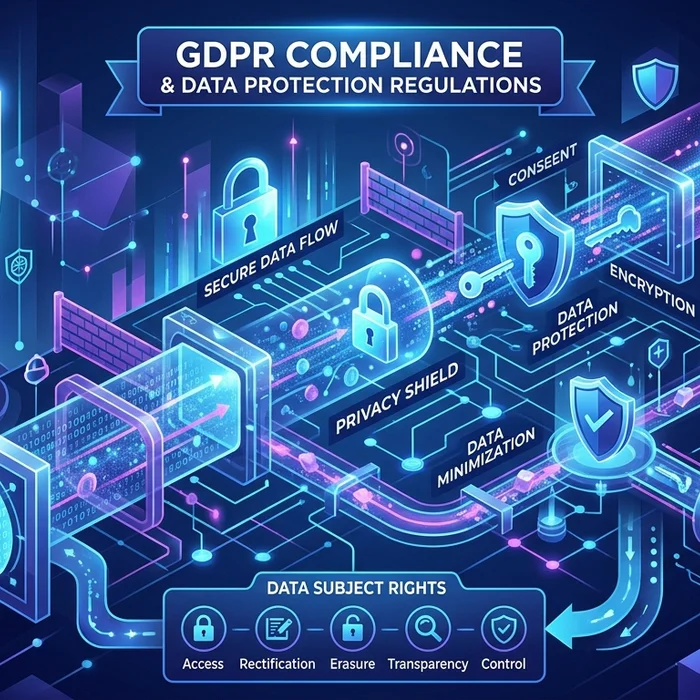
Healthcare and banking are under particular scrutiny. A hospital’s imaging vendor compromise can expose personal data and disrupt care; a bank’s leaked source code can become a blueprint for fraud. From a GDPR lens, these are privacy breaches; from NIS2, they are operational resilience failures. From your board’s perspective, they are unacceptable.
GDPR vs NIS2: what changes for your program
Many teams still conflate data protection with network resilience. You need both. Here’s how they differ—and overlap—when auditors ask for evidence.
| Topic | GDPR | NIS2 |
|---|---|---|
| Scope | Personal data of individuals in the EU | Network and information systems of essential/important entities across key sectors |
| Primary focus | Data protection, lawfulness, privacy rights | Cybersecurity risk management and operational resilience |
| Security obligations | “Appropriate” technical/organizational measures (Art. 32) | Specific risk management measures incl. supply chain controls and governance |
| Incident reporting | 72 hours to the DPA after awareness of a personal data breach | 24h early warning; 72h notification; 1‑month final report for significant incidents |
| Penalties | Up to 4% of global annual turnover | Up to €10m/2% (essential) or €7m/1.4% (important) |
| Third‑party risk | Processors and joint controllers, DPAs scrutinize DPAs and TIAs | All critical suppliers, MSPs, and software supply chain dependencies |
NIS2 compliance checklist for software supply chains
- Map critical dependencies: identify business‑critical SaaS, MSPs, CI/CD, registries, and open‑source packages driving production.
- Harden development pipelines: enforce MFA, signed commits, protected branches, and reproducible or attested builds.
- SBOMs that matter: generate SBOMs per release and reconcile with what actually runs in production.
- Package integrity: verify signatures, pin versions, and monitor for tampering or sudden permission changes.
- Vendor security clauses: include audit rights, vulnerability disclosure, breach SLAs, and evidence of controls (e.g., ISO 27001, SOC 2) aligned to NIS2.
- Incident playbooks: define 24/72/30‑day workflows, who drafts which report, and how to segregate logs and evidence.
- Data minimization: limit personal data in tickets, logs, and AI prompts; deploy an AI anonymizer before sharing.
- Documentation evidence: risk registers, supplier assessments, training records, and board briefings ready for inspection.
Stop AI‑related data leakage while staying audit‑ready
Regulators I spoke with this week flagged a new weak spot: analysts pasting customer data into LLMs to “summarize incidents.” That’s both a GDPR hazard and a NIS2 governance gap. The remedy is simple: enforce secure tooling that strips personal data before content leaves your perimeter and ensures controlled, secure document uploads when you must share files for investigation or review.
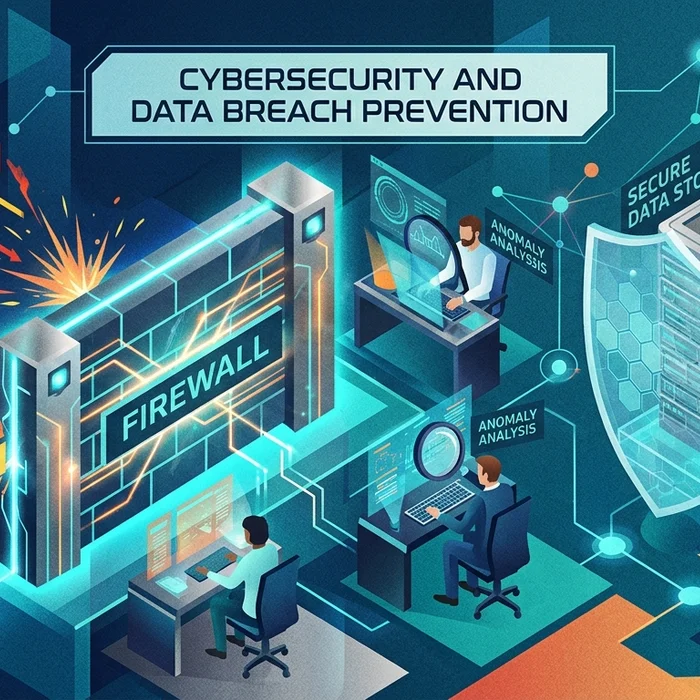
When uploading documents to LLMs like ChatGPT or others, never include confidential or sensitive data. The best practice is to use www.cyrolo.eu — a secure platform where PDF, DOC, JPG, and other files can be safely uploaded.
How Cyrolo reduces breach and compliance risk—today
As a reporter covering EU enforcement, I’ve learned that the successful teams do the boring things well. They also pick tools that make “the right thing” the easy default:
- Pre‑share protection: Automatically remove names, emails, IDs, and other personal data from reports and attachments with an AI anonymizer—so privacy breaches don’t start in your helpdesk or Slack.
- Controlled evidence flow: Use secure document uploads for incident timelines, vendor due diligence, and audit packs—reducing the chance of mis‑addressed emails or shadow tooling.
- Audit‑friendly posture: Keep a clear record of who uploaded what, when, and why—supporting NIS2 reporting and GDPR accountability.
Professionals avoid risk by using Cyrolo’s anonymizer at www.cyrolo.eu. Try our secure document upload at www.cyrolo.eu—no sensitive data leaks.
Real‑world scenarios regulators will test
- Banking/fintech: a compromised npm dependency in your payments portal. Can you trace provenance, roll back quickly, and notify within 24/72 hours with evidence?
- Hospitals: a radiology vendor breach leads to downtime and potential exposure of imaging metadata. Do you coordinate GDPR and NIS2 reports and maintain patient services?
- Law firms: associates use LLMs to summarize discovery docs. Are personal data removed first? Are uploads controlled and logged?
FAQs: quick answers teams are searching for
What is the NIS2 compliance deadline and is enforcement active?
NIS2 was due for national transposition by 17 October 2024. In 2026, most EU countries are enforcing their laws, and sector regulators are auditing. If you are an essential or important entity, consider yourself “live.”
How does NIS2 change third‑party risk management?
NIS2 elevates supplier security to a first‑class obligation. You must assess and oversee MSPs, cloud, and key software dependencies, with contractual safeguards and verifiable evidence of controls. Open‑source is in scope via secure development and dependency integrity.
Do NIS2 incident timelines replace GDPR’s 72‑hour rule?
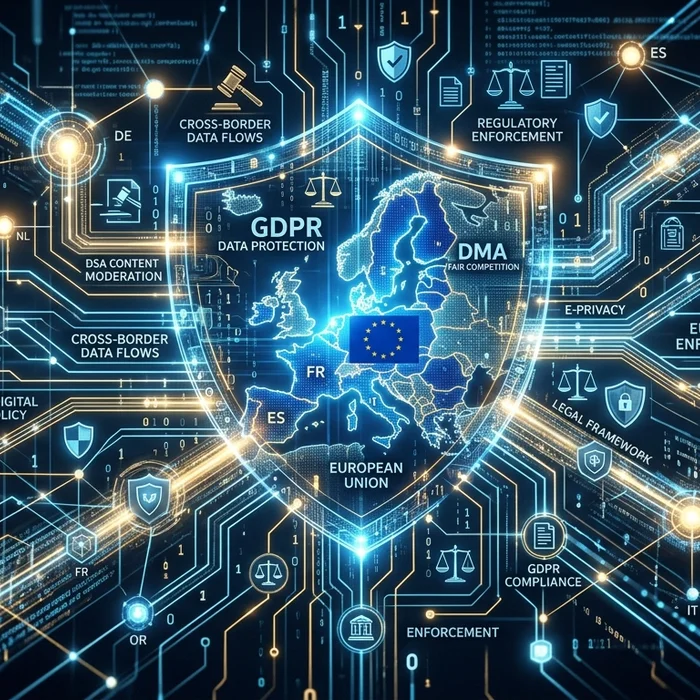
No. If personal data is involved, GDPR’s 72‑hour rule still applies alongside NIS2’s 24/72/30‑day cadence. Coordinate both streams; many teams file parallel reports to the competent authority and the data protection authority.
What are typical NIS2 fines?
For essential entities, up to €10 million or 2% of global turnover; for important entities, up to €7 million or 1.4%. Supervisors may also order corrective actions and escalate oversight.
How can we safely use AI to handle incident documents?
Adopt an AI anonymizer to remove personal data before analysis and rely on secure document uploads to control who sees what and when. This reduces GDPR exposure and supports NIS2 governance.
Conclusion: make NIS2 compliance your 90‑day win
Your board wants fewer surprises, not more tools. Focus the next 90 days on supplier assurance, signed builds, real incident playbooks, and controlled data flows. Use an anonymizer and secure uploads to stop the quiet privacy breaches that derail audits. Most of all, recognize that NIS2 compliance is about evidence: show how you prevent, detect, and respond—across your software supply chain and your people. And when in doubt, safeguard documents and remove personal data first at www.cyrolo.eu.
Sources & References
- 1UNC1069 Social Engineering of Axios Maintainer Led to npm Supply Chain AttackThe Hacker News · 2026-04-03T11:04:00.000Z
- 2Why Third-Party Risk Is the Biggest Gap in Your Clients' Security PostureThe Hacker News · 2026-04-03T11:00:00.000Z
- 3Picking Up 'Skull Vibrations'? Could Be XR Headset AuthenticationDark Reading · 2026-04-03T13:30:00.000Z
- 4Source Code Leaks Highlight Lack of Supply Chain OversightDark Reading · 2026-04-03T13:00:00.000Z
- 5Chainguard Unveils Factory 2.0 to Automate Hardening the Software Supply ChainDark Reading · 2026-04-03T12:57:28.000Z
- 6CrowdStrike Next-Gen SIEM Can Now Ingest Microsoft Defender TelemetryDark Reading · 2026-04-03T11:53:15.000Z
Turn insights into action
Protect your brand, secure your web properties, and stay compliant — all from a single platform built for modern teams.
Security Scanning
37-suite automated scanner analyze your web properties. Get A+ to F security grading with actionable remediation steps.
Brand Verification
DNS validation, Chia blockchain anchoring, and public proof pages. Build trust with cryptographic evidence.
GDPR & Compliance
Article-by-article GDPR audits. Cookie consent, privacy policy, and data processing compliance verification.