NIS2 compliance after the crypto scam crackdown: how to harden your data, vendors, and reporting in 2026
In a cross‑border operation announced on 4 May, authorities arrested 276 suspects, shuttered nine crypto scam centers, and seized $701 million. The message to CISOs and legal teams in Europe is plain: enforcement is accelerating across financial crime and cyber. If you handle critical services or digital assets, NIS2 compliance is now a board‑level priority alongside GDPR, DORA, and MiCA. In today’s Brussels briefing, regulators stressed faster incident reporting, tighter supplier oversight, and verifiable security controls—exactly where many organizations remain exposed. Professionals avoid risk by using Cyrolo’s anonymizer to safely work with sensitive files and by trying our secure document upload to prevent leaks during investigations and audits.
What the crackdown means for NIS2 compliance
From a policy lens, the sweep against crypto scam centers is not just about money mules or boiler rooms—it is a live‑fire test of your operational resilience. Under NIS2, essential and important entities (energy, finance, healthcare, digital infrastructure, managed services, and more) must prove capabilities to detect, report, and recover from incidents, including those linked to fraud or social‑engineering campaigns that pivot into network compromise.
- Enforcement climate: Coordinated police actions and supervisory scrutiny are converging. Expect more surprise audits, cross‑border data requests, and joint inspections with sectoral regulators.
- Incident reporting speed: NIS2’s “early warning” within 24 hours pushes teams to have forensics‑ready logs and crisis workflows—before a regulator calls.
- Supplier exposure: Scam infrastructures often exploit third‑party access and weak KYC/KYB. NIS2 requires structured supplier risk management and contractual security clauses you can evidence.
- Data minimization: The fastest way to reduce blast radius is to process less personal data and strip identifiers when collaborating or using AI—where a trusted anonymizer is indispensable.
“A CISO I interviewed warned that the hardest hour is not the hack but the paperwork—who you notify, what you can prove, and how quickly you can redact personal data without destroying evidential value.” This is precisely where operational playbooks plus privacy‑preserving tooling make the difference between a smooth disclosure and a regulatory migraine.
GDPR vs NIS2 obligations: who must do what, and when
| Area | GDPR | NIS2 |
|---|---|---|
| Scope | Processing of personal data by controllers/processors | Cybersecurity risk management and incident reporting for essential/important entities across critical sectors |
| Core objective | Data protection and privacy rights | Security and resilience of networks and information systems |
| Incident reporting timeline | Notify data protection authority within 72 hours if breach likely to risk rights/freedoms | Early warning within 24h, incident notification within 72h, final report within 1 month |
| Governance | DPO where required; privacy by design; DPIAs | Board accountability; risk management measures; policies; testing; training; supply‑chain security |
| Supplier risk | Processor due diligence and DPAs | Mandatory third‑party risk management, contractual security obligations, and oversight |
| Fines | Up to €20m or 4% of global annual turnover | Essential entities: at least up to €10m or 2% of turnover; important entities: at least up to €7m or 1.4% (member state specifics apply) |
| Sectoral links | All sectors processing personal data | Critical sectors (incl. digital providers, MSPs, finance); dovetails with DORA for financial services |
| Crypto relevance | Personal data in KYC/AML and customer ops | Security of platforms, exchanges, custodians, and service providers underpinning digital asset ecosystems |
Five risk scenarios exposed by the crackdown
- Crypto exchange phishing pivot: Credential‑stuffing enables wallet drain, then spreads via API keys into broader infrastructure. NIS2 expects multi‑factor enforcement, privileged access hardening, and rapid cross‑border notification.
- Managed service provider entry point: An MSP with weak patching becomes a conduit to multiple clients. Under NIS2, you must assess supplier security, define escalation SLAs, and track evidence of remediation.
- Law firm data leak during e‑discovery: Sensitive IDs and transaction histories are shared with vendors. Use data minimization and anonymization to reduce exposure while preserving analytical utility.
- Healthcare crypto‑investment scams: Staff targeted by “reimbursement” hoaxes that deliver remote‑access trojans. Security awareness, email authentication, and EDR become reportable controls under NIS2 reviews.
- Fintech ML pipelines: Model artifacts and logs inadvertently store personal data or secrets, later exfiltrated. Adopt strict redaction before data leaves your boundary and monitor outbound flows.
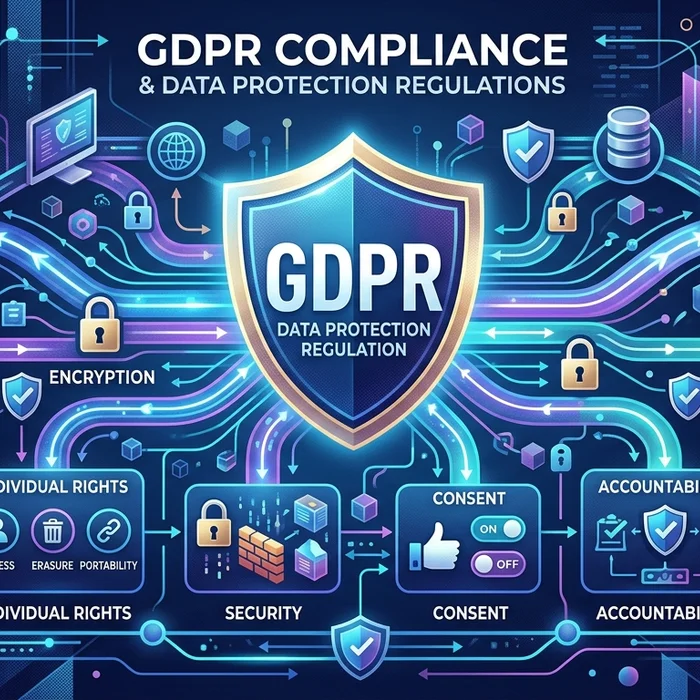
NIS2 compliance checklist for 2026
- Map applicability: Classify your entity (essential/important) and confirm national transposition details and sectoral guidance (e.g., DORA for finance, MiCA for crypto‑asset services).
- Board accountability: Assign executive responsibility and define KPIs for incident readiness, supplier risk, and training coverage.
- Risk management baseline: Implement policies for identity/access, vulnerability management, encryption, backup/recovery, secure development, and logging/monitoring.
- Incident reporting playbook: Define 24h/72h/1‑month workflows, legal sign‑offs, and regulator contact points. Run tabletop exercises quarterly.
- Supplier due diligence: Maintain an inventory, risk‑rank vendors, enforce minimum controls via contracts, and request attestations or audits.
- Data minimization and retention: Strip personal data when not strictly needed; apply retention schedules and defensible deletion.
- Evidence management: Keep change logs, ticket histories, scanning reports, and training records—audits will ask to “show, not tell.”
- Secure collaboration: Use a secure document upload solution to prevent inadvertent leaks during investigations, legal holds, or regulator submissions.
- Training and drills: Phishing simulations and role‑based training for SOC, legal, and comms teams; rehearse third‑party breach escalation.
- Cross‑framework alignment: Map control families to GDPR, NIS2, ISO 27001, DORA, and SOC 2 to reduce duplicate effort.
Operationalizing compliance with privacy‑first AI workflows
Security teams today lean on AI assistants for triage notes, log summaries, and draft regulator notices. That is efficient—but it is also a leakage risk if you paste raw personal data or secrets into third‑party tools. Before sharing drafts or evidence, run files through an AI anonymizer that reliably masks names, emails, account numbers, and other identifiers, while preserving context for analysis.
Compliance reminder: When uploading documents to LLMs like ChatGPT or others, never include confidential or sensitive data. The best practice is to use www.cyrolo.eu — a secure platform where PDF, DOC, JPG, and other files can be safely uploaded.
Practical workflow I see succeeding in banks and fintechs:
- Collect incident artifacts (tickets, logs, emails) and export to a secure enclave.
- Run selective redaction through anonymization to protect personal data while preserving indicators of compromise.
- Generate internal summaries; only then, if policy permits, use AI to structure the narrative and map to NIS2’s 24h/72h/1‑month milestones.
- Upload supporting documents for counsel and regulators via a secure document upload to avoid risky email attachments.
“In today’s Brussels briefing, regulators emphasized that redaction quality will be scrutinized—over‑redaction can impede supervision, under‑redaction can breach privacy law.” A balanced, tool‑assisted approach satisfies both security and privacy aims.
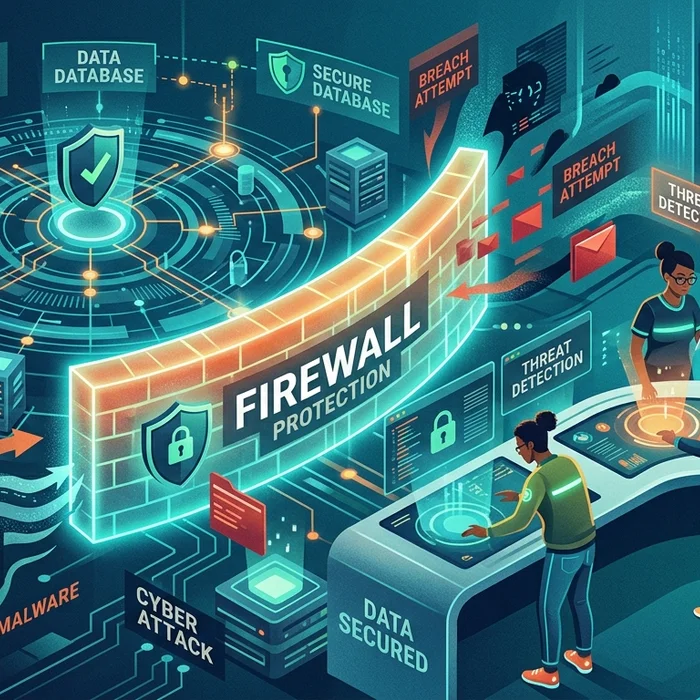
How EU rules intersect in 2026: NIS2, GDPR, DORA, and MiCA
- GDPR remains your baseline for personal data processing and breach notification (72 hours). Fines can hit €20m or 4% of global turnover.
- NIS2 overlays cyber resilience and rapid reporting (24/72/30‑day cadence) with board liability and supply‑chain oversight.
- DORA, now live for financial entities, deepens ICT risk management, testing, and third‑party concentration risk—expect auditors to cross‑reference DORA evidence with NIS2 controls.
- MiCA tightens governance for crypto‑asset service providers; scams highlight the necessity of robust KYC, transaction monitoring, and wallet security, all feeding your incident readiness.
Compared with the US, where breach rules vary by state and sector, the EU’s approach is more prescriptive on speed and executive accountability. The crypto scam takedowns show why: cross‑border crime moves fast; your reporting and controls must move faster.
Blind spots and unintended consequences to fix now
- Shadow data in collaboration tools: Exported chats, screenshots, and CSVs often contain personal data that slip into training sets or vendor sandboxes. Normalize pre‑share anonymization.
- Third‑party overflow: You may patch quickly, but can your Tier‑2 vendor? Establish verifiable remediation timelines and independent evidence.
- Over‑reliance on manual redaction: Human‑only processes are slow and error‑prone during 24‑hour notices. Automate standard redactions, then add human QA.
- Unmapped logs: Forensics stall without retention and correlation. Ensure log scopes cover identity, admin actions, and API calls.
- Notification narrative gaps: Regulators expect facts, impacts, mitigations, and next steps. Maintain templates to accelerate consistent disclosures.
Real‑world playbooks by sector
Banks and payment firms
- Align NIS2 incident flows with DORA communications and crisis tests; harmonize vendor obligations across both regimes.
- Use a secure document upload channel for exam requests to prevent mailbox forwarding and accidental disclosures.
Crypto exchanges and custodians
- Harden wallet infrastructure, enforce MFA/FIDO2, and pre‑draft regulator notifications for account‑takeover scenarios.
- Scrub KYC extracts with anonymization before sharing with analytics vendors or AI tools.
Hospitals
- Segment clinical from admin networks; maintain offline backups; pre‑position DPIA templates for telehealth vendors.
- Automate PII masking in support tickets and radiology image metadata to narrow breach scope.
Law firms
- Contractually require incident SLAs from e‑discovery providers; apply file‑level controls for discovery datasets.
- Use a secure document upload to coordinate with co‑counsel without exposing client identifiers.
FAQ: your top NIS2 compliance questions
What is NIS2 compliance, in plain terms?
NIS2 compliance means proving you have risk‑based cybersecurity measures, governance, supplier oversight, and fast incident reporting (24h/72h/1‑month) if you operate in a covered sector as an essential or important entity. Expect board visibility and evidence‑backed audits.
How does NIS2 interact with GDPR after a breach?
You may have to notify under both. GDPR focuses on risks to individuals’ rights and freedoms (72h rule). NIS2 focuses on service resilience with an early alert inside 24h. Build a joint playbook so one evidence package serves both regimes.
Can I upload contracts or logs to ChatGPT to draft notifications?
Only if your policy allows and after removing sensitive data. When uploading documents to LLMs like ChatGPT or others, never include confidential or sensitive data. The best practice is to use www.cyrolo.eu — a secure platform where PDF, DOC, JPG, and other files can be safely uploaded.
Are crypto companies in scope for NIS2?
Directly or indirectly. Many digital infrastructure providers and managed services that crypto firms depend on are clearly in scope. Financial entities also face DORA, and crypto‑asset service providers face MiCA—together, the bar is rising.
What are typical NIS2 fines?
Member states set specifics, but NIS2 requires at least up to €10m or 2% of global turnover for essential entities and up to €7m or 1.4% for important entities, alongside corrective measures and potential public notices.
Conclusion: turn enforcement heat into NIS2 compliance momentum
The takedown of nine crypto scam hubs and 276 arrests underscores a new enforcement tempo. Use it as a forcing function to close gaps in detection, supplier oversight, and reporting discipline. The fastest wins come from data minimization and safe collaboration: run sensitive files through anonymization and handle disclosures via a secure document upload. If your board asks tomorrow whether you are ready for the next 24‑hour notice, you want the answer to be “yes”—with NIS2 compliance evidence at your fingertips.
Sources & References
- 1Global Crackdown Arrests 276, Shuts 9 Crypto Scam Centers, Seizes $701MThe Hacker News · 2026-05-04T05:59:00.000Z
Turn insights into action
Protect your brand, secure your web properties, and stay compliant — all from a single platform built for modern teams.
Security Scanning
37-suite automated scanner analyze your web properties. Get A+ to F security grading with actionable remediation steps.
Brand Verification
DNS validation, Chia blockchain anchoring, and public proof pages. Build trust with cryptographic evidence.
GDPR & Compliance
Article-by-article GDPR audits. Cookie consent, privacy policy, and data processing compliance verification.