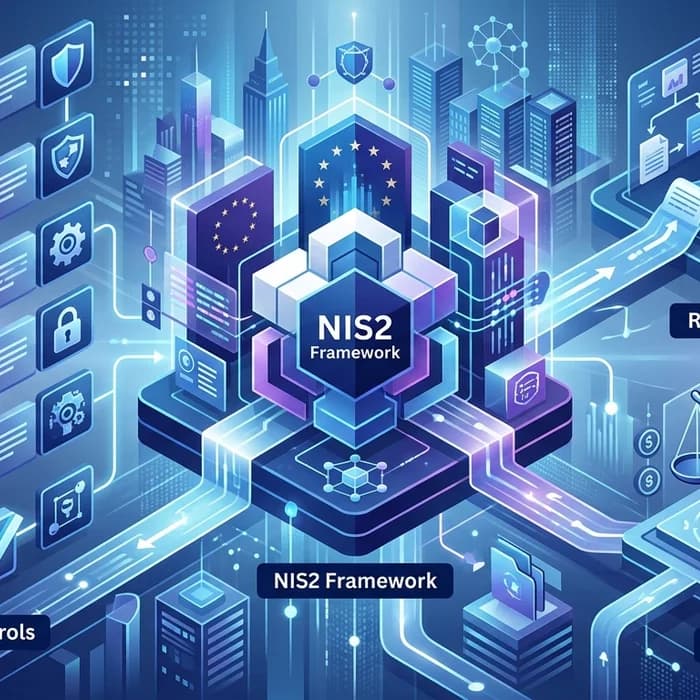
NIS2 compliance after the RondoDox XWiki botnet: what EU teams must fix now
In today’s Brussels briefing, regulators again stressed that patching, logging, and third‑party control are non‑negotiable under NIS2 compliance. The warning lands as fresh research shows the RondoDox operation abusing unpatched XWiki servers to conscript more devices into a botnet—an avoidable exposure with real regulatory consequences for EU entities. A CISO I interviewed this week put it bluntly: “If a self‑hosted wiki can take down our business continuity, then our risk register—and our NIS2 posture—aren’t real.” For organizations juggling EU regulations from GDPR to NIS2, this is the moment to close gaps before regulators and auditors come calling.

What the RondoDox incident exposes about NIS2 compliance
The RondoDox/XWiki story is a case study in how routine hygiene maps directly to legal obligations. Under NIS2, essential and important entities must implement “appropriate and proportionate” technical and organizational measures, and prove them during security audits or post‑incident investigations. Here’s where teams are falling short:
- Asset visibility: Shadow services (wikis, internal tools, admin panels) live on the public web with weak defaults. NIS2 expects an up‑to‑date asset inventory, attack surface monitoring, and documented ownership.
- Patch cadence: Unpatched XWiki instances show gaps in vulnerability management. Expect regulators to ask for proof of patch SLAs, risk scoring, and change records.
- Authentication: Default credentials and long‑lived service accounts still exist. NIS2 guidance points to MFA, PAM, and least‑privilege as baseline controls.
- Logging and detection: Botnet activity often blends with normal traffic. NIS2 requires security monitoring, anomaly detection, and retention that supports forensic reconstruction.
- Incident reporting: Under NIS2, notify your national CSIRT early—within 24 hours of becoming aware—followed by a more detailed report within 72 hours and a final report within one month. Not knowing who owns the wiki—or where the logs are—leads to late, inaccurate filings.
- Supply‑chain governance: Many XWiki instances are managed by external integrators. NIS2 heightens vendor oversight: contractual security clauses, minimum control baselines, and verification.
Penalties are no longer theoretical. For essential entities, Member State laws now allow fines up to €10 million or 2% of global turnover (whichever is higher); for important entities, up to €7 million or 1.4%. Management can be held accountable for systematic failures.
GDPR vs NIS2: same risks, different obligations
EU organizations increasingly ask whether an XWiki‑style compromise is a data protection problem (GDPR) or a network/system security problem (NIS2). It can be both. Use the table below to position obligations and plan your response.
| Topic | GDPR | NIS2 |
|---|---|---|
| Scope | Personal data processing by controllers/processors | Network and information systems of “essential” and “important” entities in key sectors |
| Trigger | Privacy breach or non‑compliant processing of personal data | Cybersecurity incidents affecting availability, authenticity, integrity, or confidentiality of services |
| Reporting timelines | Notify DPA “without undue delay,” ideally within 72 hours of awareness if risk to rights and freedoms | Early warning within 24 hours to CSIRT/authority; incident notification within 72 hours; final report in one month |
| Penalties | Up to €20M or 4% global turnover | Essential: up to €10M or 2%; Important: up to €7M or 1.4% |
| Core controls | Data minimization, legal basis, DPIAs, breach response, data subject rights | Risk management, patching, access control, logging, business continuity, supply‑chain security |
| Role of anonymization | Proper anonymization removes data from GDPR scope | Supports safe sharing of indicators, logs, and reports without unnecessary personal data |
| Documentation | Records of processing, DPIAs, breach logs | Policies, risk assessments, incident reports, audit trails |
Practical NIS2 compliance checklist

- Map in‑scope services and classify them as essential or important under national transposition.
- Deploy attack surface discovery; include “non‑obvious” assets like self‑hosted wikis and knowledge bases.
- Define patch SLAs by severity; enforce maintenance windows and emergency procedures.
- Mandate MFA for all admin interfaces; rotate and vault service accounts.
- Centralize logs with tamper‑evident retention; ensure you can reconstruct 90+ days.
- Drill the 24h/72h/1‑month reporting workflow with named owners and templates.
- Assess key suppliers; require security clauses, attestations, and right‑to‑audit.
- Prepare a clean‑room data sharing plan: anonymize personal data before sending logs to vendors or LLMs.
Secure document workflows: anonymize before you share
When incidents hit, teams rush to share screenshots, logs, tickets, and contract extracts with vendors and incident responders. That’s often how privacy breaches happen inside the breach. Before escalating, scrub personal data and sensitive business details.
- Use an AI anonymizer to remove names, emails, phone numbers, IBANs, addresses, case IDs, and free‑text identifiers from evidence packets.
- Stage evidence via secure document uploads so only intended recipients can access files like PDF, DOC, CSV, JPG, and log bundles.
- Retain proof of redaction for your GDPR and NIS2 audit files.
Compliance reminder: When uploading documents to LLMs like ChatGPT or others, never include confidential or sensitive data. The best practice is to use www.cyrolo.eu — a secure platform where PDF, DOC, JPG, and other files can be safely uploaded.
Professionals avoid risk by using Cyrolo’s anonymizer at www.cyrolo.eu. Try our secure document upload at www.cyrolo.eu — no sensitive data leaks.
How Cyrolo maps to EU regulations
In conversations with hospital CIOs and fintech CISOs, three pain points repeat: removing personal data quickly, moving evidence securely, and proving control to regulators. Cyrolo helps address all three:
- Data protection by design: Automated anonymization supports GDPR data minimization and NIS2’s proportionality principle when sharing logs and playbooks.
- Controlled distribution: Secure document uploads reduce the risk of forwarding sensitive attachments via email or unmanaged chat.
- Auditability: Maintain a trail that shows what was redacted, when, and by whom—useful for security audits and post‑incident reviews.
- Vendor collaboration: Share only what’s necessary with MSSPs and integrators, lowering exposure during multi‑party response.
Real‑world scenarios
- Bank, SWIFT ops: A botnet‑driven DDoS saturates a public portal. Operations teams anonymize customer identifiers in WAF logs before escalating to the telco and national CSIRT.
- Hospital, EHR outage: A forgotten wiki server becomes the foothold. The DPO demands proof that nurse rosters and HR files were anonymized before third‑party triage.
- Law firm, M&A data room: To meet a 72‑hour notification, counsel compiles exhibits with client PII removed, preserving privilege while satisfying regulators.
- Fintech, incident drills: Quarterly tabletops use sanitized past incidents to train teams without exposing personal data.
NIS2 compliance in 30/60/90 days
For organizations just catching up after the October 2024 transposition deadline, this phased plan works:
- Day 0–30: Confirm in‑scope entities and services; appoint accountable management; baseline your attack surface (include wikis); set patch SLAs; require MFA for admin interfaces.
- Day 31–60: Centralize logging; draft the 24h/72h/1‑month reporting playbook; test incident roles; roll out anonymization for evidence workflows.
- Day 61–90: Supplier risk reviews; tabletop with CSIRT notification; prove improvements via metrics—patch latency, MFA coverage, mean time to detect/report.
Expect on‑site or remote supervision in 2025 as regulators move from guidance to enforcement. Several authorities told me they will prioritize “basic hygiene” failures first: exposed services, missing MFA, and unlogged incidents.
Blind spots and unintended consequences
- Over‑reporting vs under‑reporting: Teams fear fines and over‑notify. Use a decision tree tied to service criticality and impact thresholds to meet NIS2 without flooding CSIRTs.
- Log oversharing: Raw logs leak personal data and secrets. Anonymize selectively so detection context remains intact.
- Cross‑border ops: EU groups with US vendors must balance SOC data residency with 24‑hour reporting. Contract for EU processing where feasible.
- Tool sprawl: More tools mean more credentials. Consolidate workflows; prefer platforms with strong access control and auditability.
FAQ

What is NIS2 compliance in simple terms?
NIS2 compliance means your essential or important services in the EU run with demonstrable cybersecurity controls—patching, access control, logging, business continuity—and that you can detect, respond to, and report significant incidents on strict timelines.
Who is covered by NIS2?
Entities in sectors like energy, transport, health, financial market infrastructures, ICT services, public administration, and digital providers. National laws specify thresholds. Many mid‑size suppliers are now “important entities.”
What are the NIS2 penalties?
Essential entities: up to €10 million or 2% of worldwide turnover; important entities: up to €7 million or 1.4%, plus potential orders and management liability for persistent non‑compliance.
Does anonymization remove GDPR obligations?
Proper anonymization can take data out of GDPR’s scope; pseudonymization does not. In practice, anonymize evidence before sharing for incident response to reduce risk and simplify compliance. Use an AI anonymizer rather than ad‑hoc redactions.
Can I upload logs to LLMs for analysis?
Be extremely cautious. Many LLM tools retain inputs or use them for training unless configured otherwise. Compliance reminder: When uploading documents to LLMs like ChatGPT or others, never include confidential or sensitive data. The best practice is to use www.cyrolo.eu — a secure platform where PDF, DOC, JPG, and other files can be safely uploaded.
Conclusion: turn the botnet lesson into lasting NIS2 compliance
RondoDox did not need a zero‑day; it needed an unpatched wiki and a busy team. That’s exactly the kind of avoidable failure NIS2 aims to eliminate. If you tighten asset discovery, patching, MFA, logging, and reporting—and anonymize what you share—you reduce the chance of a privacy breach, minimize downtime, and stand tall in front of regulators. Start today: anonymize incident evidence and move it safely with www.cyrolo.eu. Then validate your controls against the checklist above and rehearse the 24h/72h/1‑month pathway. That’s how EU organizations turn headlines into hardening—and real NIS2 compliance.
Sources & References
- 1RondoDox Exploits Unpatched XWiki Servers to Pull More Devices Into Its BotnetThe Hacker News · 2025-11-15T16:35:00.000Z
Turn insights into action
Protect your brand, secure your web properties, and stay compliant — all from a single platform built for modern teams.
Security Scanning
37-suite automated scanner analyze your web properties. Get A+ to F security grading with actionable remediation steps.
Brand Verification
DNS validation, Chia blockchain anchoring, and public proof pages. Build trust with cryptographic evidence.
GDPR & Compliance
Article-by-article GDPR audits. Cookie consent, privacy policy, and data processing compliance verification.