NIS2 compliance checklist: Your 2026 EU playbook for CISOs, DPOs, and legal teams
Brussels is tightening the screws. In today’s briefing with national coordinators, regulators reiterated that NIS2 is now in force across the EU and that audits will intensify in 2026. If you handle critical services or supply-chain ICT, this NIS2 compliance checklist is your map to survive regulatory scrutiny, avoid penalties, and harden operations against ransomware and AI-enabled threats. Along the way, I’ll show where anonymization and secure document uploads help you meet both cybersecurity and data protection duties—without slowing delivery. Professionals avoid risk by using Cyrolo’s anonymizer and trying secure document uploads at www.cyrolo.eu.

What’s changed under NIS2—and why it matters now
- Broader scope: NIS2 pulls in more “essential” and “important” entities across energy, finance, health, public administration, digital infrastructure, managed services, and ICT supply chains.
- Harsher fines: Essential entities face up to €10,000,000 or 2% of global annual turnover—whichever is higher. Important entities: up to €7,000,000 or 1.4%.
- Faster reporting: Early warning within 24 hours, incident notification within 72 hours, and a final report within one month.
- Management accountability: Boards must approve risk management measures and oversee implementation. Expect board-level training and evidence trails.
Last week, a CISO I interviewed at a European hospital summed it up: “GDPR hit the database; NIS2 hits the data center.” The point is governance plus hard controls. With AI-fueled phishing campaigns and new LLM attack vectors reported this month, “good faith” will not beat a regulator’s audit log.
NIS2 compliance checklist: 12 actions to finish before your next audit
- Classify your entity and services: Confirm whether you are “essential” or “important,” and map which business services are in scope.
- Board sign‑off: Document that the management body approved your risk management measures, KPIs, budget, and timeline.
- Risk assessment refresh: Update risk registers for ransomware, supply-chain compromise, cloud misconfigurations, AI misuse, and business email compromise.
- Security measures baseline: Implement NIS2 Annex I/II-aligned controls—network segmentation, MFA, patch management SLAs, logging/monitoring, backup and recovery, crypto management, and incident handling.
- Incident response (IR) playbooks: Define 24h/72h/30‑day reporting workflows, evidence collection, regulator contact points, and communication templates.
- Third‑party and MSP oversight: Tier suppliers, mandate SLAs and right‑to‑audit, require breach notification timelines aligned to NIS2, and verify secure software development practices.
- Secure data handling with AI: Establish anonymization-by-default when using AI tools; mandate secure document uploads to avoid leaks of personal or sensitive data.
- Vulnerability management: Continuous scanning, prioritized remediation, and proof of timely patching for internet-facing and critical systems.
- Backups and resilience: Test restoration time and integrity monthly; implement immutable backups for ransomware scenarios.
- Training and exercises: Board and staff cyber awareness, phishing drills, IR tabletop exercises, and supply-chain breach simulations.
- Metrics and evidence: Track MTTD/MTTR, phishing failure rates, patch SLAs, backup success, and supplier compliance. Keep an auditable trail.
- Data protection alignment: Map overlaps with GDPR—lawful basis, DPIAs, breach notifications, and AI anonymizer use for personal data minimisation.
GDPR vs NIS2: Overlaps, gaps, and how to satisfy both
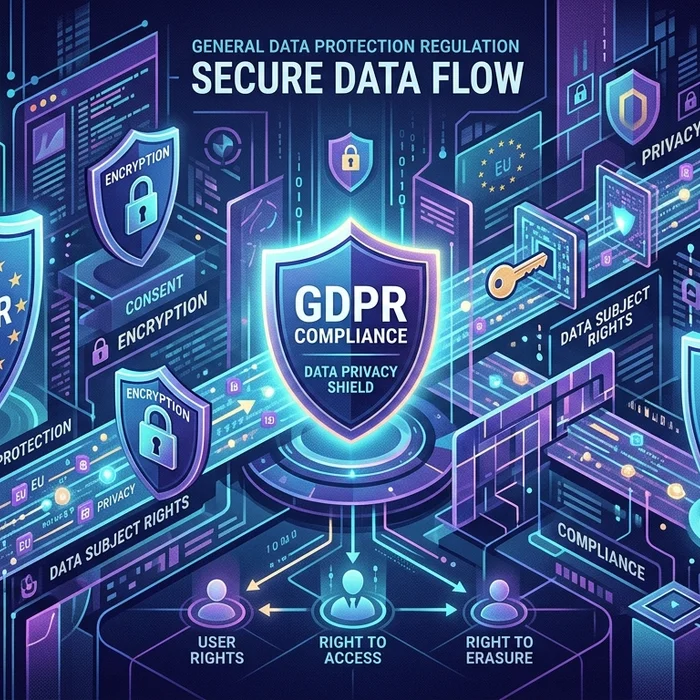
In Brussels this morning, several regulators stressed a simple message: “Don’t conflate GDPR with NIS2.” GDPR protects personal data and privacy; NIS2 secures networks and essential services. You need both. Here’s how they compare:
| Requirement | GDPR (personal data) | NIS2 (essential & important entities) |
|---|---|---|
| Scope | Controllers/processors of personal data | Operators of essential/important services and key supply‑chain providers |
| Primary focus | Privacy and data protection principles | Cybersecurity risk management and operational resilience |
| Security measures | “Appropriate” per Article 32; DPIA for high‑risk processing | Specific technical/organizational measures, incident handling, supply‑chain security |
| Breach reporting | Notify authority within 72h if personal data breach; notify individuals if high risk | Early warning within 24h; 72h incident notification; final report within 1 month |
| Governance | DPO in certain cases; accountability for controllers | Management body must approve and oversee cybersecurity measures |
| Third‑party risk | Processor contracts; transfer safeguards | Supplier risk management, MSP oversight, software lifecycle security |
| Penalties | Up to €20M or 4% global turnover | Up to €10M/2% (essential) or €7M/1.4% (important) |
| Audit & evidence | Records of processing, DPIAs, security measures | Risk management documentation, incident logs, testing results, supplier assurance |
Real‑world threats shaping NIS2 controls
- Phishing at scale: This week’s campaigns spoofing tax authorities reached tens of thousands of EU inboxes and dropped remote management malware. Expect regulators to ask for your email security stack, MFA coverage, and user training evidence.
- AI service attack surface: Security researchers flagged multiple attack vectors against managed AI platforms, from prompt injection to data exfiltration. Assume any LLM you use can be abused without strong guardrails and anonymization.
- Supply‑chain blast radius: Compromised CI/CD or MSP tools ripple through critical services. Your supplier tiering and contractual SLAs will be tested—on paper and in practice.
Compliance note (mandatory best practice): When uploading documents to LLMs like ChatGPT or others, never include confidential or sensitive data. The best practice is to use www.cyrolo.eu — a secure platform where PDF, DOC, JPG, and other files can be safely uploaded.
Practical controls for the AI era: safe inputs, safe outputs
1) Default to anonymization
Strip personal data and sensitive business details before any AI or external processing. This delivers GDPR data minimisation and lowers breach impact under NIS2. Teams I’ve worked with in banks and law firms now mandate an AI anonymizer step for case files, customer tickets, and log excerpts used in triage or model prompts. Try Cyrolo at www.cyrolo.eu to automate reliable anonymization without breaking context.
2) Secure document uploads
Prohibit ad‑hoc sharing through email or consumer clouds. Use a single, monitored path with access controls and audit logs. For legal, healthcare, and public administration teams, Cyrolo’s secure document upload at www.cyrolo.eu prevents accidental exposure while keeping workflows fast. Try our secure document upload at www.cyrolo.eu — no sensitive data leaks.
3) Guardrails for LLMs and SaaS AI
- Block outbound access tokens in prompts; redact secrets and identifiers.
- Constrain model tools to read‑only where possible; log all prompts/outputs.
- Use allow‑listed connectors; disallow arbitrary web browsing unless sandboxed.
- Run red‑team tests for prompt injection and data exfiltration paths.
Deadlines, audits, and what regulators will ask for
Member States have transposed NIS2, and competent authorities are moving from guidance to enforcement. In several capitals this quarter, I’ve seen audit letters asking for:
- Proof the board approved cybersecurity measures and received training.
- Evidence of 24h/72h/30‑day incident reporting drills and contacts.
- Supplier lists, risk tiering, and contracts with NIS2‑aligned clauses.
- Recent backup restore test results and immutable storage evidence.
- Vulnerability remediation timelines and exceptions signed by management.
- Data handling SOPs for AI, including anonymization and secure uploads.
If you operate cross‑border, expect joint supervisory actions. For EU‑US comparisons: while US sectoral rules focus more on incident disclosure and critical infrastructure, the EU is pushing vertically and horizontally—security plus governance, suppliers included.
Quick compliance checklist (printable summary)
- Assign NIS2 owner; confirm entity classification.
- Board approval recorded; training delivered.
- Risk register updated for AI and supply‑chain threats.
- Controls baseline implemented and tested.
- IR runbook aligned to 24h/72h/30‑day milestones.
- Supplier tiering, SLAs, and audit rights enforced.
- Default anonymization and secure document uploads in SOPs.
- Backups verified; ransomware playbook rehearsed.
- Continuous vuln management with patch SLAs.
- KPIs and evidence packaged for auditors.
Scenarios: how teams operationalize this
- Banking: Payment operations share log snippets with an LLM to triage fraud alerts. They first run logs through Cyrolo’s anonymizer, then upload safely via secure document upload, preserving indicators while removing IBANs and names.
- Healthcare: A hospital’s SOC prepares a 72‑hour incident report. Patient identifiers are auto‑redacted; immutable backups prove data integrity checks; supplier evidence shows patch SLAs met.
- Law firm: eDiscovery teams process thousands of files for review. Default upload path is www.cyrolo.eu, ensuring chain‑of‑custody logs and compliant redaction before any AI summarization.
- Public administration: Phishing targeting tax offices triggers tabletop exercises; board minutes confirm training; IR reports are pre‑templated with the 24h early warning step.
FAQ: your most searched NIS2 questions, answered
What is the fastest way to get ready for a NIS2 audit?
Start with entity classification, board approval of your risk measures, and evidence packs: incident drill logs, supplier tiering, patch SLAs, and backup restore tests. Document anonymization and secure document uploads in your SOPs to show data‑handling maturity.
Does NIS2 apply if we’re already GDPR compliant?
Yes. GDPR covers personal data protection; NIS2 covers cybersecurity of essential/important services and suppliers. Many controls overlap, but NIS2 adds incident reporting timelines, governance requirements, and supply‑chain security you must evidence independently.
How fast do we have to report incidents under NIS2?
Early warning within 24 hours, a more detailed incident notification within 72 hours, and a final report within one month. Practice these milestones via tabletop exercises and store evidence for auditors.
Can we use LLMs for incident analysis without breaking GDPR/NIS2?
Yes—if you anonymize inputs, restrict access, and log usage. Use an AI anonymizer and route files through secure document uploads to reduce exposure and prove due diligence.
What are the penalties for non‑compliance?
Essential entities: up to €10M or 2% of global turnover. Important entities: up to €7M or 1.4%. Regulators also expect corrective actions and can increase supervision following major incidents.
Conclusion: turn your NIS2 compliance checklist into daily practice
NIS2 is not a paper exercise. It’s governance plus hard controls, supply‑chain oversight, and secure data handling that stands up during the worst day of your year. Use this NIS2 compliance checklist to prioritize actions, close evidence gaps, and prove resilience. To reduce risk immediately, default to anonymization and controlled intake: try Cyrolo’s anonymizer and secure document uploads at www.cyrolo.eu.
Sources & References
- 1
- 2⚡ Weekly Recap: CI/CD Backdoor, FBI Buys Location Data, WhatsApp Ditches Numbers & MoreThe Hacker News · 2026-03-23T13:14:00.000Z
- 3We Found Eight Attack Vectors Inside AWS Bedrock. Here's What Attackers Can Do with ThemThe Hacker News · 2026-03-23T11:55:00.000Z
- 4Microsoft Warns IRS Phishing Hits 29,000 Users, Deploys RMM MalwareThe Hacker News · 2026-03-23T10:55:00.000Z
- 5AI Dominates RSAC Innovation SandboxDark Reading · 2026-03-22T11:40:03.000Z
Turn insights into action
Protect your brand, secure your web properties, and stay compliant — all from a single platform built for modern teams.
Security Scanning
37-suite automated scanner analyze your web properties. Get A+ to F security grading with actionable remediation steps.
Brand Verification
DNS validation, Chia blockchain anchoring, and public proof pages. Build trust with cryptographic evidence.
GDPR & Compliance
Article-by-article GDPR audits. Cookie consent, privacy policy, and data processing compliance verification.