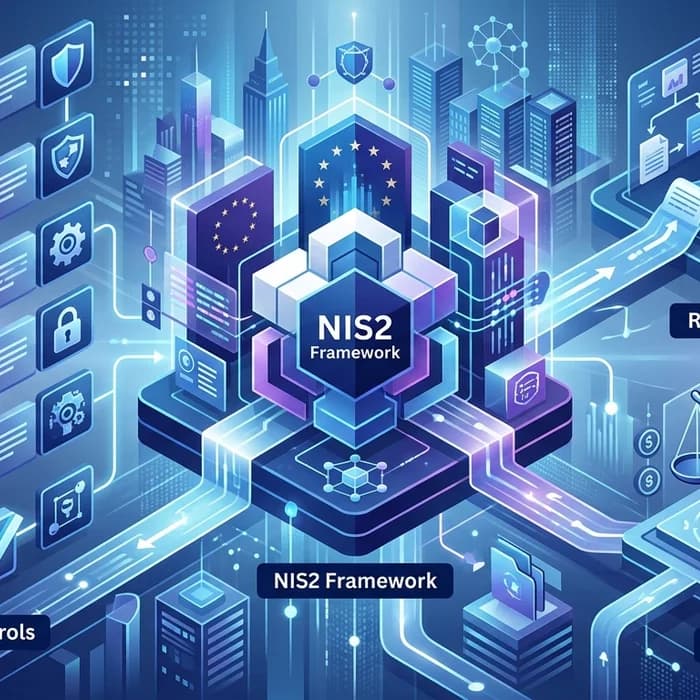
NIS2 Compliance Checklist: 2026 Playbook for EU CISOs and Counsel
As EU oversight tightens in 2026, organisations are scrambling for a practical NIS2 compliance checklist to avoid fines, keep regulators satisfied, and harden cyber resilience. In today’s Brussels briefing mood, lawmakers again signalled deeper scrutiny of critical infrastructure and digital platforms—echoing recent committee debates on Europol’s mandate and AI/media risks. For banks, hospitals, utilities, SaaS providers, and managed service firms, the immediate priority is translating NIS2 into day-to-day controls, documentation, and incident playbooks that stand up in an audit.

Why NIS2 Matters Now
- Scope expansion: NIS2 dramatically broadens “essential” and “important” entities, including health, finance, energy, water, transport, digital infrastructure, managed services, and more.
- Board accountability: Executive management can be held liable for non-compliance, and regulators can impose supervisory measures and fines.
- Heavier penalties: Administrative fines can reach at least €10 million or 2% of global annual turnover (whichever is higher), depending on Member State transposition.
- Near-term enforcement: Member States were required to transpose NIS2 by 17 October 2024, with audits and cross-border cooperation ramping through 2025–2026.
In recent CISO interviews, several warned that identity blind spots and supplier dependencies remain their top NIS2 pain points. That rings true after widespread router compromises tied to state actors and recurring industrial control system exposures: attackers increasingly pivot through unmanaged devices and third parties.
The NIS2 Compliance Checklist (What Auditors Will Expect to See)
Use this NIS2 compliance checklist to structure your 2026 action plan. Treat it as a living document you can show your supervisory authority, internal audit, and your board.
- Governance and Accountability
- Appoint accountable executives and define roles/responsibilities for NIS2 compliance.
- Board-approved cybersecurity risk management policy and risk appetite statement.
- Regular management briefings and documented decisions on risk treatment.
- Risk Management and Policies
- Enterprise risk assessment covering networks, information systems, and operational technology (OT) where applicable.
- Documented controls for encryption, access control, logging, monitoring, and secure development.
- Business continuity and disaster recovery plans, tested at least annually.
- Incident Reporting and Response
- 24-hour early warning to competent authorities for significant incidents, with follow-ups per national rules.
- Playbooks for ransomware, data exfiltration, and third-party outages; post-incident reports with root-cause analysis.
- Tabletop exercises with executive participation.
- Identity and Access Management
- Strong MFA for privileged and remote access; just-in-time and least-privilege principles.
- Identity visibility and intelligence across cloud, SaaS, and on-prem directories; orphan/privileged account discovery.
- Routine access reviews and revocation procedures.
- Supply Chain Security
- Vendor risk classification and minimum security clauses (logging, encryption, breach notification).
- SBOMs and vulnerability disclosure for critical software; patch SLAs; zero trust segmentation for third-party connections.
- Evidence of due diligence for MSPs and hosting providers.
- Technical Controls
- Endpoint and network telemetry, centralised logging, and threat detection; OT/ICS monitoring where relevant.
- Network segmentation; secure configurations for routers, VPNs, and IoT.
- Backup integrity checks and offline copies for ransomware resilience.
- Secure Data Handling
- Data classification and minimisation; encryption at rest/in transit; anonymisation or pseudonymisation for personal data.
- Safe workflows for sharing and reviewing documents—avoid uncontrolled uploads to public AI tools.
- Retention schedules aligned with legal and business needs.
- Training and Culture
- Role-based security training for engineers, legal, procurement, and executives.
- Phishing simulations and secure-coding education.
- Clear reporting channels for suspected incidents.
- Testing and Assurance
- Regular vulnerability scanning, penetration tests, and red/blue exercises.
- Control testing mapped to NIS2 articles and national guidance; remediation tracking.
- Independent audits and evidence notebooks ready for regulators.
GDPR vs NIS2: What’s Different and Where You’ll Overlap
| Topic | GDPR | NIS2 |
|---|---|---|
| Scope | Personal data protection across all sectors | Cybersecurity/risk management for essential and important entities in defined sectors |
| Primary Objective | Rights and freedoms of natural persons | Resilience and continuity of essential services and digital infrastructure |
| Incident Reporting | Supervisory authority and data subjects (for personal data breaches) | Competent authority/CSIRT for significant incidents affecting services |
| Fines | Up to €20m or 4% global turnover | At least up to €10m or 2% global turnover (per national law) |
| Security Measures | Appropriate technical and organisational measures (e.g., pseudonymisation) | Risk management measures incl. incident handling, supply chain, encryption, MFA, testing |
| Governance | DPO required for certain organisations | Executive accountability; potential personal liability measures for management |
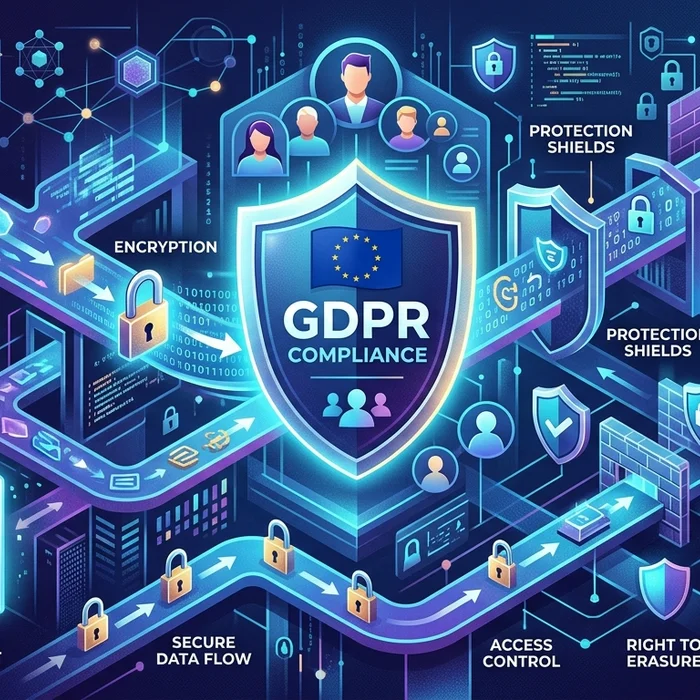
Making Documentation Easy and Safe: Anonymise, Then Share
Biggest hidden NIS2 risk? Leaking sensitive info while drafting policies, playbooks, or audit evidence—especially if teams paste documents into public AI tools. Professionals avoid risk by using Cyrolo’s anonymizer to scrub personal data and secrets before review, and by relying on secure document uploads that won’t spill data to third parties. Try our secure document upload at www.cyrolo.eu — no sensitive data leaks.
Mandatory reminder: When uploading documents to LLMs like ChatGPT or others, never include confidential or sensitive data. The best practice is to use www.cyrolo.eu — a secure platform where PDF, DOC, JPG, and other files can be safely uploaded.
Regulatory Signals from Brussels
From interview rooms in Brussels this spring, two themes keep surfacing:
- Trust and accountability: Committee discussions on platforms and AI highlight disinformation and data misuse risks, pushing organisations to double down on audit trails and data minimisation.
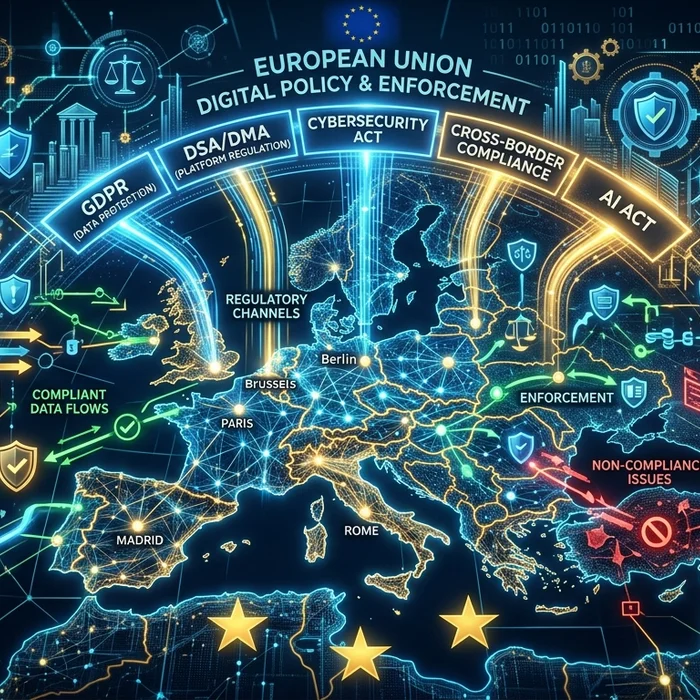
- Operational readiness: Policymakers expect quicker incident warnings and better cross-border cooperation. Translation: your 24-hour early-warning mechanics must be rehearsed and practical, not theoretical.
Alongside NIS2, many EU financial entities also face DORA application timelines in 2025. For multinationals, that means harmonising incident taxonomies and testing regimes so you don’t duplicate effort across regimes.
Threat Realities Shaping NIS2 Controls
Recent campaigns abusing consumer-grade routers to steal credentials, and disruptive operations against exposed industrial controllers, reinforce three priorities:
- Identity-first defense: Implement strong MFA, session risk scoring, and identity visibility across clouds and legacy domains. An identity compromise today often equals domain-wide compromise tomorrow.
- Edge hardening: Lock down remote access, CPE, and SOHO devices used by staff and suppliers; enforce baselines, auto-updates, and segmentation.
- Supplier containment: Assume a managed service or platform compromise will happen; pre-design isolation steps, access kill switches, and minimal trust paths.
A CISO I interviewed put it bluntly: “We don’t get breached; our identities and our suppliers do.” Your NIS2 program should be built around that reality.
EU vs US: Different Playbooks, Same Outcomes
- EU: NIS2 is prescriptive on governance and reporting timelines, layered on top of GDPR. Expect formal audits and sector authorities that can direct remediation.
- US: Sectoral rules (e.g., TSA directives, SEC disclosure, state breach laws) drive similar outcomes—faster reporting, board visibility, and supply-chain assurances—but with more fragmentation.
- Takeaway: Multinationals should codify one global baseline aligned to NIS2’s rigor, then map to local obligations.
Evidence Pack for Audits: What to Keep Ready
- Risk register with owners, treatment plans, and review dates.
- Asset inventory including shadow SaaS and privileged identities.
- Incident playbooks, last two tabletop reports, and notification templates.
- Supplier list with security clauses, results of due diligence, and active exceptions.
- Training records and executive briefings to prove governance.
- Change logs showing improvements after incidents or tests.
- Anonymised samples of logs and tickets to protect personal data while demonstrating control effectiveness—use an AI anonymizer to remove personal data safely before sharing.
Try our secure document upload to review policies and audit evidence without risking exposure to external systems.
FAQ: NIS2 Compliance in 2026
What is the NIS2 compliance deadline?
Member States had to transpose NIS2 by 17 October 2024. Expect stepped-up supervision and audits through 2025–2026. Essential and important entities should be operating to NIS2 standards now.
Who falls in scope under NIS2?
Essential and important entities across sectors like energy, transport, health, finance, water, digital infrastructure, public administration, and key ICT service providers (e.g., MSPs). National laws detail thresholds and lists.
What are the penalties for non-compliance?
Administrative fines can reach at least €10 million or 2% of worldwide turnover, alongside potential supervisory orders and management accountability measures, depending on national implementation.
How does NIS2 interact with GDPR?
They complement each other: GDPR protects personal data; NIS2 focuses on service resilience and security measures. A single incident can trigger duties under both—have unified playbooks and legal review.
How can I safely use AI to prepare NIS2 documentation?
Never paste confidential details into public AI tools. Anonymise first and use controlled environments. When uploading documents to LLMs like ChatGPT or others, never include confidential or sensitive data. The best practice is to use www.cyrolo.eu — a secure platform where PDF, DOC, JPG, and other files can be safely uploaded.
Conclusion: Turn Your NIS2 Compliance Checklist into Daily Habits
NIS2 is not a binder—it’s an operating model. Convert this NIS2 compliance checklist into enforced policies, measurable controls, and tested playbooks. Prove governance to regulators without exposing sensitive details by anonymising evidence and using controlled sharing. Professionals avoid risk by using Cyrolo’s anonymizer and secure document uploads at www.cyrolo.eu to keep data protection airtight while accelerating audits and security reviews.
Sources & References
- 1Other events - The Upcoming Revision of Europol’s Mandate - 19-03-2026 - Committee on Civil Liberties, Justice and Home AffairsEU Parliament LIBE · 2026-04-08T13:10:28.000Z
- 2Other events - AI and Digital platforms - concerns for media pluralism - 02-03-2026 - Committee on Civil Liberties, Justice and Home AffairsEU Parliament LIBE · 2026-04-08T13:05:12.000Z
- 3Shrinking the IAM Attack Surface through Identity Visibility and Intelligence Platforms (IVIP)The Hacker News · 2026-04-08T11:30:00.000Z
- 4Thousands of consumer routers hacked by Russia's militaryArs Technica Policy · 2026-04-08T11:00:08.000Z
- 5Full Sail University to Open IBM Cyber Defense Range Powered by AWS and Cloud Range on CampusDark Reading · 2026-04-08T14:43:49.000Z
- 6Niobium Introduces The FogDark Reading · 2026-04-08T14:22:33.000Z
- 7Pluralsight Launches SecureReady to Help Organizations Build Job-Ready Cybersecurity TeamsDark Reading · 2026-04-08T14:08:22.000Z
- 8Iranian Threat Actors Disrupt US Critical Infrastructure Via Exposed PLCsDark Reading · 2026-04-08T13:46:29.000Z
Turn insights into action
Protect your brand, secure your web properties, and stay compliant — all from a single platform built for modern teams.
Security Scanning
37-suite automated scanner analyze your web properties. Get A+ to F security grading with actionable remediation steps.
Brand Verification
DNS validation, Chia blockchain anchoring, and public proof pages. Build trust with cryptographic evidence.
GDPR & Compliance
Article-by-article GDPR audits. Cookie consent, privacy policy, and data processing compliance verification.