NIS2 Compliance Checklist: Your 2026 Game Plan for EU Cybersecurity, Data Protection, and Zero‑Leak Workflows
In today’s Brussels briefing, regulators reiterated that NIS2 enforcement is no longer theoretical—boards will be held directly accountable in 2026. If you’re mapping your NIS2 compliance checklist, remember this is not just another privacy layer like GDPR. It’s a cybersecurity resilience regime that touches operations, incident response, suppliers, and communications. For teams already navigating EU regulations—from GDPR to DORA—this is the year to close gaps on cybersecurity compliance, data protection, and safe AI workflows, including anonymization and secure document uploads.
As a reporter speaking daily with EU regulators and CISOs across banking, healthcare, and critical infrastructure, I’m seeing the same pressure points: supply-chain risk, evidence quality for security audits, and preventable privacy breaches caused by sloppy AI use. Below is a candid, field-tested blueprint to meet the letter of the law without slowing the business.
What NIS2 Changes in Practice (and How It Differs from GDPR)
NIS2 expands the scope of EU cybersecurity compliance to “essential” and “important” entities across sectors like energy, transport, health, finance, digital infrastructure, and managed services. Member States transposed the directive from late 2024 onward, and by 2026, regulators expect operational maturity: risk management, supply‑chain controls, incident handling, and management accountability.
- Fines and liability: NIS2 sets administrative fines that can reach at least €10 million or 2% of global turnover for essential entities (and at least €7 million or 1.4% for important entities). Boards can face personal accountability for systemic failures.
- Scope and focus: GDPR governs personal data processing and privacy rights. NIS2 governs cybersecurity resilience and reporting obligations for essential/important services—even where personal data isn’t involved.
- Reporting clocks: NIS2 incident reporting includes an early warning within 24 hours, an initial notification within 72 hours, and a final report within one month for significant incidents.
GDPR vs NIS2: What You Must Actually Do
| Topic | GDPR | NIS2 |
|---|---|---|
| Primary Aim | Protect personal data and privacy rights | Ensure cybersecurity resilience of essential/important services |
| Who’s in Scope | Any controller/processor handling personal data in the EU | Sector-based essential/important entities, incl. key suppliers and MSPs |
| Core Obligations | Lawful basis, DPIAs, data minimization, rights handling, breach notification | Risk management, incident handling, business continuity, supply-chain security, logging/monitoring |
| Incident Reporting | Breach of personal data: notify authority within 72 hours; individuals when high risk | Significant cyber incidents: early warning within 24h, initial within 72h, final report within 1 month |
| Fines | Up to 4% global turnover or €20M | At least €10M or 2% (essential); at least €7M or 1.4% (important), per national law |
| Board Accountability | Implicit via governance of processing activities | Explicit: management oversight and potential personal liability |
Your NIS2 Compliance Checklist for 2026
- Map entity status and scope: confirm if you are “essential” or “important,” including subsidiaries and critical suppliers.
- Perform a formal risk assessment aligned with sector guidance; document threat scenarios and business impact.
- Establish incident response with 24h/72h/1‑month report workflows, templates, and on‑call roles.
- Implement MFA, least privilege, hardening baselines, and patch SLAs; verify with continuous vulnerability management.
- Ensure logging, alerting, and retention for forensic-grade evidence; practice tabletop exercises quarterly.
- Protect backups with immutable storage and segmented networks; test restore procedures.
- Secure the software supply chain: SBOMs, code signing, vendor security clauses, and continuous third‑party assessments.
- Operationalize data protection measures: encryption in transit/at rest, data minimization, AI anonymizer use for testing and analysis.
- Train the board and executives on NIS2 duties; evidence their oversight decisions and budget approvals.
- Harmonize GDPR and NIS2: align DPIAs with cyber risk assessments so privacy and security controls reinforce each other.
- Stand up a breach communications plan for regulators, customers, and the public; pre‑approve messages to hit the 24/72h windows.
- Prove it: keep audit-ready records (policies, risk registers, incident logs, vendor scores, training attendance).
Practical Workflows That Prevent Leaks While You Comply
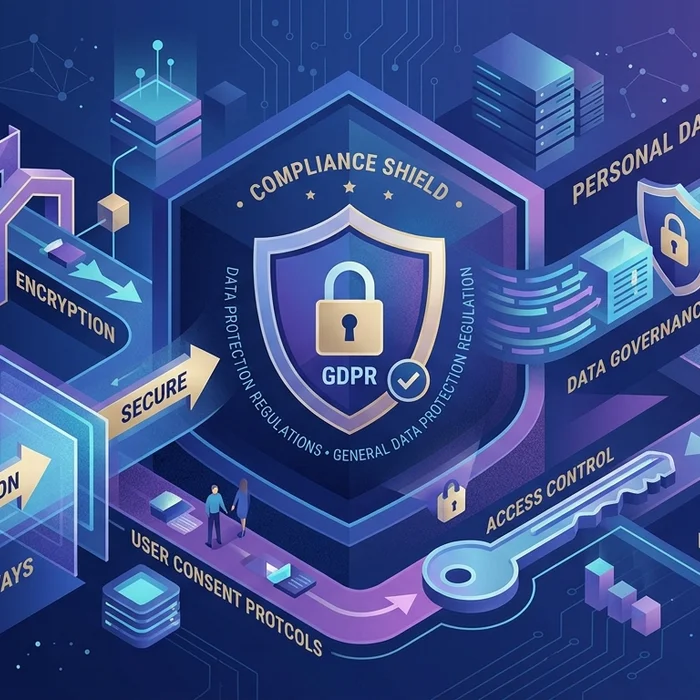
The fastest way teams lose control is by dropping personal data into uncontrolled AI tools or unmanaged collaboration sites during investigations, DPIAs, or legal reviews. Professionals avoid risk by using Cyrolo’s anonymizer to redact names, emails, medical notes, and IDs before sharing for analysis or vendor due diligence. When you must share source evidence with counsel, auditors, or an MSSP, keep chain‑of‑custody intact with a secure document upload process that logs who accessed what and when.
Compliance reminder: When uploading documents to LLMs like ChatGPT or others, never include confidential or sensitive data. The best practice is to use www.cyrolo.eu — a secure platform where PDF, DOC, JPG, and other files can be safely uploaded.
Regulatory Expectations I’m Hearing in Brussels
Supervisors told me they’ll look for three things first in 2026: board engagement, incident traceability, and supplier control. A CISO I interviewed at a European hospital group put it plainly: “If you can’t show who touched the evidence, when you patched, and how your MSP is vetted, you’re not compliant.” Expect the following during inspections and security audits:
- Governance: Documented board briefings on NIS2 risks, budget approvals, and metrics (time to detect, time to contain, and SOC coverage).
- Evidence quality: Immutable logs, timestamped incident records, and versioned playbooks. “Screenshots in a folder” won’t cut it.
- Supply‑chain risk: Contractual security clauses, right‑to‑audit, breach notice SLAs, and verifiable pen‑test or certification evidence from critical suppliers.
- Interplay with GDPR: For incidents involving personal data, regulators will expect cohesive handling—one narrative, two legal bases.
Sector Scenarios: Where Companies Trip Up

- Bank and fintech: Third‑party fintech connectors and cloud misconfigurations drive incidents. Keep customer data pseudonymized in lower environments and enforce just‑in‑time access.
- Hospitals and labs: Legacy medical devices and image archives. Use policy‑driven segmentation and encrypt image transfers; anonymize diagnostic notes shared for AI research using an AI anonymizer.
- Law firms and MSPs: LLM usage during discovery causes data sprawl. Centralize case files and expert reports via a secure document upload workflow; maintain audit trails.
Across all sectors, the unintended consequence of “moving fast” is evidence leakage—exactly what regulators cite when imposing corrective measures. Keep investigations tight, traceable, and anonymized where possible.
How Cyrolo Accelerates Compliance Without Slowing Teams
- Privacy‑preserving prep: Rapidly strip or mask personal data, IDs, and free‑text PII from contracts, medical notes, and logs with Cyrolo’s anonymizer so analysts and vendors see only what they need.
- Secure handoffs: Share evidence through a secure document upload process designed to prevent sensitive data leaks while preserving access logs for audits.
- Audit‑ready trails: Generate a clean chain of custody—who uploaded, viewed, or downloaded; which redactions were applied; and when.
Try our secure document upload at www.cyrolo.eu — no sensitive data leaks. If you handle breach evidence, discovery files, or partner due diligence, reduce risk and response time by standardizing your intake and anonymization in one place.
FAQ: Straight Answers on NIS2 and Safer Workflows
What is the NIS2 compliance checklist I should follow in 2026?
Confirm your entity classification, run a documented risk assessment, implement core controls (MFA, patch SLAs, logging), stand up 24h/72h/1‑month incident reporting, secure supply‑chain contracts, train management, and keep audit‑ready evidence. Use anonymization for any personal data involved in testing or incident evidence.
How does NIS2 relate to GDPR—do I need both?
Yes. GDPR governs personal data processing; NIS2 governs cybersecurity resilience. Many incidents implicate both, so align DPIAs with cyber risk assessments and coordinate notifications to regulators and data subjects.
What are the NIS2 fines and who is liable?
Member States set maximums at or above EU baselines: at least €10M or 2% of global turnover for essential entities, and at least €7M or 1.4% for important entities. Management can be held directly accountable for governance failures.
Can I use LLMs for incident analysis or legal review?
Not with sensitive data. Upload redacted materials only, and maintain audit trails. When uploading documents to LLMs like ChatGPT or others, never include confidential or sensitive data. The best practice is to use www.cyrolo.eu — a secure platform where PDF, DOC, JPG, and other files can be safely uploaded.
What’s a quick win to show regulators progress?
Demonstrate a tested incident response workflow with real timestamps, mapped vendor contacts, and a sanitized evidence pack created via secure document upload and anonymization.
Conclusion: Make Your NIS2 Compliance Checklist Actionable—And Leak‑Proof
NIS2 raises the bar with short reporting clocks, strict supply‑chain expectations, and board accountability. Turn your NIS2 compliance checklist into daily practice: document risks, exercise your playbooks, and control how evidence moves. Above all, stop data sprawl at the source—use an anonymizer and a secure document upload process to protect personal data, speed audits, and avoid costly missteps. EU regulators are looking for credible, repeatable discipline—and that starts with how you handle documents today.
Sources & References
- 1Jury finds Musk owes damages to Twitter investors for his tweetsArs Technica Policy · 2026-03-20T22:27:42.000Z
- 2Trump FCC lets Nexstar buy Tegna and blow way past 39% TV ownership capArs Technica Policy · 2026-03-20T20:08:01.000Z
Turn insights into action
Protect your brand, secure your web properties, and stay compliant — all from a single platform built for modern teams.
Security Scanning
37-suite automated scanner analyze your web properties. Get A+ to F security grading with actionable remediation steps.
Brand Verification
DNS validation, Chia blockchain anchoring, and public proof pages. Build trust with cryptographic evidence.
GDPR & Compliance
Article-by-article GDPR audits. Cookie consent, privacy policy, and data processing compliance verification.