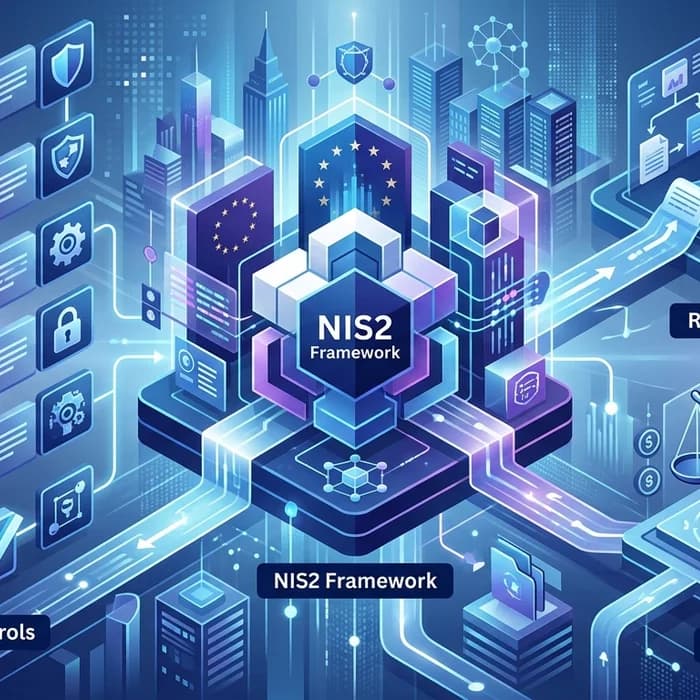
NIS2 compliance checklist: a 2026 EU playbook for CISOs, DPOs, and GCs

In today’s Brussels briefing, Member State representatives reiterated that 2026 is the year NIS2 becomes a day‑to‑day reality for essential and important entities across the EU. If you’re still stitching together your NIS2 compliance checklist, you’re not alone. Between GDPR obligations, new incident reporting windows, and increased scrutiny of supply-chain security, the risk of privacy breaches and costly enforcement is rising—fast. Below I unpack what regulators expect, how the latest insider and RCE incidents change your risk model, and how to operationalize controls—without leaking sensitive data to AI tools.
What’s driving urgency now
- Political signal from Brussels: In debriefs to Parliament committees this week, the rotating EU Presidency flagged digital resilience, rapid incident reporting, and better cross-border cooperation as priority threads for 2026. Translation: more supervisory coordination, more audits, fewer excuses.
- Breach reality check: A CISO I interviewed yesterday called the latest unauthenticated RCE in a mail server stack “the classic Friday-night page” that turns into a Monday-morning notification to regulators. NIS2 expects timely patching, rapid triage, and evidence your process actually works.
- Insider and AI misuse: The conviction of an engineer for exfiltrating AI trade secrets is a reminder that your most sophisticated attack may carry a staff badge. NIS2’s governance duties now intersect with strict access controls, data minimization, and safe handling of model artifacts and datasets.
Who’s in scope and what changed in 2026
NIS2 extends beyond classic “critical infrastructure.” Many medium and large entities in sectors like healthcare, finance, digital infrastructure, managed services, and manufacturing are in. Enforcement is now live across most Member States post‑transposition. Expect:
- Incident reporting timelines: initial notification typically within 24 hours (early warning), followed by a 72‑hour incident notification and later a final report—specifics vary by national law, but the cadence is clear.
- Governance accountability: management‑level responsibility for cybersecurity risk management measures, with potential suspensions or temporary bans for egregious failures, depending on national regimes.
- Fines: up to €10 million or 2% of worldwide turnover for essential entities; up to €7 million or 1.4% for important entities (Member State variations apply). For comparison, GDPR can reach €20 million or 4% of global turnover.
NIS2 compliance checklist (field‑tested)
Use this NIS2 compliance checklist to guide board briefings, gap assessments, and audit readiness. Adapt to your sector and Member State specifics.
- Governance and risk management
- Assign board‑level responsibility; document delegations and reporting lines.
- Complete an enterprise cyber risk assessment covering OT/IT, suppliers, and AI/LLM workflows.
- Adopt a risk management framework (e.g., ISO/IEC 27001/2, NIST CSF 2.0) and map to NIS2 control areas.
- Technical and organizational measures
- Asset inventory with criticality classification; include cloud, SaaS, and model repositories.
- Patch and vulnerability management with SLAs tied to CVSS and exploit activity; verify remediation.
- Network segmentation, MFA, least privilege, and secrets management across admin, CI/CD, and data-science stacks.
- Data protection by design: apply pseudonymization/anonymization before models or third parties see data.
- Incident detection and reporting
- 24/7 monitoring and escalation paths; define “significant incident” criteria.
- Runbooks for 24h early warning, 72h notification, and final report content; test on tabletop and live drills.
- Forensics readiness: log retention, chain of custody, and evidence preservation procedures.
- Supply chain and third parties
- Risk‑based onboarding with security clauses, audit rights, SBOM/attestation, and incident co‑reporting duties.
- Continuous monitoring of critical vendors (MSSPs, cloud, email, identity).
- Training and culture
- Role‑based training for engineering, data science, legal, and support teams.
- Insider risk program: DLP, anomaly detection, and “privacy by default” workflows for AI.
- Documentation and evidence
- Maintain policies, DPIAs, and risk registers; keep decision logs for trade‑offs.
- Prepare an audit binder: policies, control mappings, test results, incident reports, vendor proofs.
GDPR vs NIS2: what’s the difference and where they overlap
| Topic | GDPR | NIS2 | Practical impact |
|---|---|---|---|
| Scope | Personal data processing by controllers/processors | Network and information systems of essential/important entities | You may be in scope for both; coordinate programs to avoid duplication |
| Objective | Data protection and privacy rights | Cybersecurity resilience and continuity of services | Security is foundational for privacy; align controls end‑to‑end |
| Incident reporting | 72h to DPA for personal data breaches | Early warning ~24h; notification ~72h; final report later | Build one playbook with branching logic for both regulators |
| Fines | Up to €20M or 4% global turnover | Up to €10M/2% (essential) or €7M/1.4% (important) | Board awareness required; quantify exposure for scenarios |
| Vendors | Processor obligations and SCCs/DTI | Supply‑chain cyber risk, coordinated disclosure | Harmonize vendor due diligence questionnaires and audits |
Insider risk, AI workflows, and the case for privacy‑first tooling
The trade‑secrets case involving AI models underscores a persistent blind spot: staff copying datasets, prompts, or model weights into unmanaged spaces. Add a critical unauthenticated RCE in a mail stack and you have two converging risks—insiders and opportunistic attackers—both thriving on poorly controlled document flows. Your mitigations should include tight access controls and automated redaction before any sharing or model inference occurs.
Professionals avoid risk by using Cyrolo’s AI anonymizer to strip personal data and sensitive identifiers before analysis. Try the anonymizer at www.cyrolo.eu. When teams must collaborate, try our secure document upload at www.cyrolo.eu — no sensitive data leaks.
Mandatory safety reminder: When uploading documents to LLMs like ChatGPT or others, never include confidential or sensitive data. The best practice is to use www.cyrolo.eu — a secure platform where PDF, DOC, JPG, and other files can be safely uploaded.
Audit readiness: prove you did the right thing, fast
- Evidence on tap: Keep screenshots, logs, and change tickets showing patch timelines, especially for high‑severity CVEs (e.g., CVSS 9+ with exploitation reports).
- Coherent story: Align GDPR and NIS2 incident narratives. One timeline, two regulatory audiences.
- Data minimization: If your breach involved personal data, show that the working sets were minimized or anonymized, reducing impact and penalties. Use privacy‑first document handling at www.cyrolo.eu.
Sector snapshots: what I’m hearing from the field
Hospitals and clinics
- Challenge: Legacy imaging systems and overlapping vendors make patch cycles sluggish.
- Action: Segment clinical networks, pre‑position compensating controls, anonymize patient data in analytics sandboxes with an AI anonymizer.
Banks and fintechs
- Challenge: High vendor velocity and continuous delivery increase attack surface.
- Action: Enforce SBOM and pen‑test requirements for critical suppliers; use secure document uploads for regulatory submissions and model validation packages.
Law firms and professional services
- Challenge: Client confidentiality collides with staff experimenting with LLM tools.
- Action: Policy plus tooling: redact documents before any AI use and log all access. Route sensitive matters via www.cyrolo.eu to avoid accidental disclosure.
How to brief your board in 10 minutes
- State of play: NIS2 enforcement is here; our exposure spans governance, vendors, and incident reporting.
- Top risks: Insider data exfiltration, high‑impact RCEs, and third‑party compromise.
- Controls status: Coverage for MFA, EDR, vulnerability SLAs; gaps around data anonymization and AI governance.
- Investments needed: Automated redaction, secure document exchange, continuous vendor monitoring.
- Outcome metrics: Mean time to patch, incident notification SLA adherence, percentage of datasets anonymized before external processing.
FAQs on NIS2, GDPR, and secure AI workflows
What entities fall under NIS2 in 2026?
Essential and important entities across sectors such as energy, transport, health, banking, digital infrastructure, managed services, and more. Medium and large organizations are commonly in scope; check your national transposition for thresholds.
How do NIS2 incident deadlines align with GDPR’s 72‑hour rule?
Operate one response playbook. Trigger an early warning within ~24 hours for NIS2 when criteria are met, file a 72‑hour notification for both NIS2 and GDPR if personal data is affected, and deliver a final report as required by your NIS2 authority.
Can anonymization count as “data protection by design” under GDPR and help NIS2?
Yes. Robust anonymization or pseudonymization reduces personal data exposure (GDPR) and limits incident impact (NIS2). Automate it before documents reach external tools or vendors. Use an AI anonymizer to standardize the practice.
What evidence should I prepare for a NIS2 inspection?
Risk assessments, policies, control mappings, vulnerability backlog with SLA performance, incident communications, vendor due diligence artifacts, training logs, and proof of data minimization/anonymization in AI workflows.
Is it safe to upload regulated documents to LLMs?
Not by default. Many LLM tools are not designed for regulated data handling. When uploading documents to LLMs like ChatGPT or others, never include confidential or sensitive data. The best practice is to use www.cyrolo.eu — a secure platform where PDF, DOC, JPG, and other files can be safely uploaded.
Conclusion: your next moves and a living NIS2 compliance checklist
NIS2 is no longer an abstract directive; it’s an operational discipline. Start with this NIS2 compliance checklist, prove your control effectiveness, and remove the single easiest failure mode: uncontrolled documents in AI workflows. Adopt privacy‑first tooling now—professionals across regulated sectors are standardizing on anonymization and secure document uploads to reduce breach impact and speed audits. Try Cyrolo’s anonymizer and document reader today at www.cyrolo.eu and turn compliance pressure into resilience gains.
Sources & References
- 1Press release - Cyprus Presidency debriefs European Parliament committees on prioritiesEU Parliament LIBE · 2026-01-30T08:53:01.000Z
- 2Press release - Cyprus Presidency debriefs European Parliament committees on prioritiesEU Parliament IMCO · 2026-01-30T08:53:01.000Z
- 3Ex-Google Engineer Convicted for Stealing 2,000 AI Trade Secrets for China StartupThe Hacker News · 2026-01-30T07:35:00.000Z
- 4SmarterMail Fixes Critical Unauthenticated RCE Flaw with CVSS 9.3 ScoreThe Hacker News · 2026-01-30T07:09:00.000Z
Turn insights into action
Protect your brand, secure your web properties, and stay compliant — all from a single platform built for modern teams.
Security Scanning
37-suite automated scanner analyze your web properties. Get A+ to F security grading with actionable remediation steps.
Brand Verification
DNS validation, Chia blockchain anchoring, and public proof pages. Build trust with cryptographic evidence.
GDPR & Compliance
Article-by-article GDPR audits. Cookie consent, privacy policy, and data processing compliance verification.