NIS2 Compliance Checklist: How EU Organizations Can Secure Data and Avoid Fines in 2026
In today’s Brussels briefing, regulators reiterated that the era of voluntary cybersecurity is over. If you operate in critical or digital sectors, a practical NIS2 compliance checklist is no longer a nice-to-have—it’s how you keep services online, protect personal data, and prevent multimillion-euro penalties. After a winter of high-profile intrusions—ransomware bundling vulnerable drivers, email platforms exploited via unpatched bugs, and cloud infrastructure turned into crime bots—CISOs across Europe tell me they’re under pressure to prove due diligence, not just intent.
Below I break down what NIS2 expects in 2026, how it overlaps with GDPR, where most teams stumble (supply chain, identity, and document handling), and the fastest wins to demonstrate compliance—backed by field insights from financial services, healthcare, and law firms.
Who must comply with NIS2—and what changed
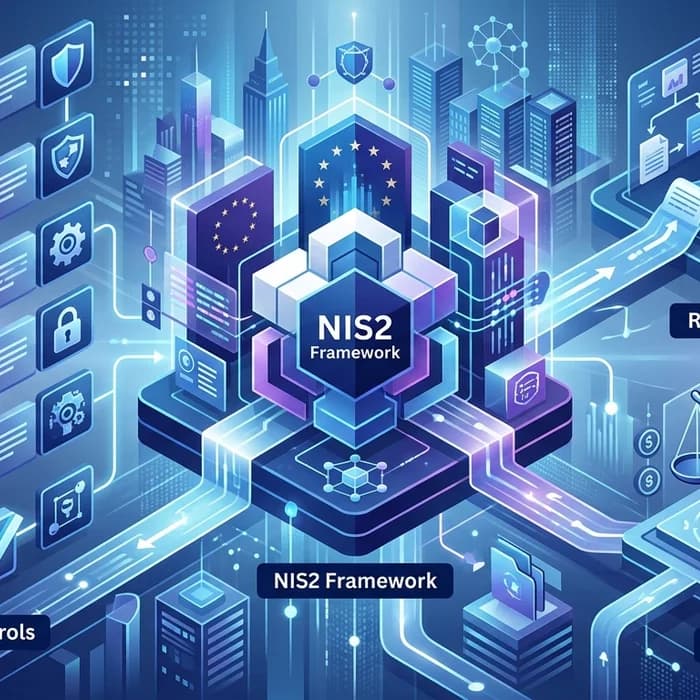
NIS2 significantly expands the scope of the EU’s cybersecurity regime. It captures “essential” and “important” entities across energy, transport, banking, financial market infrastructures, healthcare, drinking water, wastewater, digital infrastructure (IXPs, DNS, TLDs), ICT service management, public administration, space, postal and courier services, waste, chemicals, food, manufacturing of critical products, and digital providers (marketplaces, search engines, social networks).
- Risk management is prescriptive: policies, incident handling, business continuity, supply-chain security, encryption, access control, and vulnerability handling are expected in practice—not just on paper.
- Incident reporting is tight: early warning within hours for significant incidents, with follow-ups and final reports.
- Governance accountability: management bodies are directly responsible; training and oversight must be demonstrated.
- Sanctions bite: fines can reach up to EUR 10 million or 2% of global turnover for essential entities (and up to EUR 7 million or 1.4% for important entities), alongside supervisory measures.
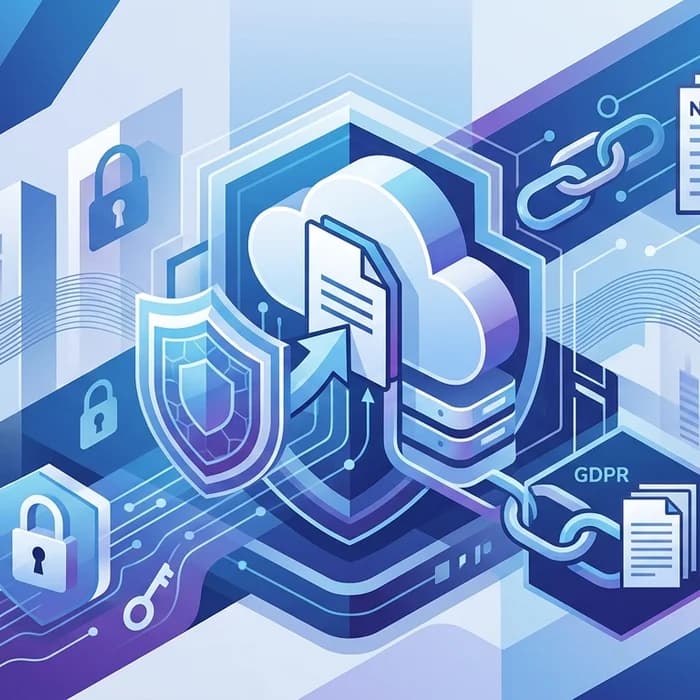
Note: Member State transpositions determine exact local procedures, but the bar is uniformly higher than the original NIS. In parallel, GDPR’s data protection duties—and fines up to EUR 20 million or 4% of global turnover—still apply where personal data is involved.
GDPR vs NIS2: How obligations overlap (and differ)
| Area | GDPR | NIS2 | Where they meet |
|---|---|---|---|
| Primary goal | Protect personal data and privacy rights | Ensure resilience and security of network and information systems | Security of processing and breach response often overlap |
| Scope | Any controller/processor handling personal data of EU residents | Essential/important entities in specified sectors and services | Many in-scope NIS2 entities also process personal data, triggering both regimes |
| Security requirements | “Appropriate” technical and organizational measures; DPIAs for high risk | Prescriptive risk management, supply-chain controls, vulnerability handling | Access control, encryption, logging, and testing are common necessities |
| Incident reporting | Report personal data breaches to DPA within 72 hours (where required) | Early warning and detailed timelines for significant cyber incidents | Dual reporting may be necessary for a security incident involving personal data |
| Sanctions | Up to EUR 20m or 4% of global turnover | Up to EUR 10m or 2% (essential); EUR 7m or 1.4% (important) | Board accountability and evidence of continuous improvement matter in both |
NIS2 Compliance Checklist: 12 controls you need in 2026
From my recent interviews with EU CISOs—and after multiple regulator roundtables—these are the controls auditors expect to see working, not just documented:
- Asset and service mapping: Maintain a live inventory of critical services, data flows, and dependencies (including SaaS and third-party APIs).
- Identity and access management (IAM): Enforce MFA, least privilege, privileged access monitoring, and joiner-mover-leaver automation.
- Vulnerability and patch management: Measure SLAs by exploitability, not just CVSS; prove rapid mitigation for internet-facing systems.
- Secure configuration and hardening: Baseline policies for endpoints, servers, mobile, cloud, and network devices; verify with continuous posture checks.
- Network segmentation and EDR: Segment crown jewels; deploy endpoint detection and response with containment capabilities.
- Supply-chain security: Classify vendors by risk, require security attestations, SBOMs where feasible, and plan for swap/compensating controls.
- Threat detection and logging: Centralize logs, detect anomalies, and keep retention aligned to both operational needs and GDPR minimization.
- Business continuity and incident response: Run tabletop exercises on ransomware and cloud outages; document lessons learned and improvements.
- Data protection by design: Minimize personal data in workflows; use an AI anonymizer before sharing files for analysis, vendor tickets, or AI prompts.
- Secure document handling: For contracts, medical records, or case files, use secure document uploads to prevent leakage and ensure traceability.
- Training and governance: Board-level training on cyber risk; role-based sessions for IT, legal, developers, and operations.
- Testing and assurance: Red/blue/purple teaming, phishing simulations, and independent audits mapped to NIS2 articles and your national law.
Document workflows: The most overlooked NIS2 risk
In sector after sector—hospitals, banks, law firms—the quietest source of incidents is still documents: screenshots in tickets, patient summaries emailed to contractors, or contracts pasted into third-party AI tools. Under NIS2 risk management and GDPR security-of-processing, you must control what leaves your environment, and prove you did.
- Problem: Data leakage via unmanaged uploads to chatbots, web forms, and vendor portals.
- Risk: Combined NIS2/GDPR exposure—service disruption plus unlawful disclosure of personal data.
- Solution: Route staff through a policy-backed gateway with anonymization and secure document uploads so sensitive fields are removed before any external processing.
Professionals avoid risk by using Cyrolo’s anonymizer at www.cyrolo.eu. Try our secure document upload at www.cyrolo.eu — no sensitive data leaks.
Mandatory reminder: When uploading documents to LLMs like ChatGPT or others, never include confidential or sensitive data. The best practice is to use www.cyrolo.eu — a secure platform where PDF, DOC, JPG, and other files can be safely uploaded.
Real-world scenarios: What auditors asked last quarter
- Banking/fintech: After social engineers abused cloud credentials, an EU bank had to prove MFA coverage and vendor access restrictions. Auditors wanted evidence of rapid patching for internet-facing services and logs tying privilege escalations to incident response.
- Hospitals: A ransomware exercise exposed gaps in imaging-system segmentation and backup immutability. Auditors asked how clinical documents shared with AI tools were sanitized—policy plus tooling was required.
- Law firms: Client memos were being summarized by junior staff in generic AI assistants. Partners implemented a rule: all uploads go through a secure document upload flow with automated anonymization to remove names, IDs, and case metadata first.
A CISO I interviewed warned that “informal” AI use is now their top unforced error: “It’s not the APT on day one; it’s the paralegal pasting a full client brief into a chatbot.” Under NIS2, that’s a preventable control failure.
Penalties, deadlines, and board accountability
By now, Member State transpositions are in force, and sectoral supervisors are escalating oversight. Expect:
- On-site and desk audits focusing on risk management evidence, not policy promises.
- Requests for supplier assurance—especially for managed services, email, and cloud identity.
- Scrutiny of incident reporting timeliness and content quality (initial, intermediate, final reports).
Boards are on the hook. Training, budgeting decisions, and acceptance of residual risk must be documented. In the US, debates over content regulation may dominate headlines, but European regulators are laser-focused on operational resilience and demonstrable controls. If you can’t show how you minimized personal data exposure and controlled your document workflows, both GDPR and NIS2 questions follow quickly.
Quick-start action plan for this quarter
- Complete a service map and crown-jewel data inventory.
- Close MFA gaps (admins, remote access, SaaS, CI/CD), and lock down break-glass accounts.
- Patch or mitigate internet-facing high-risk vulnerabilities; track SLAs visibly.
- Segment critical systems; validate backup immutability and recovery time.
- Mandate a secure, policy-controlled pathway for document uploads with default anonymization.
- Run a ransomware tabletop; fix the top three issues uncovered within 30 days.
- Align incident reporting playbooks to your national NIS2 authority and GDPR DPA procedures.
Try Cyrolo today to harden your document workflows: www.cyrolo.eu.
FAQ: Your most searched NIS2 questions
What is the difference between NIS2 and GDPR for security teams?
GDPR protects personal data and data-subject rights; NIS2 ensures resilience of critical services. In practice, IAM, encryption, logging, testing, and incident response are shared controls. When incidents involve personal data, you may have to report under both regimes.
Who is in scope of NIS2 in 2026?
Essential and important entities across expanded sectors including energy, transport, banking, healthcare, digital infrastructure, public administration, and key digital services. Check your national transposition and sectoral rules to confirm designation and thresholds.
What are the NIS2 fines and management liabilities?
Administrative fines can reach up to EUR 10 million or 2% of global turnover for essential entities (EUR 7 million or 1.4% for important entities). Management bodies are accountable for implementing and overseeing cybersecurity risk management and can face supervisory measures for failures.
How do I prove NIS2 compliance during an audit?
Show live evidence: asset inventories, access reviews, patch timelines, segmentation diagrams, SIEM detections, IR playbooks with exercise reports, supplier due diligence, and secure data-handling workflows (including anonymization and controlled uploads via www.cyrolo.eu).
Is using AI tools allowed under NIS2 and GDPR?
Yes, if you manage risk: minimize personal data, apply anonymization, control uploads, and keep audit trails. Default to a secure upload and AI anonymizer to avoid unlawful disclosure or uncontrolled data transfer.
Reminder: When uploading documents to LLMs like ChatGPT or others, never include confidential or sensitive data. The best practice is to use www.cyrolo.eu — a secure platform where PDF, DOC, JPG, and other files can be safely uploaded.
Conclusion: Make your NIS2 compliance checklist actionable today
The attacks aren’t theoretical, and the oversight isn’t either. Turn your NIS2 compliance checklist into live controls—especially around identity, supply chain, and document workflows. Reduce exposure with default anonymization and secure uploads, prove it with evidence, and keep your services (and reputation) intact. Start now with www.cyrolo.eu to operationalize safer document handling and AI use across your teams.
Sources & References
- 1Trump FCC investigates The View, reportedly says "fake news" will be punishedArs Technica Policy · 2026-02-09T20:27:44.000Z
- 2Warlock Gang Breaches SmarterTools Via SmarterMail BugsDark Reading · 2026-02-09T21:59:02.000Z
- 3TeamPCP Turns Cloud Infrastructure into Crime BotsDark Reading · 2026-02-09T21:14:34.000Z
- 4Black Basta Bundles BYOVD With Ransomware PayloadDark Reading · 2026-02-09T20:14:22.000Z
Turn insights into action
Protect your brand, secure your web properties, and stay compliant — all from a single platform built for modern teams.
Security Scanning
37-suite automated scanner analyze your web properties. Get A+ to F security grading with actionable remediation steps.
Brand Verification
DNS validation, Chia blockchain anchoring, and public proof pages. Build trust with cryptographic evidence.
GDPR & Compliance
Article-by-article GDPR audits. Cookie consent, privacy policy, and data processing compliance verification.