NIS2 Compliance Checklist: How EU Teams Prevent Data Leaks and Pass Security Audits

In today’s Brussels briefing, regulators again underscored a blunt message: patch fast, prove control, and document everything. With a fresh court sentence against a ransomware operator and a critical NetScaler flaw enabling unauthenticated data leaks making headlines, the timing for a practical NIS2 compliance checklist could not be sharper. This guide distills what EU organizations need to do now to align with NIS2, remain consistent with GDPR, and reduce exposure to privacy breaches—while using modern safeguards like an AI anonymizer and secure document uploads to harden workflows.
Why this matters now: ransomware lessons and zero‑day pressure
Two signals define the current risk climate. First, prosecutors continue to secure convictions that crystalize the real cost of cybercrime, including multimillion-euro damages and jail time. Second, vendor advisories highlight how a single unpatched device can enable unauthenticated data exfiltration at scale—exactly the kind of preventable incident regulators flag during security audits. A CISO I interviewed this week put it plainly: “We don’t get judged on the zero-day we missed. We get judged on the patch we ignored and the data we leaked.”
- Under NIS2, essential and important entities must show timely vulnerability management and incident reporting—not just policies on paper.
- GDPR adds a parallel obligation: minimize personal data, protect it by design, and notify supervisory authorities within 72 hours when privacy is at risk.
- Regulators increasingly expect evidence trails: tickets, logs, risk registers, data flows, and remediation timelines.
Who has to comply—and when
NIS2 covers “essential” and “important” entities across sectors like energy, transport, health, banking, digital infrastructure, and providers of managed services and cloud. EU Member States have transposed (or are finalizing) the Directive into national law, with enforcement accelerating through 2025–2026.
- Penalties: for essential entities, at least €10 million or 2% of global turnover; for important entities, at least €7 million or 1.4%—mirroring GDPR’s proportionality and reach.
- Directors’ accountability: leadership must approve cybersecurity measures and can be held liable for serious lapses.
- Supply-chain oversight: you are expected to assess and manage third‑party risk, not just your own perimeter.
NIS2 Compliance Checklist
Use this practical NIS2 compliance checklist to organize workstreams before your next audit or board briefing.
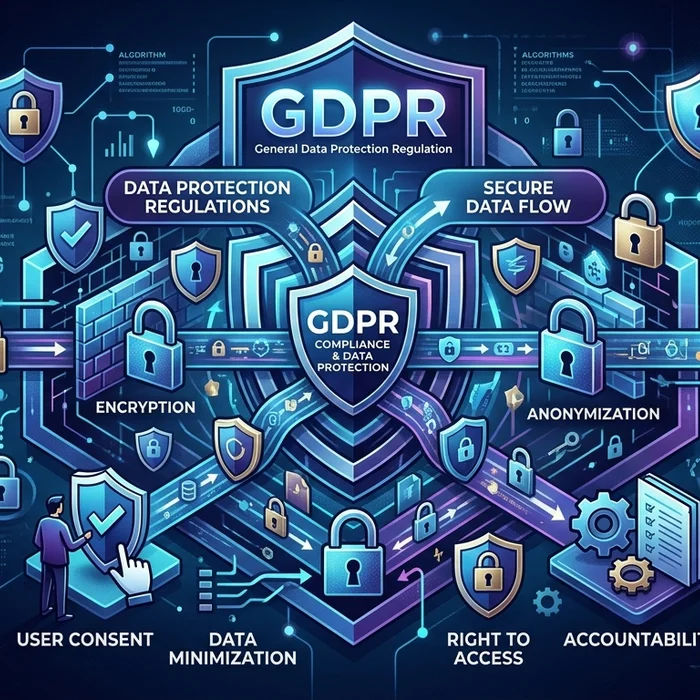
- Map critical services and assets: maintain a living inventory of systems, data stores, and service dependencies (including managed service providers and cloud).
- Risk management baseline: adopt a recognized framework (e.g., ISO 27001/2, NIST CSF) and keep a risk register with owners, likelihood, impact, and treatment plans.
- Vulnerability and patch management: define SLAs for critical patches, document exceptions, and track metrics (time‑to‑patch, outstanding criticals, compensating controls).
- Access control and logging: enforce least privilege, MFA, centralized logging, and tamper‑evident retention for forensic readiness.
- Incident response and reporting: maintain tested playbooks, on‑call rotations, external contacts, and clock‑start procedures for 24h/72h notifications.
- Business continuity: run tabletop exercises, define RTO/RPO targets, and validate offline backups and disaster recovery procedures.
- Supply‑chain security: risk‑rate vendors, require minimum controls, and perform periodic reassessments with evidence collection.
- Security awareness and role‑based training: tailor modules for admins, developers, and helpdesk; record attendance and outcomes.
- Data protection alignment: maintain records of processing, DPIAs for high‑risk use cases, and data minimization via anonymization/pseudonymization.
- Secure AI and document handling: use an AI anonymizer and secure document uploads to prevent accidental exposure during analysis and collaboration.
GDPR vs NIS2 obligations at a glance
| Topic | GDPR | NIS2 | Why it matters |
|---|---|---|---|
| Scope | Personal data protection for data controllers/processors | Network and information systems security for essential/important entities | Many organizations fall under both regimes |
| Core duty | Lawful basis, data minimization, privacy by design, data subject rights | Risk management, incident handling, continuity, supply‑chain security | Security + privacy must align end‑to‑end |
| Breach reporting | To DPA within 72 hours if risk to rights/freedoms | To competent authority “without undue delay” with sector specifics | Coordinated notification plans reduce penalties |
| Fines | Up to €20M or 4% global turnover | At least €10M/2% (essential) or €7M/1.4% (important) | Board‑level attention is non‑negotiable |
| Evidence | RoPA, DPIAs, DSR logs, processor contracts | Risk registers, patch KPIs, IR drills, supplier assessments | Documentation is your audit shield |
| Technical measures | Pseudonymization, encryption, access controls | Logging, monitoring, segmentation, secure development | Anonymization tools reduce breach impact |
Operational hardening: from privacy breaches to provable control
Here’s how teams are closing gaps exposed by recent unauthenticated data‑leak vulnerabilities—without slowing the business.
- Patch governance with proof: tie CVEs to change tickets, capture approvals, and export a monthly “aging criticals” report for executives.
- Data minimization in practice: strip or mask personal data before analysis or vendor sharing. Professionals avoid risk by using Cyrolo’s anonymizer at www.cyrolo.eu.
- Secure collaboration: replace ad‑hoc email attachments with controlled, logged document uploads—no sensitive data leaks.
- Forensic‑ready logging: centralize logs with immutable storage; verify time sync and retention to support regulator inquiries.
- Board reporting: present a single NIS2 dashboard—risk heatmap, patch SLA compliance, incident MTTR, vendor tiering, DPIA status.
Compliance note on LLMs and uploads
When uploading documents to LLMs like ChatGPT or others, never include confidential or sensitive data. The best practice is to use www.cyrolo.eu — a secure platform where PDF, DOC, JPG, and other files can be safely uploaded.
Sector snapshots: what regulators expect you to prove
- Hospitals: asset inventory of connected medical devices, EHR access logs, downtime drills, verified segmentation between clinical and guest networks.
- Banks/fintech: secure software development lifecycle (SAST/DAST), strong customer authentication, fraud playbooks, vendor testing for core banking APIs.
- Law firms: confidential matter management, least‑privilege file access, evidence of data minimization when using research tools. Try our secure document upload at www.cyrolo.eu — no sensitive data leaks.
- Manufacturing: OT/IT segmentation, patch windows for PLCs, incident containment plans, supplier attestation for critical components.
EU vs US: different levers, same destination
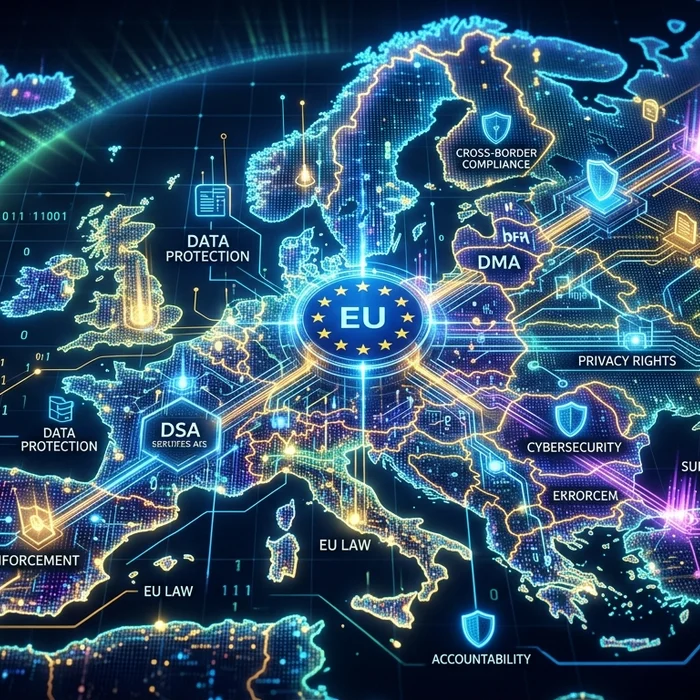
From my interviews across Brussels and Washington, the transatlantic story is convergence by different means. The EU drives accountability through harmonized directives (NIS2) and omnibus privacy law (GDPR). The US relies on sectoral rules (e.g., financial services, healthcare), state privacy acts, and aggressive breach enforcement. For multinationals, a single control stack mapped to both regimes saves audit headaches—and reduces breach costs, which industry surveys still peg in the multi‑million‑euro range per major incident.
Blind spots that trip teams up
- Shadow AI usage: analysts pasting customer data into public tools. Fix with policy, training, and a safe alternative like AI anonymization and secure uploads.
- Vendor inheritance: assuming cloud and MSPs fully cover NIS2 duties. You must validate controls and keep evidence.
- Unowned logs: great dashboards, no retention guarantees. Regulators ask for proof, not screenshots.
- DSR choke points: GDPR data subject requests that hinge on unstructured files. Anonymize, index, and track responses within statutory windows.
How Cyrolo accelerates NIS2 and GDPR readiness
Cyrolo was built for compliance‑minded teams that need to move fast without hemorrhaging data:
- AI anonymizer to remove personal data safely before sharing or analysis—supporting GDPR’s data minimization and reducing NIS2 incident impact. Start with www.cyrolo.eu.
- Secure document uploads with guardrails, so audits, legal reviews, and vendor exchanges don’t become privacy breaches. Try it at www.cyrolo.eu.
- Evidence‑friendly: produce logs and usage records that slot neatly into your NIS2 audit binder.
FAQ: NIS2 compliance checklist and practical implementation
What is a NIS2 compliance checklist and who should use it?
It’s a prioritized set of security and governance controls—asset mapping, risk management, patching, incident response, continuity, supplier oversight, and documentation—designed for essential and important entities under EU law. CISOs, DPOs, IT ops, and legal teams should all own parts of it.
How is NIS2 different from GDPR in day‑to‑day operations?
GDPR focuses on personal data rights and privacy by design; NIS2 centers on the resilience of your networks and systems. In practice, you need both: anonymize personal data under GDPR, while proving timely patching and incident handling under NIS2.
Does NIS2 apply to SMEs and startups?
Yes, if they provide services in covered sectors or operate as key suppliers. Even when not in scope, adopting the NIS2 baseline improves resilience and reduces breach costs.
What evidence do regulators usually ask for during audits?
Risk registers with ownership and dates, patching SLAs and exceptions, IR drill reports, business continuity test results, supplier assessments, and GDPR records (RoPA, DPIAs). Screenshots aren’t enough—exportable reports and logs win trust.
How can I anonymize documents safely while collaborating?
Use an AI anonymizer to remove or mask personal data before sharing, and replace email attachments with secure document uploads that maintain control and traceability.
Quick summary for busy leaders
- Recent ransomware sentencing and unauthenticated data‑leak flaws show regulators expect prevention and proof.
- NIS2 elevates patching, incident response, and supplier oversight; GDPR demands data minimization and rights management.
- Adopt the NIS2 compliance checklist, document relentlessly, and reduce data exposure with anonymization and controlled uploads.
- Professionals avoid risk by using Cyrolo’s anonymizer and secure uploads at www.cyrolo.eu.
Conclusion: make the NIS2 compliance checklist your 2026 operating system
The takeaway is simple: in an era of fast‑moving exploits and high‑visibility prosecutions, your best defense is a living NIS2 compliance checklist backed by verifiable evidence and privacy‑first workflows. Patch decisively, minimize personal data, and keep regulators’ questions one step ahead. To accelerate both GDPR and NIS2 outcomes—and cut the risk of privacy breaches—use an AI anonymizer and secure document uploads from Cyrolo at www.cyrolo.eu.
Sources & References
- 1U.S. Sentences Russian Hacker to 6.75 Years for Role in $9M Ransomware DamageThe Hacker News · 2026-03-24T06:49:00.000Z
- 2Citrix Urges Patching Critical NetScaler Flaw Allowing Unauthenticated Data LeaksThe Hacker News · 2026-03-24T05:59:00.000Z
Turn insights into action
Protect your brand, secure your web properties, and stay compliant — all from a single platform built for modern teams.
Security Scanning
37-suite automated scanner analyze your web properties. Get A+ to F security grading with actionable remediation steps.
Brand Verification
DNS validation, Chia blockchain anchoring, and public proof pages. Build trust with cryptographic evidence.
GDPR & Compliance
Article-by-article GDPR audits. Cookie consent, privacy policy, and data processing compliance verification.