NIS2 compliance in 2025: A field guide for EU security leaders, legal teams, and CISOs
As the EU tightens oversight on essential and important entities, NIS2 compliance has moved from a policy headline to a board-level mandate. In Brussels this week, lawmakers preparing for the Eurojust evaluation highlighted cross‑border incident response gaps, hours after European CISOs were still digesting news of a record multi‑terabit DDoS wave driven by a new botnet. The signal is unmistakable: the EU expects measurable resilience, fast reporting, and disciplined data handling—backed by fines that now rival GDPR.
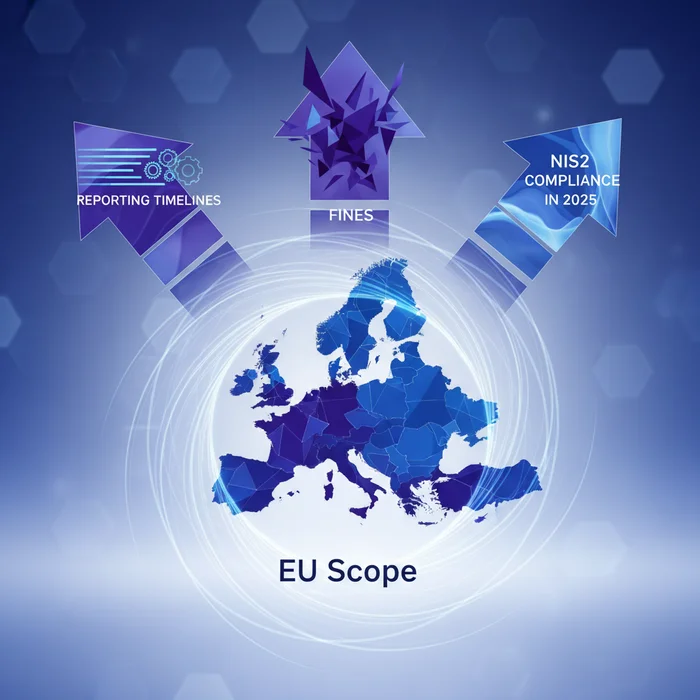
Why NIS2 compliance matters now
In today’s Brussels briefing ahead of the LIBE Committee’s interparliamentary review of Eurojust’s activities, regulators emphasized two priorities: cross‑border cooperation and verifiable cyber resilience. That message lands in a week when a European hyperscale provider disclosed mitigation of a 5.72 Tbps DDoS attack linked to a fast‑moving botnet—an attack profile that could knock hospitals offline, disrupt fintech payments, or stall casework at law firms.
Under NIS2, those scenarios are no longer “black swan” hypotheticals—they are test cases for your incident reporting clock, your supplier oversight, and your executive accountability. A CISO I interviewed put it bluntly: “If you can’t prove you can withstand a DDoS, contain a breach, and notify within 24 hours, you’re one audit away from a fine.”
Who is in scope under NIS2?
- Essential entities: energy, transport, banking, financial market infrastructures, health, drinking water, digital infrastructure (IXPs, DNS, TLDs), public administration in-scope, and space.
- Important entities: postal/courier, waste management, chemicals, food, manufacturing of critical products, digital providers (cloud, data centers, online marketplaces, search engines, social networking), and R&D in certain critical areas.
- Size-cap rule: Most medium (≥50 employees/€10M turnover) and large entities are covered; smaller firms may still be in scope if they are critical to society/economy or part of a critical supply chain.
Member States were required to transpose NIS2 by 18 October 2024. Through 2025, national regulators will ramp up inspections, with penalties up to €10 million or 2% of global turnover for essential entities (and slightly lower ceilings for important entities). Directors can be held personally accountable for oversight failures.
GDPR vs NIS2: what’s really different?
Security and privacy teams often ask whether GDPR compliance already “covers” NIS2. Short answer: no—there’s overlap on security controls and breach handling, but scope and objectives differ. Use the comparison below to brief your board and allocate budgets.
| Area | GDPR | NIS2 |
|---|---|---|
| Primary objective | Protect personal data and privacy rights | Ensure cybersecurity and operational resilience of essential/important services |
| Scope | Any controller/processor handling personal data | Sectoral entities (essential/important), regardless of whether personal data is involved |
| Incident trigger | Personal data breach | Any significant incident affecting service continuity, confidentiality, integrity, or availability |
| Reporting timelines | 72 hours to data protection authority if risk to rights and freedoms | Early warning within 24 hours; a more detailed report within 72 hours; final report within 1 month |
| Supplier oversight | Due diligence where processors handle personal data | Mandatory risk-based supply chain security across ICT/operational suppliers |
| Governance | DPO and privacy governance | Executive accountability, mandatory risk management measures, potential audits and onsite inspections |
| Fines (upper bound) | Up to €20M or 4% global turnover | Up to €10M or 2% (essential) / lower for important entities, plus supervisory measures |
NIS2 compliance: your 12‑point checklist
- Map critical services and assets: identify essential functions, data flows, dependencies, and single points of failure.
- Classify incidents: define “significant” thresholds to trigger 24h early warnings and 72h reports.
- Risk management program: implement policies for asset management, access control, patching, network segmentation, and backup/restore.
- DDoS resilience: validate capacity with realistic tests; ensure scrubbing, autoscaling, and upstream coordination.
- Identity and access: enforce MFA, least privilege, privileged access management, and continuous monitoring.
- Vulnerability management: maintain inventories, SLAs, and evidence of timely remediation.
- Incident response runbooks: include clock-start criteria, legal review, regulator templates, and cross-border escalation paths.
- Supply chain security: assess critical vendors, require attestations, test failover, and prepare substitution plans.
- Logging and evidence: centralize logs, preserve forensic artifacts, and protect chain of custody (key for Eurojust-coordinated cases).
- Business continuity: test restoration time objectives; validate offsite and offline backups.
- Training and exercises: run executive tabletop drills with 24h/72h/1‑month reporting milestones.
- Data minimization and anonymization: reduce exposure in tickets, logs, and knowledge bases to limit privacy breaches.
From policy to practice: tools that cut breach and fine risk
Most NIS2 failures I see in audits trace back to uncontrolled data flows: screenshots with personal data dropped into tickets, contracts emailed for AI summarization, or logs stuffed with identifiers. Two quick wins:
- Use an AI anonymizer to strip personal data from documents, screenshots, and log snippets before sharing them with vendors, auditors, or AI assistants. Professionals avoid risk by using Cyrolo's anonymizer at www.cyrolo.eu.
- Consolidate secure document uploads for investigations and audits so teams don’t email files or paste content into uncontrolled tools. Try our secure document upload at www.cyrolo.eu — no sensitive data leaks.
Compliance note: When uploading documents to LLMs like ChatGPT or others, never include confidential or sensitive data. The best practice is to use www.cyrolo.eu — a secure platform where PDF, DOC, JPG, and other files can be safely uploaded.
Incident reporting and audits: what regulators expect
NIS2 formalizes a cadence that many teams haven’t rehearsed under live fire:
- Within 24 hours: early warning to your competent authority if a significant incident is suspected—share basic facts, impact, and cross‑border effects.
- Within 72 hours: an update with indicators of compromise, root-cause hypothesis, mitigation steps, and preliminary service impact.
- Within 1 month: a final report with validated root cause, remediation, lessons learned, and plans to prevent recurrence.
Auditors will ask for evidence. Keep playbooks, call trees, regulator contact kits, and templated reports ready. In cross‑border cases, expect tighter coordination with judicial bodies—Eurojust’s evaluation underscores the EU’s focus on shared evidence standards and timelines. That means your logging, hashing, and chain‑of‑custody practices are not “nice to have”; they’re essential.
Sector snapshots: what “good” looks like
Hospitals
- Segment clinical networks; maintain offline backups; pre-approve emergency change windows.
- Anonymize radiology images and discharge notes before AI triage or contractor review using anonymization.
Banks and fintechs
- Integrate DDoS scrubbing with fraud detection; rehearse payment rail failover.
- Control AI-assisted contract analysis via secure document uploads to avoid privacy breaches in third‑party tools.
Law firms and public authorities
- Use standardized evidence intake with tamper-evident logs.
- Minimize personal data in matter files shared with external counsel or expert systems through AI anonymizer workflows.
EU vs US: practical differences
- Disclosure cadence: EU’s NIS2 imposes prescriptive 24h/72h/1‑month milestones; in the US, SEC rules mandate “material” incident disclosure on tight timelines, but sectoral coverage varies.
- Director liability: EU regulators increasingly expect boards to evidence cyber oversight; US enforcement is catching up but uneven by sector.
- Supply chain: NIS2 explicitly extends risk management into ICT/OT suppliers; US treatment depends on sectoral frameworks and contracts.
FAQ: NIS2 and cybersecurity compliance
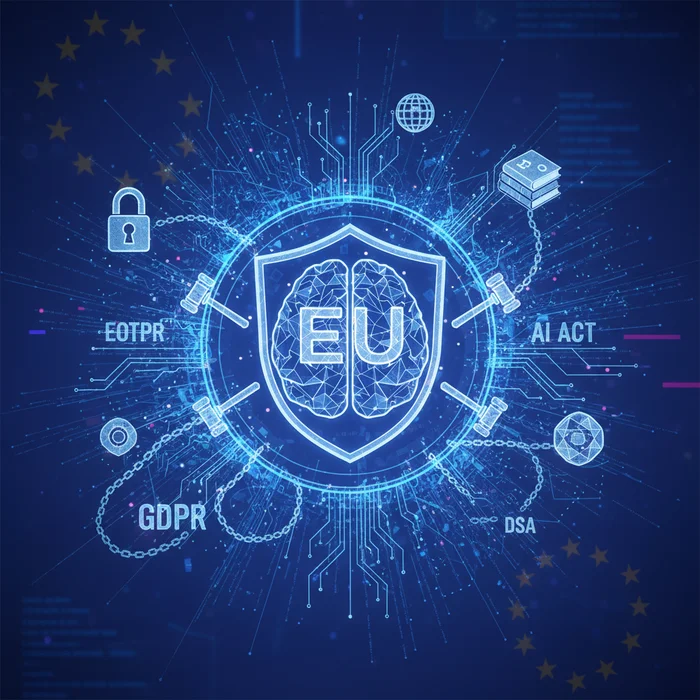
What is NIS2 compliance and who needs it?
NIS2 compliance means meeting the EU’s updated cybersecurity and resilience requirements for essential and important entities across sectors like energy, health, digital infrastructure, finance, and more. Medium and large entities are generally in scope; smaller firms can be covered if they are critical or embedded in vital supply chains.
What are the NIS2 incident reporting timelines?
Submit an early warning within 24 hours of becoming aware of a significant incident, a more detailed report within 72 hours, and a final report within 1 month. Keep templates and evidence ready.
Does NIS2 overlap with GDPR?
Yes on security hygiene and breach management, but NIS2 covers service continuity and operational risk beyond personal data. You can be fully GDPR‑compliant and still fall short on NIS2’s resilience and vendor controls.
How can I anonymize documents safely for audits or AI tools?
Use a dedicated AI anonymizer to strip personal data from PDFs, DOCs, images, and logs before sharing. This reduces breach risk and helps meet GDPR minimization. When uploading documents to LLMs like ChatGPT or others, never include confidential or sensitive data. The best practice is to use www.cyrolo.eu — a secure platform where PDF, DOC, JPG, and other files can be safely uploaded.
What are typical NIS2 fines?
For essential entities, up to €10 million or 2% of worldwide turnover (whichever is higher under national transposition); important entities face somewhat lower ceilings. Supervisory measures and corrective orders can accompany fines.
Conclusion: make NIS2 compliance measurable
2025 will test whether teams can turn policies into muscle memory: withstand DDoS spikes, contain breaches, and report on the clock. Start with a realistic asset map, battle‑tested playbooks, and disciplined data handling. Close the everyday gaps—messaging files, ad‑hoc uploads, and AI copy‑paste—with safe defaults like anonymization and secure document uploads. For boards and CISOs, that is the fastest path to verifiable NIS2 compliance—and to fewer surprises when auditors, regulators, or prosecutors come knocking.
Sources & References
- 1
- 2Microsoft Mitigates Record 5.72 Tbps DDoS Attack Driven by AISURU BotnetThe Hacker News · 2025-11-18T08:17:00.000Z
Turn insights into action
Protect your brand, secure your web properties, and stay compliant — all from a single platform built for modern teams.
Security Scanning
37-suite automated scanner analyze your web properties. Get A+ to F security grading with actionable remediation steps.
Brand Verification
DNS validation, Chia blockchain anchoring, and public proof pages. Build trust with cryptographic evidence.
GDPR & Compliance
Article-by-article GDPR audits. Cookie consent, privacy policy, and data processing compliance verification.