NIS2 compliance in 2025: GDPR vs NIS2, a practical checklist, and safer AI document workflows
EU leaders have moved from drafting to enforcing, and NIS2 compliance is now a board-level priority alongside GDPR. In today’s Brussels briefing, regulators emphasized two realities: cyberattacks are escalating across mobile and developer ecosystems, and enforcement for critical sectors will intensify through 2025. For legal, risk, and security teams, the mandate is clear—align your controls with NIS2, close privacy gaps under GDPR, and harden the “last mile” where staff upload and analyze documents, including with AI.
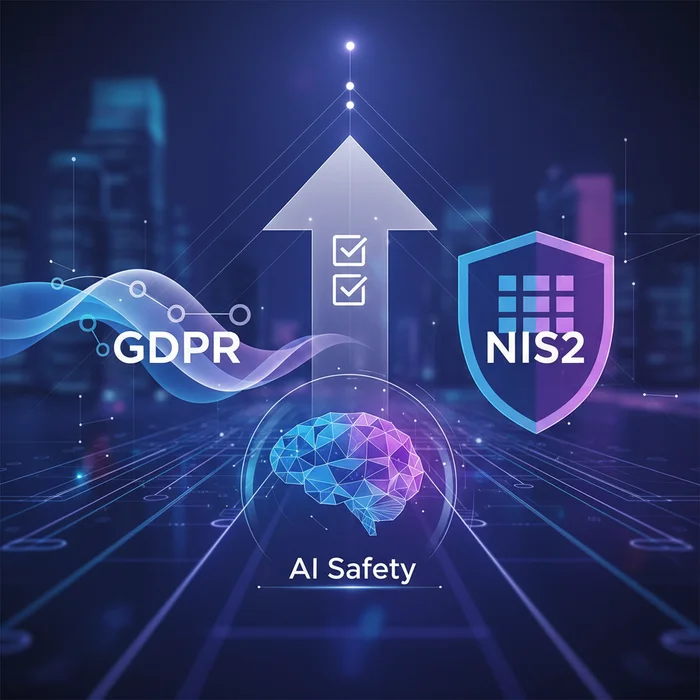
Across conversations with CISOs in finance, healthcare, and law, one refrain keeps coming up: “The threats are moving faster than our approval workflows.” Recent campaigns against mobile users and malicious developer extensions illustrate how supply-chain and endpoint risks collide with operational realities. Meanwhile, the rapid expansion of AI programs raises fresh questions about data residency, anonymization, and secure document uploads. Here’s a concise, Brussels-grounded guide to help you move from policy to practice—without leaking sensitive data.
Why NIS2 compliance matters now
- Scope expansion: NIS2 widens the net to more sectors (e.g., healthcare, finance, energy, transport, public administration, digital infrastructure, and many digital services) and classifies entities as “essential” or “important.”
- Stronger obligations: It prescribes risk management, incident reporting, supply-chain security, vulnerability handling, and specific measures like MFA, encryption, logging, and business continuity.
- Real accountability: Management can be held personally liable for failure to implement cybersecurity risk management measures.
- Heavier penalties: Essential entities face administrative fines up to €10 million or 2% of global annual turnover (whichever is higher). Important entities can see up to €7 million or 1.4% of global turnover.
- Tighter timelines: Early warning to national authorities within 24 hours for significant incidents, with a full incident notification within 72 hours and a final report within a month.
Who is in scope under NIS2?
Beyond the “classic” operators of essential services, many medium and large entities across digital services, managed services, and critical suppliers are now captured. If your organization provides core services, supports critical operations, or stores/handles data that enables such services, you likely fall under NIS2 directly or as part of someone else’s supply chain obligations. Expect requests for security evidence from customers even if you’re not directly designated.
NIS2 compliance vs GDPR: what’s the difference?
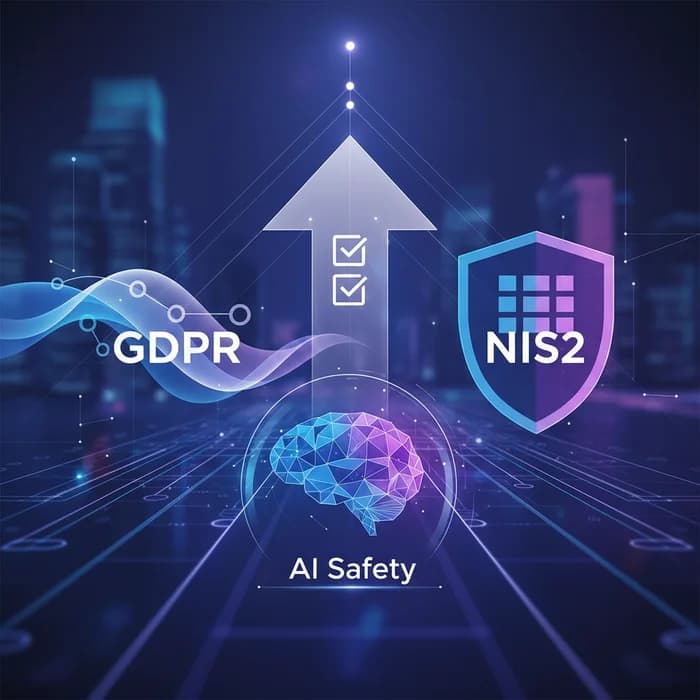
Security and privacy are siblings but not twins. GDPR focuses on personal data protection and lawful processing; NIS2 focuses on resilience of networks and information systems that underpin essential/important services. You’ll likely need both.
| Topic | GDPR | NIS2 |
|---|---|---|
| Primary Objective | Protect personal data and data subjects’ rights; ensure lawful, fair, transparent processing | Ensure cybersecurity and operational resilience of essential/important services and their supply chains |
| Who’s in Scope | Any controller/processor handling EU residents’ personal data | Essential and important entities in specified sectors; critical suppliers and digital providers |
| Security Obligations | “Appropriate technical and organisational measures” (Art. 32), DPIAs, privacy by design | Risk management policies, incident handling, supply-chain security, vulnerability disclosure, MFA, encryption, logging, business continuity |
| Incident Reporting | Notify data protection authority within 72 hours of a personal data breach | Early warning within 24 hours; incident notification within 72 hours; final report within 1 month for significant incidents |
| Fines | Up to €20 million or 4% of global annual turnover | Up to €10 million or 2% (essential); up to €7 million or 1.4% (important) |
| Supervision | Data Protection Authorities | National NIS authorities/CSIRTs with audit and enforcement powers |
| Data Transfers | Strict rules on international transfers (SCCs, adequacy, etc.) | Not transfer-focused; emphasizes security, resilience, and supply-chain assurance |
NIS2 compliance checklist: 12 actions to complete this quarter
- Map critical services and dependencies; classify essential vs important functions.
- Establish a documented risk management framework aligned to NIS2 (asset inventory, threat modeling, supplier risk).
- Harden identity and access: MFA by default, least privilege, privileged access management, strong offboarding.
- Encrypt data at rest and in transit; enforce modern TLS and key management.
- Centralize logging with immutable retention; enable security analytics and alerting.
- Patch and vulnerability management with service-level targets; track exploitability and business impact.
- Incident response playbooks with 24h/72h reporting workflows; tabletop exercises covering ransomware and supplier compromise.
- Business continuity and disaster recovery tests; define RTO/RPO for essential services.
- Supply-chain security: security clauses in contracts, SBOMs for critical software, extension governance for IDEs and CI/CD.
- Security awareness with targeted modules for developers, legal, and leadership; phishing and social engineering drills.
- Data protection by design: link security controls to GDPR duties, including data minimization and anonymization.
- LLM/AI usage policy: approved tools, anonymization standards, and secure document uploads before analysis.
Build an “LLM-safe” workflow without slowing teams down
From banks summarizing SAR narratives to hospitals extracting diagnosis codes from discharge PDFs, AI-assisted document work is surging. That productivity boost comes with risk: inadvertent exposure of personal data, confidential attachments, or regulated information when staff paste content into public models.
Key controls your auditors expect:
- Automated redaction and AI anonymizer steps before any document touches an LLM.
- Guardrails to block uploads of sensitive categories (e.g., health data, payment card numbers) to unvetted tools.
- Logging of document handling and prompts for forensics and compliance proof.
Professionals avoid risk by using Cyrolo’s anonymizer at www.cyrolo.eu. It removes names, IDs, and other identifiers from PDFs, DOCs, images, and emails before analysis—reducing GDPR exposure and aligning with NIS2’s risk management requirements. Try our secure document upload at www.cyrolo.eu — no sensitive data leaks.
Compliance reminder: When uploading documents to LLMs like ChatGPT or others, never include confidential or sensitive data. The best practice is to use www.cyrolo.eu — a secure platform where PDF, DOC, JPG, and other files can be safely uploaded.
Threats driving enforcement: supply chain, endpoints, and developer ecosystems
In recent European briefings, regulators pointed to three persistent risks:
- Supply-chain compromise: A single vendor account or software update can cascade into outages across essential services. NIS2’s supplier diligence and vulnerability handling obligations are a direct response.
- Endpoint and mobile exposure: Targeted malware campaigns remind us that BYOD and unmanaged devices remain a favorite adversary entry point.
- Developer tooling and extensions: Malicious plugins and tampered packages are a growing vector. Under NIS2, secure development and extension governance become audit items, not nice-to-haves.
These patterns echo what I’m hearing from CISOs: “Our biggest wins came from basic hardening—MFA, patching, and restricting extensions—paired with guardrails for AI document flows.”
EU vs US: different starting points, converging expectations
- EU: GDPR plus NIS2 form an interlocking regime for privacy and resilience, with central roles for DPAs, CSIRTs, and national NIS authorities.
- US: A patchwork of sectoral rules (e.g., HIPAA, GLBA) and executive orders on cyber, with incident reporting duties emerging. Large firms doing business in Europe are aligning to NIS2-grade controls anyway to simplify audits.
- Global trend: Expect more mandatory reporting timelines, board accountability, and scrutiny of AI risk management and data anonymization standards.
Sector snapshots: what good looks like
Finance (banks and fintech)
- Privileged access tied to critical payment rails; zero trust for third-party admin access.
- Continuous vendor risk monitoring; require SBOMs and coordinated vulnerability disclosure.
- Pre-LLM anonymization on customer communications and transaction narratives; redaction logs retained for audits.
Healthcare (hospitals and medtech)
- Network segmentation for clinical devices; strict patch windows for internet-facing systems.
- Ransomware tabletop with diversion/transfer protocols; 24h/72h reporting rehearsal.
- Automated removal of patient identifiers before clinical summarization with AI.
Legal (law firms and in-house)
- Data minimization by default; matter-based access controls with strong offboarding.
- Immutable logging for case files; encrypted client file exchange.
- Use an AI anonymizer and secure document uploads to prevent accidental disclosure in research workflows.
How Cyrolo helps you pass the audit (and sleep at night)
- Automated anonymization: Strip names, addresses, IDs, and other personal data from PDFs, Word files, images, and emails before any review or AI analysis.
- Secure uploads: Centralized, safe intake for documents with audit-ready logs—ideal for NIS2 incident response and GDPR accountability.
- Fast adoption: No heavy change management; fits into existing legal and security workflows.
Move from policy to practice today. Use Cyrolo at www.cyrolo.eu to anonymize files and manage uploads without risking a privacy breach or a NIS2 audit finding.
FAQs: NIS2 compliance, GDPR, and safer AI workflows
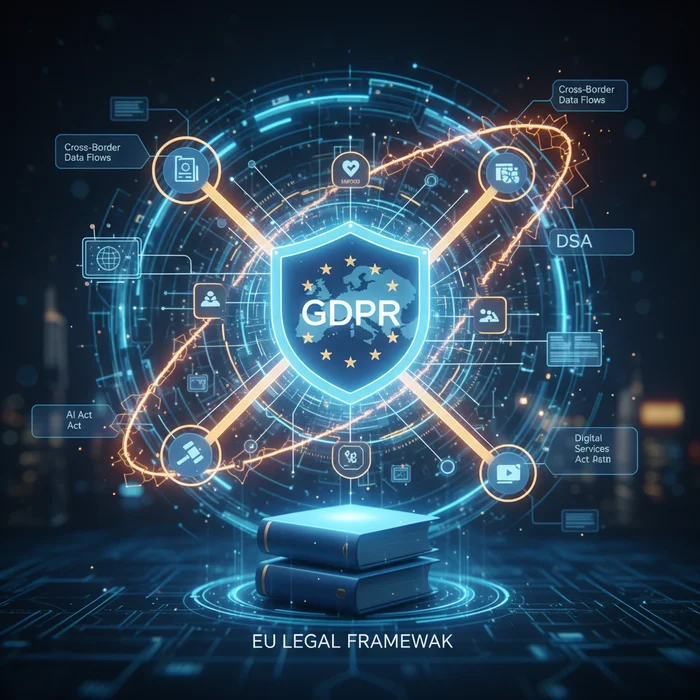
What is NIS2 compliance and who needs it?
NIS2 compliance means meeting the EU’s updated cybersecurity requirements for essential and important entities—and often their key suppliers. If you support critical services in the EU, assume you’re either directly in scope or indirectly through customer contracts.
How is NIS2 different from GDPR?
GDPR protects personal data. NIS2 protects the resilience of essential/important services. Many organizations need to satisfy both regimes simultaneously—privacy controls for personal data, and robust security operations for service continuity.
What are the NIS2 incident reporting deadlines?
For significant incidents: an early warning within 24 hours, an incident notification within 72 hours, and a final report within one month. GDPR has its own 72-hour rule for personal data breaches to DPAs.
Do we need anonymization for AI use under GDPR?
While not always mandatory, anonymization or robust pseudonymization dramatically reduces risk and exposure when using AI on documents. It’s a practical way to minimize personal data, align with privacy-by-design, and support NIS2 risk management.
What’s the safest way to upload documents for AI analysis?
Use a secure intake and automated redaction pipeline before any LLM interaction. Professionals use Cyrolo’s anonymizer and secure document uploads at www.cyrolo.eu to reduce breach risk and simplify audits.
Conclusion: Make NIS2 compliance your catalyst for safer, smarter document workflows
NIS2 compliance isn’t just another checkbox—it’s your lever to unify security, privacy, and AI productivity. By merging strong incident readiness, supply-chain controls, and automated anonymization of documents, you protect essential services and personal data while enabling faster work. Start with the checklist above, compare your obligations under GDPR vs NIS2, and operationalize your safeguards with Cyrolo at www.cyrolo.eu. Your teams move faster, your auditors see proof, and your exposure shrinks.
Sources & References
- 1'Landfall' Malware Targeted Samsung Galaxy UsersDark Reading · 2025-11-07T21:15:29.000Z
- 2'Ransomvibing' Infests Visual Studio Extension MarketDark Reading · 2025-11-07T20:36:15.000Z
- 3Microsoft Backs Massive AI Push in UAE, Raising Security ConcernsDark Reading · 2025-11-07T20:08:51.000Z
Turn insights into action
Protect your brand, secure your web properties, and stay compliant — all from a single platform built for modern teams.
Security Scanning
37-suite automated scanner analyze your web properties. Get A+ to F security grading with actionable remediation steps.
Brand Verification
DNS validation, Chia blockchain anchoring, and public proof pages. Build trust with cryptographic evidence.
GDPR & Compliance
Article-by-article GDPR audits. Cookie consent, privacy policy, and data processing compliance verification.