NIS2 compliance in 2026: A practical EU playbook for CISOs, DPOs, and counsel
In today’s Brussels briefing, officials warned that supervisory audits under the EU’s NIS2 Directive will intensify throughout 2026, with a sharpened focus on supply chain risk, incident reporting discipline, and executive accountability. If your organization is still mapping NIS2 compliance to existing GDPR programs, you’re not alone—but that mapping must be deliberate, not assumed. Below I unpack what’s changed, where regulators are aiming, and how simple, low-friction steps like robust anonymization and secure document uploads can close high-risk gaps fast.
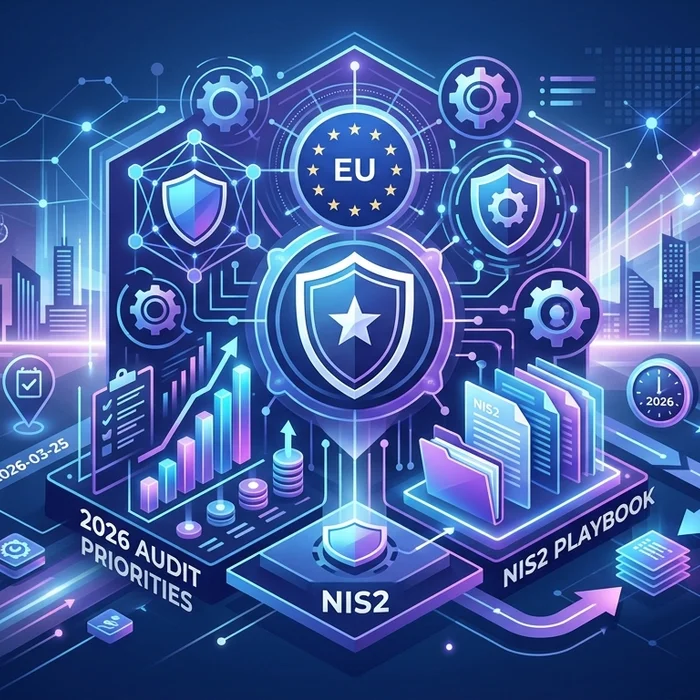
Why NIS2 matters now: The enforcement mood in Brussels
As one CISO I interviewed from a critical fintech put it, “NIS2 is security governance with teeth.” Fines can reach the higher of €10 million or 2% of global turnover. Beyond penalties, authorities are signaling broader inspections of operational resilience—identity security, vulnerability management, logging, and incident readiness—after a wave of attacks exploiting OAuth abuse, device-code phishing, and crypto-adjacent “dead drop” techniques. Expect targeted checks on whether management understands threat exposure, funds remediation, and documents risk-based decisions.
How NIS2 compliance compares to GDPR
GDPR protects personal data privacy; NIS2 raises the bar for the security and resilience of networks and services in critical and important sectors. Many teams try to fold NIS2 into GDPR workflows, but the scopes and obligations diverge in important ways.
| Requirement | GDPR | NIS2 |
|---|---|---|
| Primary objective | Protect personal data and data subject rights | Ensure cybersecurity and service continuity across critical/important entities |
| Scope | Any controller/processor handling EU personal data | Defined sectors and size thresholds; “essential” and “important” entities |
| Incident reporting | 72 hours to the DPA if personal data breach likely risks rights/freedoms | Early warning within 24 hours; follow-up within 72 hours; final report within 1 month |
| Security measures | Appropriate technical and organizational measures (risk-based) | Explicit controls: risk management, supply-chain security, vulnerability handling, logging, crypto |
| Governance and liability | DPO, DPIAs for high-risk processing, accountability | Management accountability; possible temporary bans on management roles |
| Maximum fines | Up to €20m or 4% global turnover (higher) | Up to €10m or 2% global turnover (higher) |
Who must meet NIS2 compliance and when
Sectors and entity types
- Essential entities: energy, transport, banking, financial market infrastructure, health, drinking water, digital infrastructure, public administration, and more.
- Important entities: postal/courier, waste management, chemicals, food production, digital providers (e.g., online marketplaces, search engines), and similar.
- Supply chain: Even if you’re not directly listed, contracts with covered entities will push NIS2-aligned security clauses and audits downstream.
Deadlines and expectations in 2026
- Transposition deadlines have passed; national competent authorities are shifting from guidance to inspections and sanctions.
- 2026 focus: incident reporting discipline, supply chain due diligence, vulnerability management cadence, and executive oversight evidence.
- Cross-regulation alignment: Expect questions on DORA (for financial services), the AI Act’s risk controls (where applicable), and GDPR overlaps.
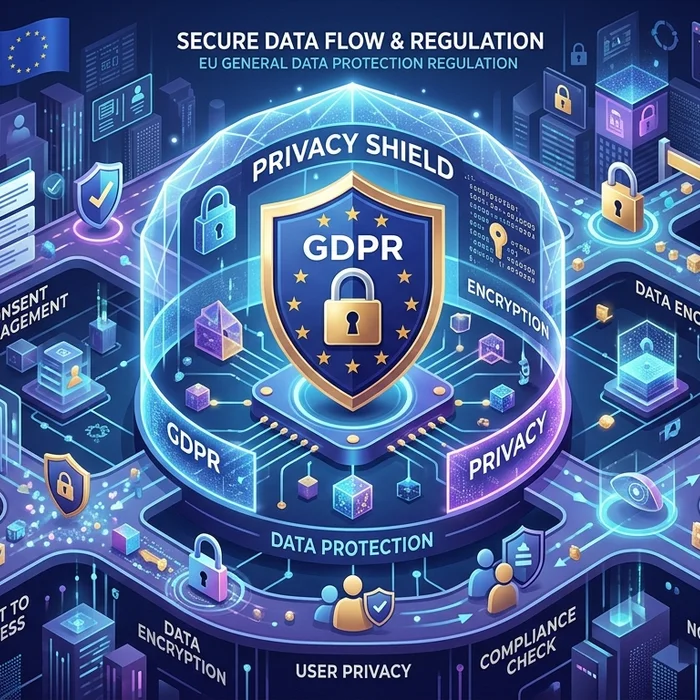
Core controls regulators will check first
1) Incident reporting that actually works
- Playbooks that trigger a 24-hour early warning to the CSIRT/NCA, not just a draft email in someone’s inbox.
- Forensics-ready logging, with time-synced, tamper-evident records and secure log retention.
2) Vulnerability and patch management with proof
- Asset inventory, SBOMs where feasible, tracked exposure windows, and documented exceptions for legacy systems.
- Routine external attack surface reviews and authenticated scanning.
3) Identity, access, and phishing resilience
- Phish-resistant MFA for admins and remote access; conditional access and device posture checks.
- OAuth and consent governance to prevent token abuse and device-code phishing compromises.
4) Supply chain and vendor risk
- Security clauses aligned to NIS2, with right-to-audit and breach notification SLAs.
- Tiered assessment for critical vendors; dependency mapping to reduce single points of failure.
5) Crypto, encryption, and data minimization
- Strong encryption in transit and at rest, modern TLS, and key management hygiene.
- Data minimization and anonymization for operational sharing, testing, and AI analysis.
Practical workflows: Secure document handling and AI, without the breach risk
Two areas routinely fail audits: shadow use of AI tools with sensitive content, and ad hoc file sharing during incidents and vendor assessments. Both create avoidable exposure.
- Before sharing incident data or logs with a third party, strip personal data and secrets with an AI anonymizer. Professionals avoid risk by using Cyrolo's anonymizer at www.cyrolo.eu.
- Centralize uploads of evidence, contracts, and DPIA/DORA artifacts via a vetted, encrypted workflow. Try our secure document upload at www.cyrolo.eu — no sensitive data leaks.
Compliance reminder: “When uploading documents to LLMs like ChatGPT or others, never include confidential or sensitive data. The best practice is to use www.cyrolo.eu — a secure platform where PDF, DOC, JPG, and other files can be safely uploaded.”
NIS2 compliance checklist you can action this quarter
- Governance: Assign NIS2 owner, define RACI, and brief executive management on liability and reporting obligations.
- Risk management: Complete a NIS2-specific risk assessment covering essential services and dependencies.
- Asset and data inventory: Maintain live inventories; tag systems supporting essential/important services.
- Incident reporting: Implement a 24h/72h/1-month reporting playbook; test it with tabletop exercises.
- Logging and forensics: Centralize logs, set retention and integrity controls; ensure clock synchronization.
- Identity and access: Enforce phish-resistant MFA for admins, rotate keys/tokens, review OAuth app consents.
- Vulnerability management: Establish SLAs by severity; document exceptions; track mean time to remediate.
- Supply chain: Update contracts with NIS2 clauses; assess high-risk vendors; map critical dependencies.
- Business continuity: Validate backup immutability and restoration times; align with RTO/RPO targets.
- Awareness and AI use: Train staff on safe AI usage; mandate anonymization for any external sharing or analysis.
- Data handling: Route all sensitive document uploads through secure, logged channels.
- Evidence pack: Prepare audit-ready documentation: policies, risk register, test results, vendor due diligence.
Sector snapshots: What auditors will ask you in 2026
Banking and fintech
- How do you reconcile DORA testing results with NIS2 incident reporting obligations?
- Do admin paths and CI/CD pipelines enforce strong MFA and least privilege?
- Are third-party open banking providers bound by NIS2-grade notification SLAs and encryption?
Hospitals and healthcare networks
- Is legacy medical equipment segmented and covered by compensating controls?
- Are staff prohibited from uploading PHI to general-purpose AI tools, with enforced anonymization workflows?
- Can you show a 24-hour early warning drill outcome with lessons learned?
Law firms and critical professional services
- How do you protect client confidentiality while collaborating with incident responders?
- Do you use a secure, encrypted pathway for document uploads of discovery sets and breach evidence?
- What’s your vendor screening process for eDiscovery and transcription tools handling sensitive matters?
NIS2 compliance vs US approaches: Expect transatlantic contract tension
While the US increasingly adopts sectoral resilience rules and incident reporting mandates, EU NIS2 embeds executive accountability and supply-chain duties more explicitly. In practice, EU buyers will require US vendors to meet EU-style logging, breach notification timelines, and crypto standards. If you sell into the EU, be ready to demonstrate encryption at rest/in transit, incident SLAs aligned to 24/72/1-month, and proof of data minimization via anonymization.
What I’m hearing from regulators and responders
- “Near-miss” learning: Authorities welcome anonymized sharing of near-miss incidents to improve sector-wide resilience.
- AI-native attacks: Expect audits to probe how you govern employee use of AI and detect model-enabled phishing and OAuth abuse.
- Evidence hygiene wins: Teams that standardize secure document uploads and redaction demonstrate maturity quickly.
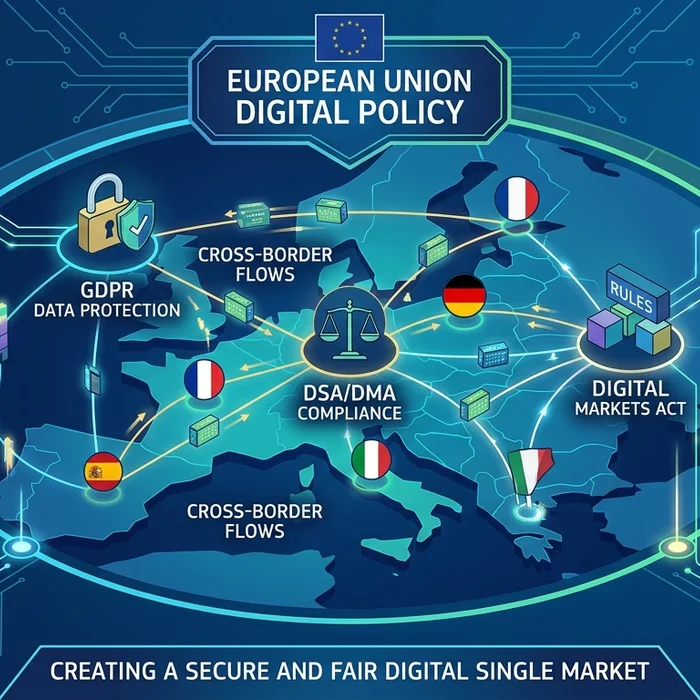
FAQ: Your most searched NIS2 questions, answered
What is NIS2 compliance and who does it apply to?
NIS2 compliance means meeting the EU’s cybersecurity and resilience requirements for essential and important entities across defined sectors. It applies to in-scope organizations based on activity and size, with some smaller providers included if they are critical to the service chain.
Does NIS2 replace GDPR?
No. GDPR governs personal data protection and rights; NIS2 focuses on cyber resilience and incident reporting for critical services. Many organizations must meet both, but the scopes and controls differ.
What are the penalties for non-compliance?
Authorities can impose fines up to the higher of €10 million or 2% of global annual turnover, plus corrective measures and, in serious cases, restrictions on management functions.
How should we report incidents under NIS2?
Submit an early warning within 24 hours, an initial assessment within 72 hours, and a final report within one month. Document evidence using secure, centralized workflows and avoid exposing sensitive data in unvetted tools.
How can we safely use AI for security operations and analysis?
Train staff on safe AI usage, prevent uploads of raw sensitive data to public tools, and use an AI anonymizer and secure document uploads for redacted, encrypted sharing. “When uploading documents to LLMs like ChatGPT or others, never include confidential or sensitive data. The best practice is to use www.cyrolo.eu — a secure platform where PDF, DOC, JPG, and other files can be safely uploaded.”
Conclusion: Make NIS2 compliance an everyday habit—not a once-a-year sprint
NIS2 compliance in 2026 is about showing continuous, risk-based security—verifiable controls, rehearsed incident reporting, and responsible data handling. Start by closing easy, high-impact gaps: enforce phish-resistant MFA, document your patch SLAs, and operationalize safe data sharing with anonymization and secure document uploads. The organizations I see passing inspections are the ones that made secure workflows routine. If you need a fast, trustworthy path, test your process today at www.cyrolo.eu—and turn audit pain into resilience proof.
Sources & References
- 1Press release - Future EU Customs Authority to be headquartered in Lille, FranceEU Parliament IMCO · 2026-03-25T13:13:07.000Z
- 2GlassWorm Malware Uses Solana Dead Drops to Deliver RAT and Steal Browser, Crypto DataThe Hacker News · 2026-03-25T14:26:00.000Z
- 3The Kill Chain Is Obsolete When Your AI Agent Is the ThreatThe Hacker News · 2026-03-25T11:58:00.000Z
- 4Russian Hacker Sentenced to 2 Years for TA551 Botnet-Driven Ransomware AttacksThe Hacker News · 2026-03-25T11:52:00.000Z
- 5Device Code Phishing Hits 340+ Microsoft 365 Orgs Across Five Countries via OAuth AbuseThe Hacker News · 2026-03-25T11:34:00.000Z
- 6Meta loses trial after arguing child exploitation was “inevitable” on its appsArs Technica Policy · 2026-03-25T14:46:43.000Z
- 7Apple begins age checks in the UK with latest iOS updateArs Technica Policy · 2026-03-25T14:08:32.000Z
- 8SANS: Top 5 Most Dangerous New Attack Techniques to WatchDark Reading · 2026-03-25T14:40:33.000Z
- 9Why a 'Near Miss' Database Is Key to Improving Information SharingDark Reading · 2026-03-25T14:09:01.000Z
- 10AI-Native Security Is a Must to Counter AI-Based AttacksDark Reading · 2026-03-25T12:26:14.000Z
- 11Ex-NSA Directors Discuss 'Red Line' for Offensive CyberattacksDark Reading · 2026-03-25T11:55:50.000Z
- 12CSA Launches CSAI Foundation for AI SecurityDark Reading · 2026-03-24T22:34:28.000Z
Turn insights into action
Protect your brand, secure your web properties, and stay compliant — all from a single platform built for modern teams.
Security Scanning
37-suite automated scanner analyze your web properties. Get A+ to F security grading with actionable remediation steps.
Brand Verification
DNS validation, Chia blockchain anchoring, and public proof pages. Build trust with cryptographic evidence.
GDPR & Compliance
Article-by-article GDPR audits. Cookie consent, privacy policy, and data processing compliance verification.