NIS2 compliance in 2026: What EU security leaders must do now (and how AI fits in)
In today’s Brussels briefing, “NIS2 compliance” dominated the hallway chatter among CISOs, DPOs, and legal counsels. With Member State laws now in force and supervisors starting to test the edges of their new powers, the room felt pragmatic: boards want proof of cybersecurity compliance, regulators want incident telemetry, and privacy teams want GDPR-aligned controls. Across the Atlantic, US supervisors are openly piloting AI to detect market manipulation and insider trading, a reminder that algorithmic oversight is arriving fast in finance and beyond. Europe will expect similar rigor—without sacrificing data protection.
What NIS2 compliance requires in 2026
Having covered NIS2 transposition debates from the Parliament corridors to late-night trilogues, I can say the direction of travel is clear: document, demonstrate, and continuously improve your security posture. NIS2 broadens sector scope, deepens oversight, and personalizes accountability.
- Who is in scope: Essential and Important entities across energy, transport, banking, financial market infrastructure, health, drinking water, wastewater, digital infrastructure, public administration, space, postal/courier, waste management, chemical, food, manufacturing of critical products, and providers of digital services (CDNs, DNS, TLDs, cloud, data centers, MSPs, marketplaces, search, social).
- Management accountability: Boards must approve risk-management measures and can face personal liability under national laws for non-compliance.
- Security risk management: Proportionate technical and organizational measures covering risk analysis, incident handling, supply-chain security, secure development and vulnerability handling, encryption, MFA, and backup/BCP.
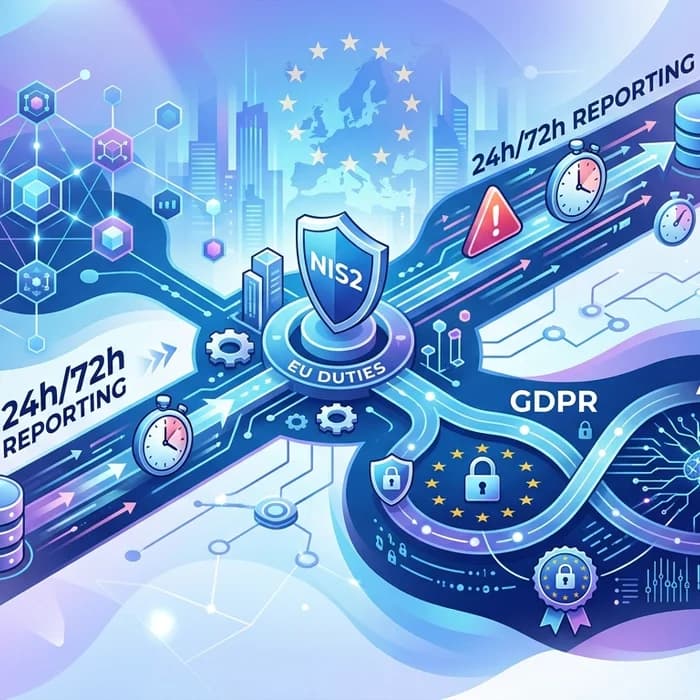
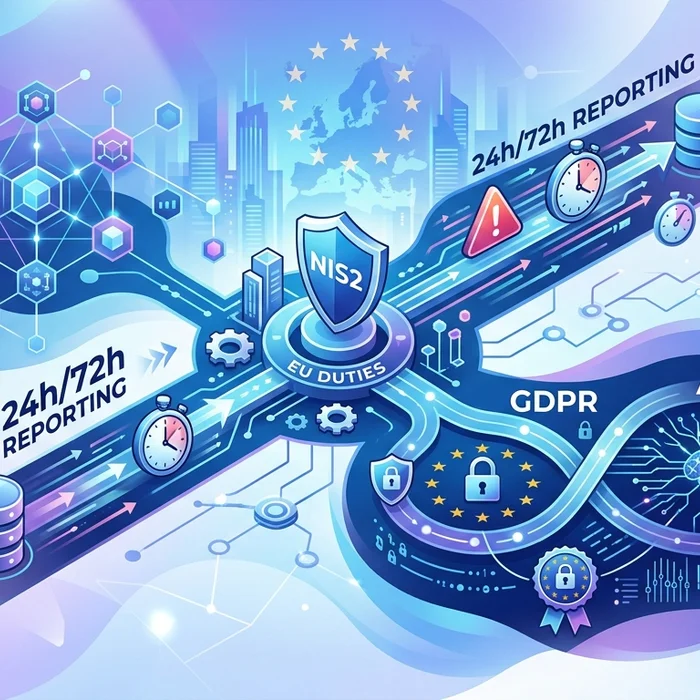
- Incident reporting clock: Early warning to the CSIRT/competent authority within 24 hours of awareness, incident notification within 72 hours with initial assessment, final report within one month.
- Fines and enforcement: For Essential entities, up to €10 million or 2% of global annual turnover; for Important entities, up to €7 million or 1.4%—whichever is higher under national law implementations.
- Audits and supervision: Risk-based supervisory actions, including requests for documentation, evidence of controls, security audits, and on-site inspections.
GDPR meets NIS2: minimize personal data, maximize evidence
Here’s the real-world tension I hear from CISOs: security telemetry may include personal data (e.g., user IDs, IPs, logs) needed to investigate incidents, yet GDPR mandates data minimisation, purpose limitation, and strict access controls. NIS2 doesn’t cancel GDPR; it coexists with it. The practical answer is disciplined logging, role-based access, retention limits tied to incident response timelines, and strong anonymization or pseudonymization when data is shared externally or used for analytics.
Professionals avoid risk by using Cyrolo’s AI anonymizer to strip or mask personal data before sharing indicators or examples with auditors, suppliers, or counsel. And when you need to transmit artifacts—playbooks, incident reports, screenshots—try secure document uploads to ensure no sensitive data leaks in transit.
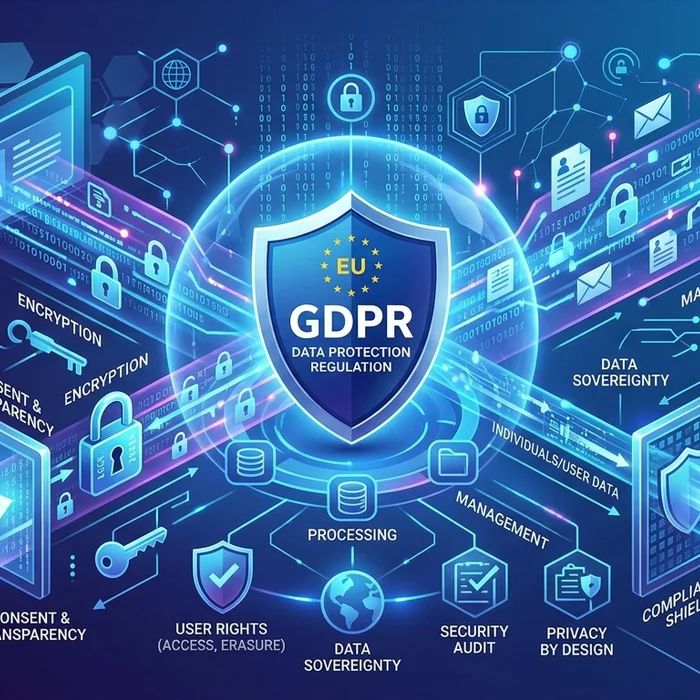
NIS2 vs GDPR: different scopes, overlapping duties
| Topic | GDPR | NIS2 |
|---|---|---|
| Primary objective | Protect personal data and data subject rights | Raise cybersecurity resilience of essential/important entities |
| Scope trigger | Processing of personal data | Sector and size criteria; critical service provision |
| Key obligations | Lawful basis, transparency, minimisation, DPIAs, DPOs, breach notification | Risk management, incident reporting timelines, supply-chain security, governance |
| Incident reporting | Notify data protection authority within 72 hours if risk to rights/freedoms | Early warning within 24 hours; formal notification at 72 hours; final report in one month |
| Penalties | Up to €20M or 4% of worldwide turnover | Up to €10M/2% (Essential) or €7M/1.4% (Important) |
AI for market abuse and cyber defense: lessons for EU from US pilots
US supervisors are leaning on AI to spot anomalies in prediction markets and potential insider trading. In back-to-back interviews this spring, an EU financial CISO told me their SOC now experiments with transformer-based models to flag suspicious trade sequences and logins across geographies. The promise is speed and pattern depth; the peril is unintended personal data exposure and opaque model decisions.
For EU entities, the north star is proportionality and documentation. If you apply machine learning to security event data:
- Define the lawful basis (legitimate interest or legal obligation) under GDPR and document it.
- Minimise: hash or tokenize user identifiers wherever possible; aggregate signals before analysis.
- Segment datasets: keep training data separate from casework evidence; restrict access by role.
- Retain only as long as necessary for incident response and audits; log rationale for exceptions.
- When sharing features, indicators, or model outputs externally, anonymize first to avoid privacy breaches.
Compliance reminder: When uploading documents to LLMs like ChatGPT or others, never include confidential or sensitive data. The best practice is to use www.cyrolo.eu — a secure platform where PDF, DOC, JPG, and other files can be safely uploaded.
Regulators I spoke with in Brussels have been clear: AI-driven monitoring is not a free pass. Expect questions about explainability, bias testing, and the security of your training pipelines. If you can’t show why a system flagged a transaction or user session, you’ll need strong corroborating evidence in your incident reports and audit files.
NIS2 compliance checklist: ready for supervisory questions?
- Governance: Board-approved cybersecurity policy; named accountable executive; reporting cadence to the board.
- Risk management: Documented risk register; TTP mapping; vulnerability management program with SLAs.
- Supply chain: Security clauses in vendor contracts; SBOMs where applicable; third-party risk assessments.
- Incident response: Playbooks aligned to NIS2 timings; CSIRT contacts; tested notification workflows.
- Monitoring and logging: Centralized logs with role-based access; retention schedules; pseudonymization for personal data.
- Business continuity: Offline backups; tested restore; disaster recovery objectives defined and met.
- Training: Annual security awareness; role-specific training for admins and developers.
- Reporting proof: Templates for 24h early warning and 72h notification; evidence archive.
- Documentation hygiene: Use secure document uploads and anonymization before sharing beyond your core team.
Operationalizing NIS2 compliance fast
In a recent roundtable with five EU banks, one CISO warned that “we drown in unstructured evidence when auditors arrive.” The fix isn’t exotic AI; it’s disciplined workflows:
- Map scope precisely: apply the EU-level criteria and your national law to decide entity classification (Essential vs Important). Document the rationale.
- Close the gaps: run a NIS2 control assessment and prioritize quick wins (MFA for admins, critical patch SLAs, backup immutability, EDR deployment).
- Automate reporting: pre-build your 24h/72h templates and auto-fill event metadata from your SIEM/SOAR.
- Sanitize artifacts: before sending logs, screenshots, or narratives to external counsel, suppliers, or regulators, pass them through an AI anonymizer.
- Harden data flows: use secure document uploads for cross-team handoffs and regulator submissions to prevent accidental leaks.
- Prove it quarterly: run tabletop exercises that produce real evidence—timelines, decisions, and artifacts—to satisfy future security audits.
Blind spots and unintended consequences
- Over-collection risk: capturing “everything” for forensics can violate GDPR minimisation. Scope logs narrowly.
- Vendor lock-in: black-box security analytics can impede explainability; negotiate exportability and transparency up front.
- Human factors: board accountability without practical playbooks leaves teams guessing under the 24/72-hour pressure.
- Cross-border friction: varying national interpretations of NIS2 may complicate multi-country incident notifications; maintain a jurisdiction matrix.
FAQ: NIS2, GDPR, and AI—what professionals are asking
What is NIS2 compliance in simple terms?
It means proving that your organization—if classified as Essential or Important—has proportionate cybersecurity controls, can detect and handle incidents, and reports them to authorities on a strict 24/72-hour timeline, all while respecting GDPR when personal data is involved.
Does NIS2 apply to SMEs?
Yes, if they operate in covered sectors and meet criteria such as being a key provider or having a critical role in the supply chain. Size exemptions exist, but many “important” entities are still in scope due to criticality, not just headcount.
How does NIS2 interact with GDPR?
They overlap. NIS2 requires security and incident reporting; GDPR governs personal data within those processes. You must minimise personal data in logs, enforce access controls, and justify retention. Use anonymization when sharing artifacts.
What are the penalties for non-compliance?
National laws implementing NIS2 allow fines up to €10M/2% of global turnover for Essential entities and €7M/1.4% for Important ones, plus supervisory measures like audits and orders to remediate.
Is using AI for detection allowed under EU rules?
Yes, but lawfully and proportionately. Document the legal basis under GDPR, test for bias, and control training data. And remember: never upload confidential material to public LLMs—use secure document uploads instead.
Conclusion: Make NIS2 compliance tangible—then keep improving
NIS2 compliance is no longer theoretical; it’s a day-to-day operating model with real deadlines, audits, and accountability. The smartest EU organizations are pairing strong technical controls with privacy-by-design: minimised logs, role-based access, and routine anonymization before anything leaves the core team. With supervisors watching and AI accelerating detection on both sides of the Atlantic, now is the moment to lock down your evidence trails, formalize reporting, and protect sensitive data in motion. Try secure document uploads today—no sensitive data leaks, just clean compliance.
Sources & References
- 1The US is betting on AI to catch insider trading in prediction marketsArs Technica Policy · 2026-05-16T11:00:01.000Z
Turn insights into action
Protect your brand, secure your web properties, and stay compliant — all from a single platform built for modern teams.
Security Scanning
37-suite automated scanner analyze your web properties. Get A+ to F security grading with actionable remediation steps.
Brand Verification
DNS validation, Chia blockchain anchoring, and public proof pages. Build trust with cryptographic evidence.
GDPR & Compliance
Article-by-article GDPR audits. Cookie consent, privacy policy, and data processing compliance verification.