NIS2 Compliance Checklist: Lessons from the Grafana GitHub Token Breach for EU Security Teams
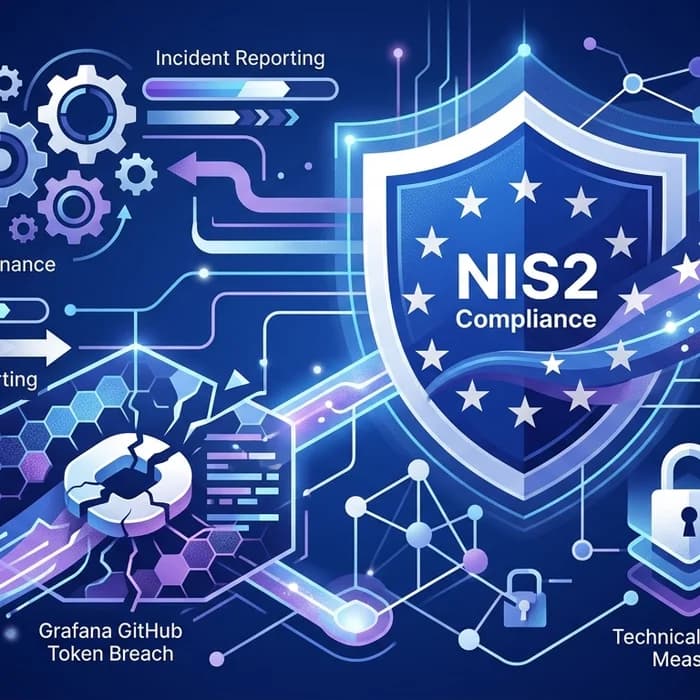
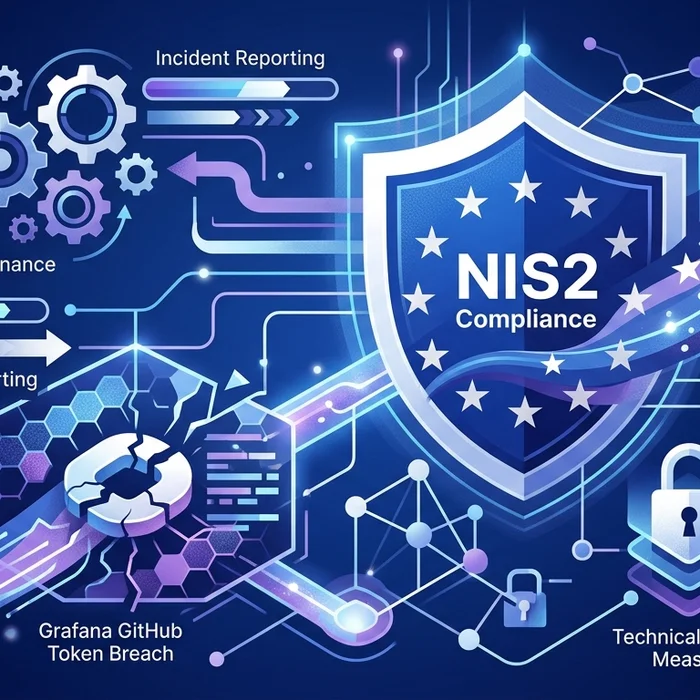
In today’s Brussels briefing, regulators again underlined that “preventable incidents” will define enforcement in 2026. The latest case in point: a reported GitHub token compromise that let attackers download source code and attempt extortion. For EU organizations, this is exactly the kind of scenario your NIS2 compliance checklist must anticipate—covering secrets management, rapid incident reporting, and verifiable supply-chain controls—alongside GDPR’s personal data duties.
Key takeaways
- NIS2 raises the bar beyond GDPR: think operational resilience, incident reporting within 24h/72h, and supply-chain security—not just personal data.
- Secrets sprawl is now a board-level risk: leaked GitHub tokens, CI logs, screenshots, or AI prompts can trigger extortion and regulator scrutiny.
- Prove controls, not promises: expect documentation, audit trails, and demonstrable remediation timelines.
- Use anonymization when sharing evidence with vendors, auditors, or regulators to reduce data exposure.
What NIS2 changes—and how it differs from GDPR
As of 2026, Member States have transposed NIS2 and national authorities are actively assessing controls. Where GDPR focuses on personal data, NIS2 targets the continuity and security of essential and important entities across sectors (energy, finance, healthcare, digital infrastructure, managed services, and more). In briefings this spring, I heard a consistent message: “Show your governance, show your incident muscle, and show your supply-chain due diligence.”
GDPR vs. NIS2 at a glance
| Area | GDPR | NIS2 |
|---|---|---|
| Scope | Personal data processing | Security and resilience of network/information systems for essential/important entities |
| Core obligation | Lawful, fair, transparent processing; data subject rights | Risk management measures, incident reporting, supply-chain security, governance |
| Incident reporting | Notify data protection authority within 72h if personal data breach likely risks rights/freedoms | Early warning within 24h, incident notification within 72h, final report within 1 month for significant incidents |
| Fines | Up to €20m or 4% of global turnover (higher applies) | At least up to €10m or 2% of global turnover for essential entities; €7m or 1.4% for important entities (Member State–specific ceilings apply) |
| Third parties | Processors/Controllers with DPAs and SCCs where applicable | Supply-chain risk management, assurance of ICT providers, managed services oversight |
| Evidence | Records of processing, DPIAs, breach logs | Security policies, asset inventories, audit logs, vulnerability management, incident runbooks, supplier assessments |
NIS2 Compliance Checklist
This practical NIS2 compliance checklist reflects what regulators are asking for—and what incidents like a GitHub token leak truly test.
- Governance and accountability
- Board-approved security policy with named executive responsibility.
- Documented risk assessments covering operational, data, and supply-chain risks.
- Regular management reporting on KPIs (mean time to detect/respond, patch SLAs).
- Asset and dependency inventory
- Up-to-date inventory of systems, repos, CI/CD pipelines, and third-party services.
- Software bill of materials (SBOM) for critical applications.
- Identity, access, and secrets
- Enforce MFA for code hosts (GitHub/GitLab), admin consoles, and cloud providers.
- Centralized secrets management; auto-rotation for tokens/keys; no secrets in code or logs.
- Continuous secrets scanning for repos, CI artifacts, and ticketing systems.
- Vulnerability and patch management
- Risk-based patching with defined SLAs; emergency patch playbooks.
- Automated dependency scanning in CI; code signing where feasible.
- Logging, monitoring, and detection
- Centralize logs for build systems, identity providers, and cloud APIs.
- Use anomaly detection for unusual source code access, token use, or repo cloning.
- Incident response and reporting
- Runbooks for token compromise, repository exfiltration, and extortion scenarios.
- Clear 24h early-warning, 72h notification, and 1-month final-report workflows to national CSIRTs.
- Templates for regulator, customer, and supplier communications.
- Supply-chain security
- Vendor assurance for MSPs, CI/CD, and code hosting; minimum control baselines.
- Contractual security clauses and right-to-audit for critical providers.
- Business continuity and resilience
- Backup and restore testing for repos, artifacts, and critical configurations.
- Tabletop exercises for development pipeline outages and ransomware.
- Secure development lifecycle
- Threat modeling for pipelines; pre-commit hooks and branch protection.
- Mandatory code review; signed commits for critical repos.
- Data protection alignment
- When incidents touch personal data, trigger GDPR breach evaluation and DPO involvement.
- Anonymize or pseudonymize evidence before external sharing.
Token breach playbook: What NIS2 expects in the first 72 hours
A CISO I interviewed this week put it bluntly: “Tokens are the new crown jewels.” If you discover a GitHub token leak, your first 72 hours should look like this:
- Containment
- Revoke affected tokens and OAuth apps immediately; rotate all potentially exposed credentials.
- Temporarily restrict repo access; require MFA re-authentication.
- Scope and forensics
- Interrogate logs: repo clone events, unusual IPs, PAT usage, API calls, CI cache access.
- Identify exfiltrated code, secrets, and any embedded personal data.
- Regulatory clock
- File a 24h early warning to your national CSIRT if criteria for a significant incident are met.
- Prepare the 72h incident notification with initial indicators of compromise and mitigation steps.
- Supply-chain coordination
- Alert critical suppliers/customers if their repos or pipelines are implicated.
- Validate integrity of build artifacts; consider rebuilding from trusted sources.
- Communications and extortion handling
- Engage legal; preserve evidence; avoid paying without law enforcement guidance.
- Anonymize sensitive details when sharing with third parties unless strictly necessary.
- Final report and hardening
- Deliver a 1-month final report with root cause, lessons learned, and control improvements.
- Demonstrate secrets scanning, token rotation cadence, and tightened access policies.
Secure document uploads and anonymization—how to operationalize “share less, prove more”
One blind spot I still see in audits: teams overshare logs and tickets that include user emails, customer IDs, or internal URLs. That inflates breach scope and raises GDPR risk. Before sending evidence to vendors, auditors, or regulators, strip personal data and business-sensitive details.
- Problem: Sharing raw logs/screenshots risks privacy breaches and intellectual property leaks.
- Solution: Use an AI anonymizer to mask personal data and sensitive strings in seconds—and keep an audit trail of what was removed.
Professionals avoid risk by using Cyrolo’s anonymizer at www.cyrolo.eu. It’s built for compliance teams who need to show their work without exposing more than necessary. Try our secure document upload at www.cyrolo.eu — no sensitive data leaks.
Compliance note: When uploading documents to LLMs like ChatGPT or others, never include confidential or sensitive data. The best practice is to use www.cyrolo.eu — a secure platform where PDF, DOC, JPG, and other files can be safely uploaded.
EU vs US: different levers, same accountability
EU authorities will examine whether your controls prevented or limited operational impact and whether you reported on time. In the US, public companies may face rapid materiality assessments for disclosure under securities rules, while sectoral laws (like healthcare) set their own timelines. Across jurisdictions, the expectation converges: measurable controls, transparent incident handling, and minimum-exposure evidence sharing.
Pitfalls regulators keep flagging
- Secrets in screenshots and slide decks: tokens pasted into incident channels or presentations.
- CI logs that retain credentials or environment variables indefinitely.
- Staff pasting sensitive snippets into AI tools “just to summarize.”
- Unvetted third-party GitHub Actions or build steps pulling unknown containers.
- Slow token rotation and no emergency cutover process.
Turn pitfalls into proof points
- Set log retention and redaction policies; verify in audits.
- Adopt pre-commit hooks to block secrets; scan repos and artifact stores continuously.
- Mandate anonymization before any external document sharing; keep a register of what left the boundary.
- Tabletop “token compromise” quarterly, with timers for 24h/72h/1-month deliverables.
How Cyrolo helps you close the loop
- Before you send artifacts to a supplier or regulator, anonymize PII and sensitive fields with Cyrolo’s AI anonymizer.
- Centralize evidence handling via secure document uploads so teams aren’t emailing attachments or pasting into risky tools.
- Create an audit trail showing exactly what was shared and when—aligning with NIS2’s “show your work” expectation.
Security leaders tell me this trims hours off incident workflows and reduces anxiety about secondary data leakage during investigations.
FAQ: NIS2, GitHub tokens, and practical compliance
What is a NIS2 compliance checklist and who needs it?
It’s a prioritized set of controls, processes, and evidence you maintain to meet NIS2 obligations—governance, risk, incident reporting, and supply-chain security. Essential and important entities in the EU (from hospitals to cloud providers) need it, with board-level accountability.
Does a GitHub token breach trigger NIS2 reporting?
If it significantly affects your service continuity, security, or has notable impact on users or cross-border services, yes—expect to file a 24h early warning, a 72h update, and a 1-month final report. If personal data is involved, assess GDPR notification as well.
How is NIS2 different from GDPR in incident handling?
GDPR looks at risks to individuals’ rights and freedoms from personal data breaches. NIS2 focuses on operational impact to essential/important services and mandates broader resilience measures and stricter timelines for significant incidents.
What should I anonymize before sharing incident evidence?
Mask personal data (names, emails, IPs where personal), API keys/tokens, internal hostnames, architectural diagrams, and customer identifiers. Use an AI anonymizer to ensure consistency and to keep a record of changes.
Is it safe to use AI tools during an incident?
Not for raw, sensitive material. Always sanitize first. When uploading documents to LLMs like ChatGPT or others, never include confidential or sensitive data. The best practice is to use www.cyrolo.eu — a secure platform where PDF, DOC, JPG, and other files can be safely uploaded.
Conclusion: Make your NIS2 compliance checklist actionable—before the next token leak
Incidents like the recent GitHub token breach are stark reminders that attackers now target development pipelines and extort with stolen code. A living, tested NIS2 compliance checklist—plus disciplined anonymization and secure evidence handling—can be the difference between a contained event and a regulatory nightmare. Don’t wait for the next compromise: harden your tokens, practice the 24h/72h/1-month cadence, and use tools that minimize exposure. Start by anonymizing and centralizing your evidence with www.cyrolo.eu today.
Sources & References
- 1Grafana GitHub Token Breach Led to Codebase Download and Extortion AttemptThe Hacker News · 2026-05-17T07:13:33.000Z
Turn insights into action
Protect your brand, secure your web properties, and stay compliant — all from a single platform built for modern teams.
Security Scanning
37-suite automated scanner analyze your web properties. Get A+ to F security grading with actionable remediation steps.
Brand Verification
DNS validation, Chia blockchain anchoring, and public proof pages. Build trust with cryptographic evidence.
GDPR & Compliance
Article-by-article GDPR audits. Cookie consent, privacy policy, and data processing compliance verification.