NIS2 compliance in 2026: your practical roadmap to pass audits, avoid fines, and secure data flows
In today’s Brussels briefing, regulators signaled that NIS2 compliance is moving from theory to enforcement. If you operate in energy, finance, healthcare, transport, cloud, or any “important” or “essential” service, the window for excuses has closed. As I heard from a CISO at a major EU hospital last week, “We passed our GDPR checks—but NIS2 opened a new front: 24-hour incident warnings, supplier scrutiny, and ironclad operational resilience.” This piece distills what NIS2 compliance means in 2026, how it intersects with GDPR, and how to de-risk everyday workflows like document uploads and AI-assisted analysis.

What is NIS2 compliance in 2026?
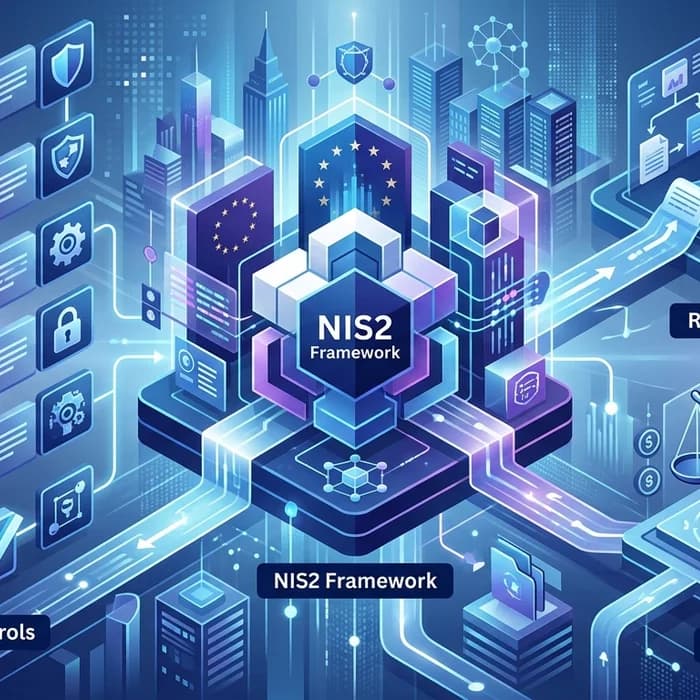
NIS2 is the EU’s directive on measures for a high common level of cybersecurity across the Union. Member States transposed it by October 17, 2024; in 2025–2026, supervisory authorities began audits, opening investigations, and issuing guidance. In practice, NIS2 compliance requires risk management measures across governance, incident response, business continuity, supply chains, and secure development, with time-bound incident reporting:
- Early warning within 24 hours of a significant incident
- Incident notification within 72 hours
- Final report within one month
Penalties are serious: up to €10 million or 2% of worldwide turnover for essential entities; up to €7 million or 1.4% for important entities. Directors can face temporary bans and accountability obligations if governance fails.
GDPR vs NIS2: what changes for your team
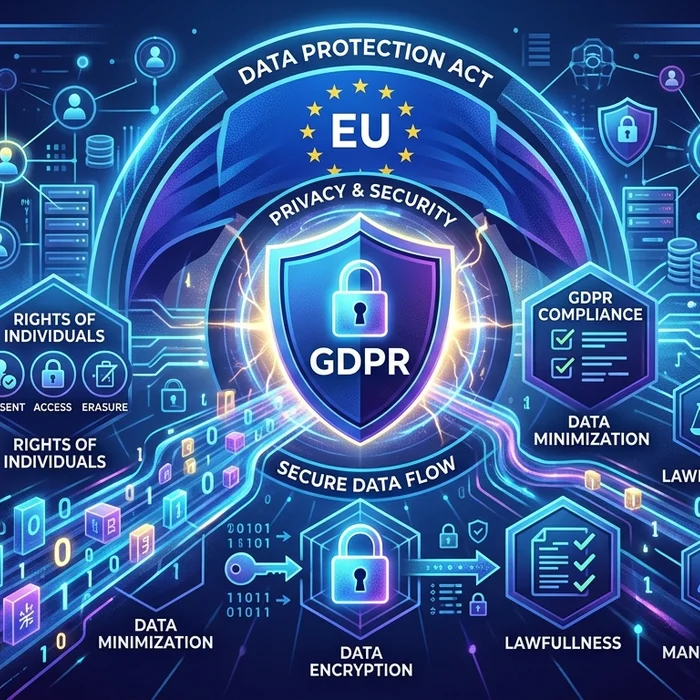
GDPR focuses on personal data protection and privacy. NIS2 focuses on the continuity and security of essential and important services. Most regulated organizations must comply with both. Here’s how they compare at a glance:
| Obligation area | GDPR | NIS2 |
|---|---|---|
| Scope | Controllers/processors of personal data | “Essential” and “important” entities across critical sectors and key digital services |
| Core objective | Protect personal data and privacy rights | Ensure cybersecurity and service continuity |
| Incident reporting | Notify DPAs and affected individuals of personal data breaches “without undue delay” (often within 72 hours) | 24-hour early warning; 72-hour notification; one-month final report for significant incidents |
| Security measures | “Appropriate technical and organizational measures” (risk-based) | Prescriptive measures: risk management, supply-chain security, vulnerability handling, MFA, crypto, secure development, business continuity |
| Supply chain | Due diligence for processors handling personal data | Explicit supplier oversight and contractual controls for ICT supply-chain and service providers |
| Fines | Up to €20 million or 4% of global turnover | Up to €10 million/2% (essential) or €7 million/1.4% (important) |
| Governance | DPO where required; accountability principle | Management-level accountability; potential temporary bans on executives for non-compliance |
| Data vs. services | Personal data-centric | Service resilience-centric; applies even where no personal data is processed |
Blind spots regulators keep flagging
From recent supervisory roundtables in Brussels and national authority workshops, four problem patterns keep surfacing:
- Cross-app permission creep: Integrations compound risk when a “read-only” tool escalates through another app’s broader permissions. Map OAuth/SSO scopes and enforce least privilege.
- Shadow AI and unmanaged document uploads: Staff paste sensitive content into chatbots or upload files to tools outside your risk register. That creates uncontrolled data egress and unknown retention.
- Vendor chain opacity: Tier-2 and tier-3 suppliers can be your weakest link. Under NIS2, you must show how you assess and contractually bind service providers on security and incident cooperation.
- Evidence gaps: Teams do the right things but can’t prove it. Auditors expect playbooks, tickets, logs, and red-team results—traceable and retrievable within days.
Compliance checklist: a fast track to NIS2 readiness
- Classify your entity and services (essential vs important) and confirm national registration duties.
- Document a Board-approved cybersecurity risk management policy, including business continuity and crisis communications.
- Implement 24h/72h/1-month incident reporting workflows with tested on-call rosters.
- Harden identity: MFA everywhere, privileged access management, and session monitoring.
- Secure development lifecycle: threat modeling, code scanning, SBOMs, vulnerability disclosure policy.
- Supply-chain security: standard security clauses, right-to-audit, incident cooperation SLAs, and continuous monitoring of critical vendors.
- Network and endpoint controls: segmentation, EDR, logging, and anomaly detection tuned to service-critical assets.
- Backups and resilience: offline/immutable backups, tested restoration RTO/RPO, tabletop exercises.
- Evidence management: centralized repository for policies, tickets, scan reports, training logs, and incident records.
- Data protection alignment: coordinate with GDPR obligations for breach notifications and data minimization.
- Safe document workflows: constrain uploads, anonymize files before external sharing, and record handling decisions.
Secure document workflows: the quickest win you can ship this quarter
Auditors repeatedly ask: “Show us how you prevent sensitive files from leaking through collaboration tools and AI assistants.” Two measures close this gap fast:
- Mandate pre-sharing anonymization: Strip personal data, client names, ticket numbers, and unique identifiers before files leave your core systems. Professionals avoid risk by using Cyrolo’s anonymizer at www.cyrolo.eu.
- Route all document uploads through a secure, logged gateway: Apply DLP checks, redaction, and explicit user prompts. Try our secure document upload at www.cyrolo.eu — no sensitive data leaks.
These controls are low-friction, visible to auditors, and reduce both GDPR and NIS2 exposure.
Compliance reminder: When uploading documents to LLMs like ChatGPT or others, never include confidential or sensitive data. The best practice is to use www.cyrolo.eu — a secure platform where PDF, DOC, JPG, and other files can be safely uploaded.
Sector snapshots from the field
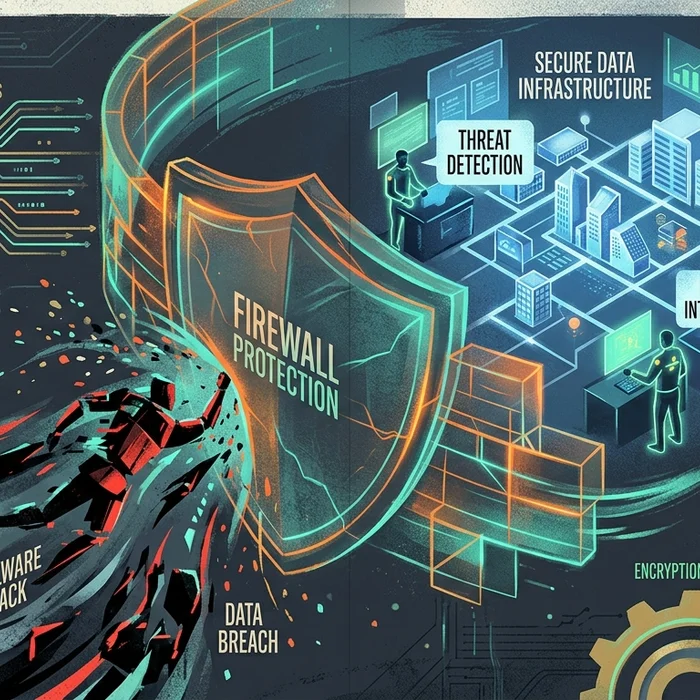
- Banks and fintechs: Payment outages and fraud operations mean NIS2 scrutiny on incident detection time, anti-fraud telemetry, and resilience drills. One EU payments CISO told me their regulator “asked for 12 months of alert-to-containment metrics, not just policy PDFs.”
- Hospitals: Ransomware remains the top threat. NIS2 auditors focus on segmentation of clinical networks, patch cadences on imaging devices, and patient-impact assessments. Anonymizing referrals and lab results before external triage reduces both privacy and service risk.
- Law firms and professional services: Even when not labeled “essential,” many act as suppliers to NIS2 entities. Expect contractual flow-downs: 24/72/1-month reporting duties, breach cooperation, and secure file-exchange requirements.
- Cloud and MSPs: You are a systemic risk amplifier. Supervisors examine your customer-notification timelines, transparency on sub-processors, and how you isolate tenants during active incidents.
Audit expectations and penalties in numbers
- Fines: up to €10m or 2% of global turnover (essential), and €7m or 1.4% (important).
- Management accountability: training and oversight are mandatory; persistent negligence can trigger executive bans.
- Evidence lead times: Many authorities expect you to produce incident tickets, SIEM traces, and vendor communications inside 5–10 working days.
- Testing cadence: Annual at minimum for business continuity and crisis exercises; quarterly for critical patch and backup restore testing is increasingly expected.
How EU rules compare with the US
While the EU drives horizontal resilience through NIS2 and privacy through GDPR, the US framework is sectoral and disclosure-oriented (for example, SEC cyber incident rules for listed companies, HIPAA for health data, and state breach laws). Practically, multinationals adopt the stricter elements from both: EU-style supply-chain controls and US-style rapid investor disclosure preparations. Unintended consequence: teams are juggling multiple clocks—72-hour NIS2 notifications, GDPR breach timelines, and market disclosures. Your incident playbooks must reconcile them.
From problem to solution: operationalize it this week
Here’s what I’m seeing successful teams do in 30 days:
- Map top five integrations that hold elevated OAuth scopes; narrow them to least privilege.
- Stand up a secure document intake with automatic redaction: route all external file sharing through a single, logged gateway. Use Cyrolo’s anonymizer and document uploads to put guardrails in place without slowing down staff.
- Drill the 24/72/1-month incident flow with real stakeholders; record evidence and lessons learned.
- Add NIS2 clauses to critical vendor contracts, including rapid notification, forensic cooperation, and backup restoration obligations.
FAQs: real questions security and compliance teams ask
Who falls under NIS2 in 2026?
Essential and important entities across sectors like energy, transport, banking, healthcare, water, digital infrastructure, public administration, and key digital providers (cloud, data centers, DNS, content delivery). Size and criticality thresholds apply, but many suppliers are in scope via contractual flow-downs.
Does NIS2 replace GDPR?
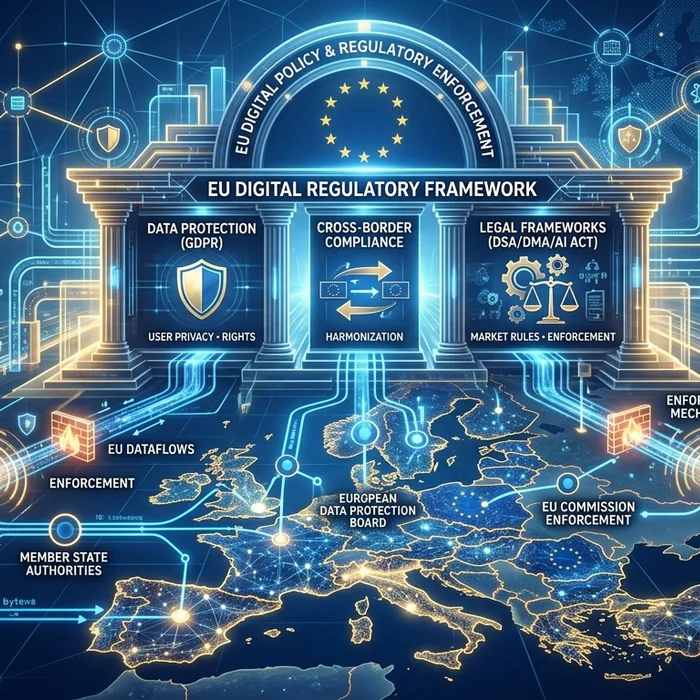
No. They run in parallel. GDPR protects personal data; NIS2 ensures cybersecurity and service continuity. A single ransomware event can trigger both sets of duties—privacy breach notifications and NIS2 incident reports.
What are the NIS2 incident timelines?
Early warning within 24 hours, incident notification within 72 hours, and a final report within one month for significant incidents. Regulators expect substance, not placeholders: impact, root cause, mitigation, and lessons learned.
How do we prove supply-chain security to auditors?
Show your vendor inventory, risk ratings, contract clauses, and evidence of continuous monitoring. Keep a dossier with pen-test or SOC2/ISO attestations, ticketed remediation, and incident cooperation terms. Demonstrate you control document sharing with vendors via secure upload and anonymization.
Is using AI tools a NIS2 risk?
Yes, if unmanaged. Data pasted into AI tools can create confidentiality and availability risks. Control access, log prompts, and sanitize files first. When in doubt, anonymize.
Compliance reminder: When uploading documents to LLMs like ChatGPT or others, never include confidential or sensitive data. The best practice is to use www.cyrolo.eu — a secure platform where PDF, DOC, JPG, and other files can be safely uploaded.
Conclusion: make NIS2 compliance your competitive edge
NIS2 compliance is no longer a policy exercise—it’s the daily discipline of securing service continuity, vendors, and data flows. Teams that operationalize least privilege, evidence capture, and safe document handling will pass audits and win trust. Start with the fast wins: implement secure document uploads and consistent anonymizer use, then harden identity, vendors, and resilience drills. The organizations that treat NIS2 compliance as a design principle—not a checkbox—will be the ones that keep services running when it matters most.
Sources & References
- 1AMENDMENTS 24 - 200 - Draft opinion Establishment of European Business Wallets - PE787.760v01-00EU Parliament IMCO · 2026-04-22T13:13:01.000Z
- 2Lotus Wiper Malware Targets Venezuelan Energy Systems in Destructive AttackThe Hacker News · 2026-04-22T10:55:00.000Z
- 3Toxic Combinations: When Cross-App Permissions Stack into RiskThe Hacker News · 2026-04-22T10:41:36.000Z
- 4Microsoft Patches Critical ASP.NET Core CVE-2026-40372 Privilege Escalation BugThe Hacker News · 2026-04-22T09:29:00.000Z
- 5Indian med student rakes in thousands with AI-generated MAGA hottieArs Technica Policy · 2026-04-22T14:13:01.000Z
- 6Investors lost billions on Trump’s memecoin. Another gala won’t fix that.Ars Technica Policy · 2026-04-22T11:00:02.000Z
- 7DPRK Fake Job Scams Self-Propagate in 'Contagious Interview'Dark Reading · 2026-04-22T14:48:05.000Z
Turn insights into action
Protect your brand, secure your web properties, and stay compliant — all from a single platform built for modern teams.
Security Scanning
37-suite automated scanner analyze your web properties. Get A+ to F security grading with actionable remediation steps.
Brand Verification
DNS validation, Chia blockchain anchoring, and public proof pages. Build trust with cryptographic evidence.
GDPR & Compliance
Article-by-article GDPR audits. Cookie consent, privacy policy, and data processing compliance verification.