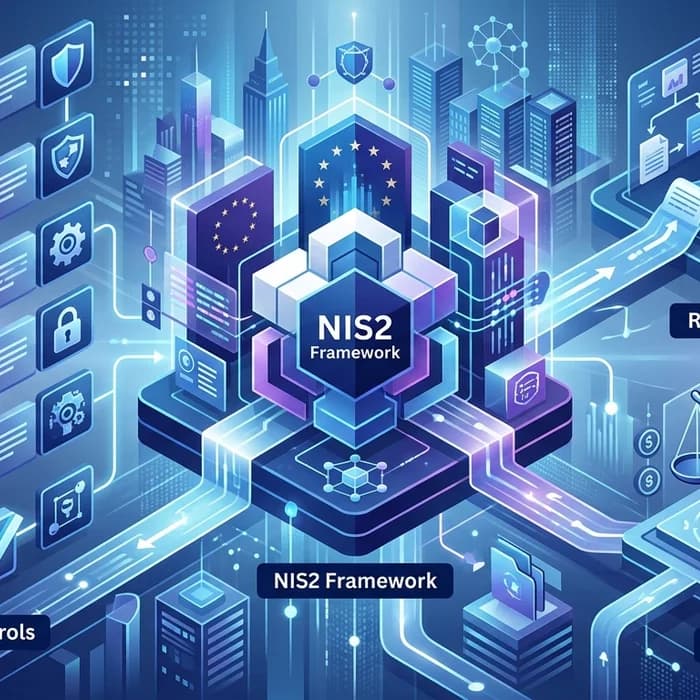
NIS2 incident reporting: What the latest Exchange and Cisco SD‑WAN exploits mean for EU cybersecurity compliance
In today’s Brussels briefing, regulators again stressed that “known exploited” vulnerabilities must translate into faster NIS2 incident reporting and tighter data protection practices. With fresh reports of an on‑prem Microsoft Exchange flaw exploited via crafted emails and a Cisco SD‑WAN bug added to a U.S. “Known Exploited Vulnerabilities” list, EU organizations face a clear message: align your EU regulations playbook—GDPR, NIS2, and cybersecurity compliance alike—or expect audits, supervisory questions, and potential fines.

Over the past week, security teams I spoke to in banks and healthcare admitted they’re re‑prioritizing patch windows and strengthening evidence handling. A CISO I interviewed warned that “the real risk is not only the breach—it’s how fast you can contain it, notify under NIS2, and share evidence without leaking personal data.” That last part—data minimization when circulating logs, emails, and screenshots—is where many teams still stumble.
Why these CVEs reset expectations for NIS2 incident reporting
Two signals stood out in the latest threat cycle:
- On‑prem Microsoft Exchange exploitability via crafted email reminds us that attack paths can originate in routine business workflows—messaging and calendaring—where personal data is dense.
- Cisco SD‑WAN administrative access bugs landing on “known exploited” lists typically accelerate patch SLAs and heighten board scrutiny. EU regulators increasingly view KEV‑style signals as objective triggers for risk‑based remediation and reporting.
Under NIS2, both essential and important entities must run vulnerability handling, supply‑chain risk management, and incident reporting processes that are demonstrably effective. In practice, this means:
- Early‑warning notification to the competent authority within 24 hours of becoming aware of a significant incident.
- Incident notification within 72 hours with an initial assessment of severity, indicators of compromise, and impact on services.
- A final report (often within one month) detailing root cause, mitigation, and prevention steps.
Those timelines collide with operational realities: Exchange mailflow triage, SD‑WAN segmentation checks, and the secure exchange of logs and packet captures with vendors, outside counsel, and regulators. If your artifacts include emails, names, IPs, and ticket notes, you must apply GDPR principles—data minimization and purpose limitation—before sharing. An AI anonymizer that reliably scrubs personal data from evidence helps you move quickly without compounding privacy risk. Professionals avoid risk by using Cyrolo’s anonymizer at www.cyrolo.eu.
GDPR vs NIS2: what each framework really asks of you
| Topic | GDPR | NIS2 |
|---|---|---|
| Scope | Personal data processing by controllers/processors in the EU (and some extraterritorial cases) | Security and resilience obligations for “essential” and “important” entities across designated sectors |
| Trigger for reporting | Personal data breach likely to result in risk to rights and freedoms | Significant incident impacting service provision or security, even if no personal data breach occurs |
| Timelines | Notify supervisory authority without undue delay, ideally within 72 hours of awareness | Early warning ~24 hours; incident notification ~72 hours; final report ~1 month (member‑state specific) |
| Supervisory authority | Data Protection Authority (DPA) | Competent NIS authority or CSIRT designated by the member state |
| Fines | Up to €20M or 4% of global turnover (higher of the two) | Typically up to €10M or 2% of global turnover (member‑state specifics apply) |
| Data handling while reporting | Data minimization and security of personal data in breach notifications | Secure operational evidence sharing; avoid unnecessary personal data in technical submissions |
| Supply chain | Due diligence for processors; DPAs expect processor oversight | Explicit supply‑chain cybersecurity risk management and contractual controls |
| Security measures | “Appropriate” technical/organizational measures; privacy by design | Risk‑based controls incl. incident handling, logging, MFA, crypto, and business continuity |
| Evidence & logging | Prove safeguards around personal data; limit exposure | Prove detection, response, and resilience; maintain logs for security audits |
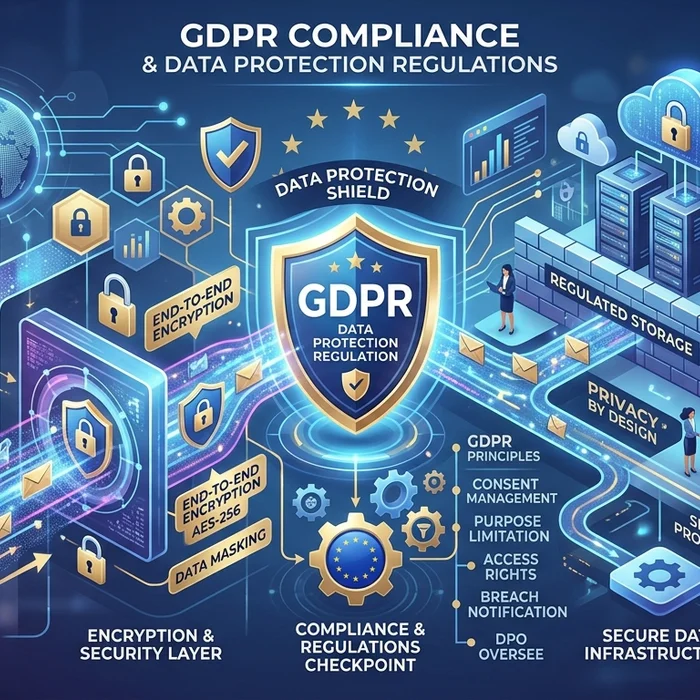
Step‑by‑step NIS2 incident reporting and containment checklist
- Confirm impact and scope fast
- Identify affected services (e.g., mail routing, SD‑WAN branches), critical dependencies, and user impact.
- Map to business services that fall under NIS2 “essential/important” designation.
- Activate vulnerability and patch pathways
- Check vendor advisories, KEV‑style lists, and EU alerts; document patch or mitigation steps taken and rationale for any delay.
- Harden controls (MFA, segmentation, EDR containment) pending full patch windows.
- Preserve evidence without oversharing
- Export logs, email samples, and configs; hash and timestamp.
- Before external sharing, remove or mask personal data using reliable anonymization.
- Meet NIS2 reporting timelines
- File the 24‑hour early warning with what you know; follow with the 72‑hour incident notification.
- Schedule the final report within the one‑month window, covering root cause and long‑term mitigation.
- Coordinate GDPR if personal data is involved
- Run breach risk assessment; notify the DPA and data subjects if required.
- Document lawful basis and data minimization in every disclosure.
- Engage suppliers and customers securely
- Use secure document uploads when sending configs, tickets, or screenshots externally.
- Track who received what evidence and why (purpose limitation).
- Prove resilience and lessons learned
- Demonstrate tabletop outcomes, new detection rules, and patch SLAs to auditors.
- Update risk registers, supplier clauses, and playbooks.
Operational pitfalls I’m hearing about—and how to fix them fast
- Evidence bleed: Teams forward raw email samples or full log bundles to vendors and outside counsel. Solution: Anonymize before you share. Try the AI anonymizer at www.cyrolo.eu to strip names, emails, ticket IDs, and other identifiers while preserving indicators of compromise.
- Patch delay justification: Boards ask why critical appliances weren’t patched earlier. Solution: Keep a written risk acceptance trail and “compensating control” matrix.
- Mixed signals to regulators: Early warnings that later contradict final reports. Solution: Use a single reporting coordinator and version‑controlled timelines.
- Supply‑chain blind spots: MSPs or SD‑WAN partners hold keys but no SLA for emergency hardening. Solution: Embed NIS2 clauses and 24/7 escalation paths in contracts.
In my conversations with national CSIRTs this spring, the subtext is clear: if a vulnerability is widely exploited, they expect prioritized remediation, monitored exposure, and prompt, data‑minimized notifications. That’s the standard to meet if you want a smoother audit experience.
Practical scenarios: banks, hospitals, and law firms
- Banks: Exchange exploitation can expose client correspondence and internal approvals. Action: Isolate affected mailboxes, rotate credentials, and anonymize sample messages before sending to your IR vendor. Try our secure document upload at www.cyrolo.eu — no sensitive data leaks.
- Hospitals: SD‑WAN issues can segment or disrupt clinical networks; personal data and continuity risks merge. Action: Escalate to crisis mode, protect e‑Prescription and imaging links, and file the NIS2 early warning within 24 hours.
- Law firms: Discovery mailboxes and case files are high‑sensitivity targets. Action: Strip names and case numbers using anonymization before engaging external forensics or opposing counsel.
Timelines and regulator expectations in 2026
By 2026, all EU member states have transposed NIS2, and enforcement is maturing. Supervisory questions I’m seeing include:

- How did you detect the incident (telemetry sources, alerting rules)?
- When did you become “aware,” and how did you calculate the 24/72‑hour clocks?
- What temporary controls protected critical services pending vendor patches?
- How did you minimize personal data in artifacts sent to CSIRTs, DPAs, and suppliers?
- What changed post‑incident (SLA updates, segmentation, MFA scope, cryptography posture)?
Remember: even if a Cisco SD‑WAN or Exchange issue does not leak personal data, it can still be reportable under NIS2 if service provision is significantly impacted. Conversely, a minor outage that leaks personal data may trigger GDPR obligations despite limited operational impact. Treat them as overlapping lenses on the same event—and document each lens clearly.
Data minimization made workable
Incident response produces a blizzard of PDFs, DOCs, CSVs, and screenshots. Redacting them by hand slows you down and increases error rates. With anonymization and secure document uploads via Cyrolo, teams can:
- Remove names, emails, phone numbers, ticket IDs, and other personal data while preserving IOCs, timestamps, and error codes.
- Share only what’s necessary with regulators, law firms, MSPs, and vendors.
- Prove GDPR data minimization in your NIS2 reporting file, streamlining security audits.
Professionals avoid risk by using Cyrolo’s anonymizer at www.cyrolo.eu.
Compliance note: When uploading documents to LLMs like ChatGPT or others, never include confidential or sensitive data. The best practice is to use www.cyrolo.eu — a secure platform where PDF, DOC, JPG, and other files can be safely uploaded.

EU vs US: different levers, same urgency
While the U.S. drives urgency with “Known Exploited Vulnerabilities” deadlines and sectoral mandates, the EU’s NIS2/GDPR mix adds a dual accountability: keep services resilient and protect personal data. Many EU regulators informally track KEV‑style cues as a severity signal. Whether your trigger is a crafted email targeting Exchange or an SD‑WAN admin exploit, your obligations converge: patch rapidly, log decisively, and report with precision and privacy by design.
FAQ: your most‑searched questions on NIS2 incident reporting
Does every exploited CVE trigger NIS2 incident reporting?
No. NIS2 focuses on incidents that significantly impact the provision of your essential/important services. However, if a CVE is widely exploited and touches critical systems (e.g., mail, SD‑WAN), you should assess impact promptly and document your decision to notify or not.
How do GDPR and NIS2 interact during an email server compromise?
If personal data may be at risk, run a GDPR breach assessment and consider DPA notification within 72 hours. Independently, if service availability or integrity is hit, NIS2 timelines (24/72 hours and final report) may also apply. You may have to notify both authorities with data‑minimized evidence.
What should I include in the 24‑hour “early warning”?
High‑level facts: affected services, suspected vectors (e.g., crafted email exploit), provisional mitigations (isolation, MFA expansion), and whether customer impact is likely. Avoid unnecessary personal data—use anonymized artifacts.
How do I safely share logs and screenshots with vendors and outside counsel?
Strip personal data first. Use secure document uploads and an AI anonymizer to reduce privacy risk while preserving technical signal for triage.
What are the typical fines if I mishandle reporting?
Under GDPR: up to €20M or 4% of global turnover. Under NIS2: generally up to €10M or 2% of global turnover, subject to national implementation. Good‑faith, timely, and privacy‑aware reporting can materially reduce regulatory friction.
Conclusion: make NIS2 incident reporting fast, precise, and privacy‑first
The latest Exchange and Cisco SD‑WAN exploit activity underscores a permanent reality: attackers move fast, and regulators expect you to move faster. Treat NIS2 incident reporting as a disciplined, rehearsed capability—paired with GDPR‑grade data minimization. Use tools that prevent evidence sprawl and privacy breaches so your team can focus on containment and resilience. Try anonymization and secure document upload at www.cyrolo.eu today—protect services, protect personal data, and stay ahead of audits.
Sources & References
- 1On-Prem Microsoft Exchange Server CVE-2026-42897 Exploited via Crafted EmailThe Hacker News · 2026-05-15T06:19:04.000Z
- 2CISA Adds Cisco SD-WAN CVE-2026-20182 to KEV After Admin Access ExploitsThe Hacker News · 2026-05-15T05:28:03.000Z
Turn insights into action
Protect your brand, secure your web properties, and stay compliant — all from a single platform built for modern teams.
Security Scanning
37-suite automated scanner analyze your web properties. Get A+ to F security grading with actionable remediation steps.
Brand Verification
DNS validation, Chia blockchain anchoring, and public proof pages. Build trust with cryptographic evidence.
GDPR & Compliance
Article-by-article GDPR audits. Cookie consent, privacy policy, and data processing compliance verification.