NIS2 supply chain security: What the North Korean IT worker infiltration means for EU companies
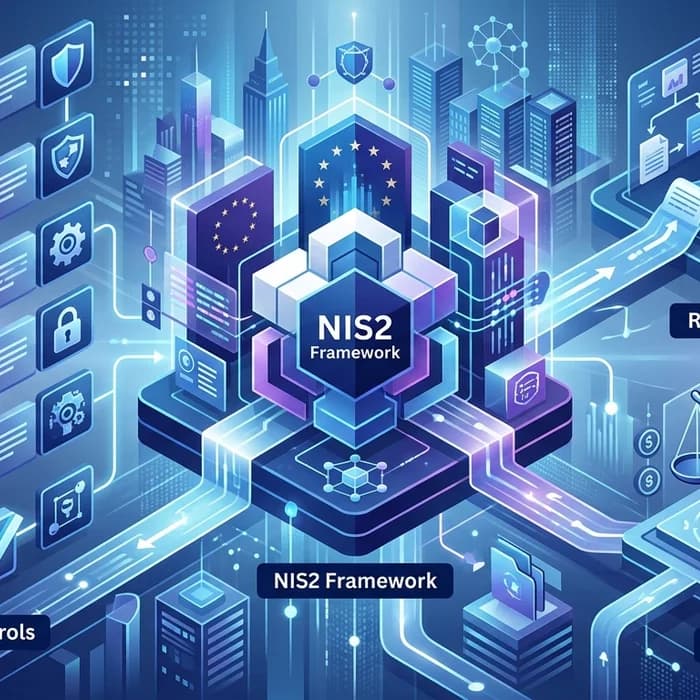
In today’s Brussels briefing, NIS cooperation officials quietly acknowledged what many CISOs already fear: NIS2 supply chain security isn’t theoretical anymore. After U.S. prosecutors confirmed that five individuals pleaded guilty for helping North Korean IT workers infiltrate 136 companies via remote contractor roles, EU regulators see a live-fire test of vendor risk management, identity proofing, and code access governance across the bloc. For organizations juggling EU regulations, GDPR obligations, and looming cybersecurity compliance deadlines, this case is a wake-up call—especially where personal data, developer credentials, and third-party access intersect.
How the infiltration worked—and why it beats basic checks
The scheme was brutally simple. According to court filings discussed by security sources in Brussels, North Korean operators:
- Used stolen or rented identities to pass KYC-lite hiring checks for remote developer roles.
- Relied on U.S. and EU money mules to receive salaries, blur provenance, and finance operations.
- Gained legitimate access to code repositories, CI/CD systems, and ticketing tools—often with weak device attestation and poor least-privilege discipline.
- Exfiltrated source code and internal documentation, putting both IP and personal data at risk, with knock-on exposure under GDPR and NIS2.
As one CISO I interviewed from a fintech in Frankfurt put it: “We were screening CVs, not devices; vetting resumes, not code-signing paths.” The lesson: verify the worker, the endpoint, and the workflow. Identity checks without device and session trust just invite privacy breaches and security audits you don’t want.
NIS2 supply chain security obligations just got real
The NIS2 Directive requires “appropriate and proportionate” technical and organizational measures for risk management, including third-party and supply chain risk. With national transpositions now in force across most Member States, supervisors will expect proof that your vendor and contractor ecosystems are under control—not just on paper, but in practice.
Scope and timing
- Who’s in scope: Essential and Important entities across energy, banking, finance, health, digital infrastructure, ICT services, managed services, and more—including many SaaS providers and cloud-dependent firms.
- Deadlines: Member States transposed NIS2 by October 17, 2024. National enforcement is ramping through late 2024–2025, alongside inspections and guidance.
- DORA alignment: Financial entities face the Digital Operational Resilience Act (DORA) from January 2025, adding ICT third-party risk duties and testing—especially relevant for contractor-heavy developer teams.
Sanctions and supervisory expectations
- Fines: Up to €10 million or 2% of global annual turnover for essential entities; up to €7 million or 1.4% for important entities, depending on national implementation.
- Governance duties: Management accountability for cybersecurity risk management. Expect board-level questions on supplier assurance, identity proofing, and code access.
- Incident reporting: Tight timelines via national CSIRTs. Supply chain incidents—like contractor misuse or code repository breaches—can trigger mandatory notification.

GDPR vs NIS2: Overlaps and differences EU teams must master
In the North Korean infiltration pattern, personal data and source code often travel together—raising concurrent GDPR and NIS2 exposures. Here’s how the frameworks compare:
| Topic | GDPR | NIS2 |
|---|---|---|
| Primary focus | Personal data protection and privacy rights | Network and information systems security and resilience |
| Scope trigger | Processing personal data of individuals in the EU | Entities in regulated sectors and critical services |
| Supply chain obligations | Controller–processor contracts; due diligence; DPIAs | Risk management for suppliers; security controls; incident reporting |
| Fines | Up to €20m or 4% of global turnover | Up to €10m or 2% (essential); up to €7m or 1.4% (important) |
| Incident notifications | To DPAs within 72 hours if personal data breach is likely to risk rights/freedoms | To CSIRTs/competent authorities on strict timelines for significant incidents |
| Governance | Data protection by design and by default; DPO (where required) | Management oversight; policies, audits, testing; secure development lifecycle |
Practical controls EU CISOs are deploying right now
- Identity + device attestation for contractors: Combine rigorous identity proofing, continuous device posture checks, and geolocation-based risk flags. Reject unknown or jailbroken endpoints.
- Granular repository segmentation: Break monolith repos. Enforce least privilege, time-bound access, and just-in-time approvals for pull/merge rights.
- Code provenance and signing: Mandatory commit signing, SBOMs, and tamper-evident build pipelines. Audit for anomalous contributor patterns.
- Data minimisation and AI guardrails: Strip personal data from tickets, logs, and training sets. Before sharing with contractors or AI tools, anonymise.
- Secure document handling: Ensure sensitive design docs, architecture diagrams, and HR files are uploaded and processed in secure environments only.
When uploading documents to LLMs like ChatGPT or others, never include confidential or sensitive data. The best practice is to use www.cyrolo.eu — a secure platform where PDF, DOC, JPG, and other files can be safely uploaded.
Professionals avoid risk by using Cyrolo’s AI anonymizer to remove names, emails, IDs, and other personal data before sharing. Try our secure document upload at www.cyrolo.eu — no sensitive data leaks.
Rapid-response playbook if you suspect contractor infiltration
- Freeze access fast: Disable accounts, rotate keys, revoke tokens, and invalidate cached sessions. Snapshot current state for forensics.
- Segment and scan repositories: Prioritise high-value code and documents. Look for anomalous clones, forks, or bulk downloads.
- Contain devices: Enforce EDR isolation or block non-compliant endpoints at the gateway. Require attestation on re-entry.
- Assess data exposure: Identify personal data or secrets in exfiltrated files. Use an anonymization workflow to triage safely and reduce further leakage.
- Notify as required: Coordinate GDPR/DPA and NIS2/CSIRT reporting. Document decisions and timestamps for regulators.
- Harden the pipeline: Implement commit signing, enforce MFA with phishing-resistant tokens, and rotate credentials embedded in code.
Compliance checklist for 2025
- Map contractor and supplier access to code, data, CI/CD, and admin consoles.
- Enforce phishing-resistant MFA, device attestation, and geofencing for all remote roles.
- Adopt repository segmentation, just-in-time access, and mandatory code review.
- Deploy SBOMs and signed builds; monitor for anomalous contributor patterns.
- Run supplier due diligence aligned to NIS2 and DORA; include breach notification clauses.
- Classify and minimise personal data in tickets, logs, and docs; default to anonymization.
- Test incident response with contractor-infiltration scenarios; rehearse regulator notifications.
- Perform security audits at least annually; evidence controls for inspectors.
- Use secure platforms for sensitive document handling and AI workflows.
To operationalise this quickly, teams are standardising on document uploads for red-teaming artifacts and compliance evidence, and applying anonymization to strip personal data before sharing with vendors or AI tools.
EU vs US: Different levers, same threat
While the recent guilty pleas came from a U.S. investigation, the underlying contractor scam is jurisdiction-agnostic. The U.S. relies on criminal prosecutions and sanctions to disrupt state-linked fraud networks. The EU leans on systemic resilience via NIS2, sector rules like DORA, and horizontal privacy enforcement under GDPR. Both approaches converge on one reality: if your developer pipeline trusts the wrong identity or device, you’ll lose code, data, and time—and face regulators asking why you didn’t see it coming.

FAQs
What is NIS2 supply chain security in practice?
It’s your obligation to manage cybersecurity risks introduced by suppliers and contractors: identity and device controls, least-privilege access, secure development practices, monitoring, and incident reporting. Evidence these controls for supervisors.
How can I safely share internal documents with third parties?
Remove personal data and sensitive fields first, then use a secure platform for uploads. Cyrolo provides both: try secure document uploads and the built-in AI anonymizer at www.cyrolo.eu.
Does anonymization help with GDPR and NIS2?
Yes. GDPR encourages data minimisation; anonymized data may fall outside GDPR scope if re-identification is not reasonably possible. Under NIS2, reducing sensitive content limits impact if files are exfiltrated. Always validate your de-identification process.
What should I demand from contractor agencies?
Phishing-resistant MFA, device attestation, background and identity verification, logging transparency, breach notification commitments, and cooperation in audits. Contract for rapid termination and credential rotation on suspicion.
Can I use LLMs for code or policy drafts safely?
Only if you strip sensitive details first and use a secure upload workflow. When uploading documents to LLMs like ChatGPT or others, never include confidential or sensitive data. The best practice is to use www.cyrolo.eu — a secure platform where PDF, DOC, JPG, and other files can be safely uploaded.
Conclusion: Make NIS2 supply chain security your 90-day priority
The North Korean contractor infiltration is a stress test of Europe’s cyber resilience. If a fake “remote developer” can land in your repos, you have a governance issue—one that hits GDPR privacy, NIS2 resilience, and, for many, DORA operational risk. Treat NIS2 supply chain security as your 90-day imperative: lock down identities and devices, minimize personal data, sign your builds, and prove it with auditable evidence. To reduce exposure today, process sensitive files through anonymization and keep them in secure document uploads at www.cyrolo.eu. That combination closes a glaring gap before the next infiltration finds it.
Sources & References
- 1Five Plead Guilty in U.S. for Helping North Korean IT Workers Infiltrate 136 CompaniesThe Hacker News · 2025-11-15T10:21:00.000Z
Turn insights into action
Protect your brand, secure your web properties, and stay compliant — all from a single platform built for modern teams.
Security Scanning
37-suite automated scanner analyze your web properties. Get A+ to F security grading with actionable remediation steps.
Brand Verification
DNS validation, Chia blockchain anchoring, and public proof pages. Build trust with cryptographic evidence.
GDPR & Compliance
Article-by-article GDPR audits. Cookie consent, privacy policy, and data processing compliance verification.