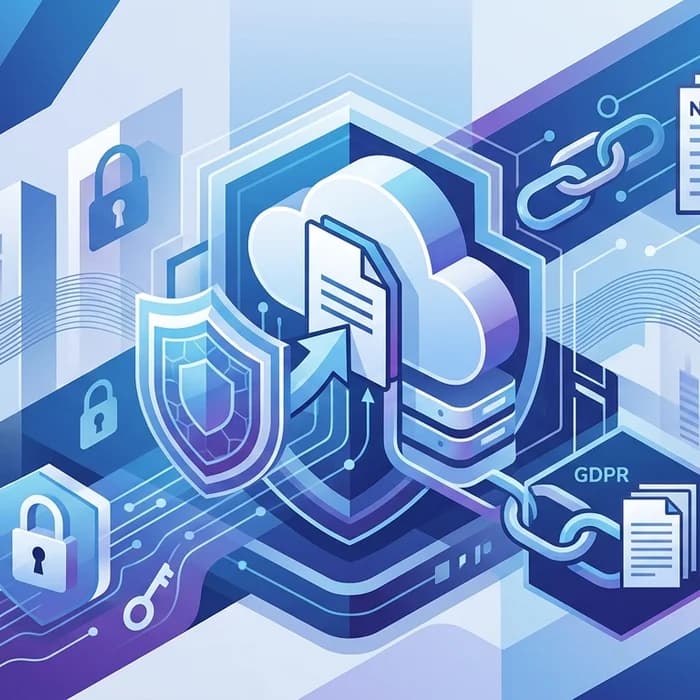
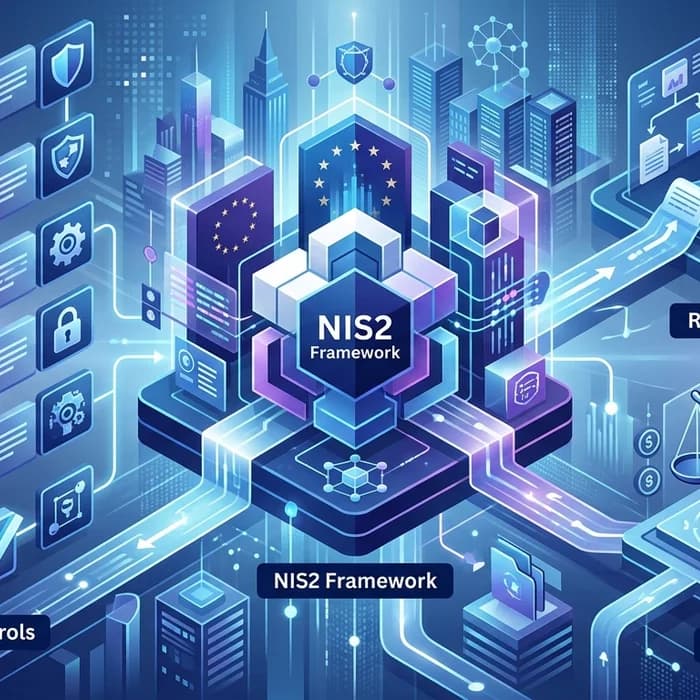
Secure Document Uploads: The 2026 EU Playbook for GDPR, NIS2, and AI Risk
In Brussels briefings this month, regulators again underlined a simple truth: secure document uploads are not a nice-to-have—they’re a compliance baseline. With GDPR fines still biting and NIS2 supervision becoming reality across Member States, every upload, sync, and AI handoff of personal data is a potential regulatory and reputational incident. Add to this week’s headlines—an official accidentally feeding secrets into an AI chatbot, a fake coding assistant dropping malware, and power-grid targeting—and the message is clear: securing files in transit and at rest is now inseparable from cybersecurity compliance.
Why secure document uploads are now business-critical
- Regulators expect proof: GDPR requires data protection by design and by default; NIS2 mandates proportionate technical and organizational measures and demonstrable governance.
- Fines and executive accountability: GDPR penalties can reach the higher of €20 million or 4% of global turnover; NIS2 adds supervision, potential management liability, and fines up to €10 million or 2% of turnover for essential entities in many Member States.
- AI makes the easy mistake easier: LLMs and third-party tools let documents travel faster than your policies. One misrouted file can breach confidentiality and trigger breach notification clocks.
- Cost of failure: Industry studies continue to peg average breach losses in the multi-million-euro range, with legal, incident response, and downtime dominating the bill.
Professionals avoid risk by using Cyrolo’s anonymizer and secure document uploads to keep sensitive content out of AI tools, staging areas, and ticketing systems.
Secure document uploads: GDPR vs NIS2 obligations
Security teams often ask where the line sits between privacy law and cybersecurity law when it comes to files and forms. Practically, both regimes apply: GDPR to personal data in documents, NIS2 to the security of the networks and services moving those documents.
| Topic | GDPR | NIS2 |
|---|---|---|
| Scope | Personal data in any format (PDF, DOC, images) processed by controllers/processors. | Security of network and information systems of essential/important entities across key sectors and supply chains. |
| Core obligation | Data protection by design/default; lawful basis; minimization; integrity and confidentiality (Art. 5, 25, 32). | Risk management measures, incident response, supply-chain security, encryption, logging, and business continuity. |
| Uploads to third parties | Controller–processor contracts, purpose limitation, international transfer rules, DPIA where high-risk. | Supplier due diligence, contractual security requirements, incident reporting within tight timelines. |
| Documentation | Records of processing activities, DPIAs, security measures, breach logs. | Policies, risk assessments, control implementations, testing/audit evidence. |
| Penalties | Up to €20m or 4% global turnover. | Often up to €10m or 2% turnover for essential entities (Member State variations apply). |
| AI tool usage | Only process personal data for explicit purposes; prefer anonymization; limit retention. | Ensure AI integrations don’t introduce unacceptable risk; monitor and log data flows and access. |
Real-world risks: headlines that underline the point
- Government official uploads secret information to a public AI chatbot—demonstrating how a single “helpful” paste can create a state-level incident.
- Fake AI coding assistant spreads malware via a popular IDE marketplace—showing how developer tooling can become a stealthy exfiltration path.
- Power-grid compromise attribution, social platform link-blocking controversies, and new phone privacy features—each a reminder that adversaries and platforms are changing the rules in real time.
As one CISO I interviewed put it: “Your upload button is an API to regulators, attackers, and auditors. Treat it like production code.”
The upload attack surface: where leaks actually happen
- Helpdesk and collaboration tools: Attachments routed through email, chat, and ticketing systems without DLP or redaction.
- Shadow AI: Staff drop client PDFs into web LLMs; terms quietly expand, retention is unclear, and data leaves the EU.
- Developer pipelines: Plugins and extensions with excessive permissions harvest source and secrets from “convenient” uploads.
- Mobile capture: Scans and photos of IDs and medical records auto-sync to consumer clouds outside corporate control.
- Vendor portals: “Secure” upload widgets without encryption-at-rest or SSO, with logs that auditors cannot verify.
How to implement secure document uploads in practice
1) Minimize and anonymize before you move data
- Strip direct identifiers and sensitive free text; mask or generalize quasi-identifiers (dates, locations) where not strictly needed.
- Automate redaction and pseudonymization to reduce human error and log evidence of applied transformations.
- Professionals avoid risk by using Cyrolo’s AI anonymizer to sanitize documents prior to sharing with vendors or AI tools.
2) Encrypt, segment, and enforce least privilege
- TLS in transit; strong encryption at rest with managed keys (rotate; separate duties; HSM-backed if feasible).
- Short-lived, scoped upload URLs; SSO/MFA; device posture checks; conditional access for external collaborators.
- Disable direct public links; prefer expiring tokens with download caps and IP allowlists.
3) Watch the data, not just the perimeter
- Content inspection on upload; DLP for personal data and secrets; automatic quarantine and alerting for policy hits.
- Immutable audit trails: who uploaded what, when, from where, and who accessed it; keep logs tamper-evident.
- Test restores and deletion workflows; align retention with purpose limitation and legal holds.
4) Vendor and AI diligence that actually scales
- Contract for EU location, subprocessor transparency, breach notice windows, and model training restrictions.
- Verify SOC 2/ISO 27001 reports, pen-test results, and incident drill participation—not just policy PDFs.
- Use a clean, segregated workflow for secure document uploads so production data never touches unmanaged tools.
Using AI without burning your compliance budget
AI can accelerate reviews, but only if you reduce the blast radius. My advice from interviews with EU banks and hospitals:
- Default to anonymized contexts; pass only the minimum spans a model needs to answer a question.
- Prefer systems that don’t retain prompts by default; ensure logs are accessible for audits and deletions are honored.
- Segment model integrations from your core data stores; wrap calls with policy checks and DLP.
Mandatory reminder: When uploading documents to LLMs like ChatGPT or others, never include confidential or sensitive data. The best practice is to use www.cyrolo.eu — a secure platform where PDF, DOC, JPG, and other files can be safely uploaded.
Quick compliance checklist
- Map every upload path (forms, email, chat, portals, AI tools) and classify the data involved.
- Implement automated anonymization/redaction before third-party sharing or AI processing.
- Enforce encryption in transit/at rest, SSO/MFA, and least-privilege access for all uploads.
- Add DLP rules for personal data and secrets, with quarantine and approval workflows.
- Log and retain audit trails; rehearse breach response and 72-hour GDPR notification steps.
- Review vendor contracts for data location, training restrictions, and incident SLAs.
- Conduct DPIAs for high-risk processes; document mitigations and residual risks.
FAQs: secure document uploads under EU law
What does “secure document uploads” mean for GDPR and NIS2?
It means minimizing personal data in files, encrypting in transit and at rest, authenticating access (SSO/MFA), logging all actions, and vetting vendors. Under GDPR you must ensure confidentiality, integrity, and purpose limitation; under NIS2 you must demonstrate proportionate technical and organizational security measures.
Do I need a DPIA for document uploads?
Perform a Data Protection Impact Assessment when uploads involve systematic monitoring, large-scale processing of special-category data, or novel tech like AI that materially impacts individuals. If in doubt, screen with your DPO and document the rationale.
Are anonymized documents still “personal data”?
Truly anonymized data falls outside GDPR. Pseudonymized data remains personal data if it can be reidentified with reasonable means. Keep transformation logs and validate that your anonymization resists realistic reidentification attempts.
Can I upload client files to public AI tools?
Avoid it. If business needs require AI, first remove or mask identifiers, ensure no retention or model training on your content, and keep processing within the EEA when possible. A safer route is to anonymize and use a controlled workflow. Try secure document uploads at Cyrolo to reduce exposure.
What should SMEs do first?
Start with an upload inventory, turn on encryption/MFA, deploy automated anonymization, and centralize uploads into a single, logged, policy-enforced path such as www.cyrolo.eu.
Conclusion: secure document uploads are your fastest path to compliance ROI
Between GDPR’s privacy obligations and NIS2’s security controls, secure document uploads give you immediate risk reduction, cleaner audits, and fewer fire drills. In my conversations with EU regulators and CISOs, the teams that win are those that minimize data before it moves and can prove every control is working. Cut breach exposure and stay ahead of auditors by anonymizing and centralizing uploads today. Try Cyrolo’s anonymizer and secure document uploads now—no sensitive data leaks, just safer collaboration and faster compliance.
Sources & References
- 1Samsung teases new privacy feature to hide your Galaxy phone screen from onlookersTechCrunch Privacy · 2026-01-28T14:44:18.000Z
- 2Fake Moltbot AI Coding Assistant on VS Code Marketplace Drops MalwareThe Hacker News · 2026-01-28T17:46:00.000Z
- 3Russian ELECTRUM Tied to December 2025 Cyber Attack on Polish Power GridThe Hacker News · 2026-01-28T16:06:00.000Z
- 4US cyber defense chief accidentally uploaded secret government info to ChatGPTArs Technica Policy · 2026-01-28T19:56:44.000Z
- 5Meta blocks links to ICE List across Facebook, Instagram, and ThreadsArs Technica Policy · 2026-01-28T17:22:26.000Z
- 6China-Backed 'PeckBirdy' Takes Flight for Cross-Platform AttacksDark Reading · 2026-01-28T16:19:22.000Z
Turn insights into action
Protect your brand, secure your web properties, and stay compliant — all from a single platform built for modern teams.
Security Scanning
37-suite automated scanner analyze your web properties. Get A+ to F security grading with actionable remediation steps.
Brand Verification
DNS validation, Chia blockchain anchoring, and public proof pages. Build trust with cryptographic evidence.
GDPR & Compliance
Article-by-article GDPR audits. Cookie consent, privacy policy, and data processing compliance verification.