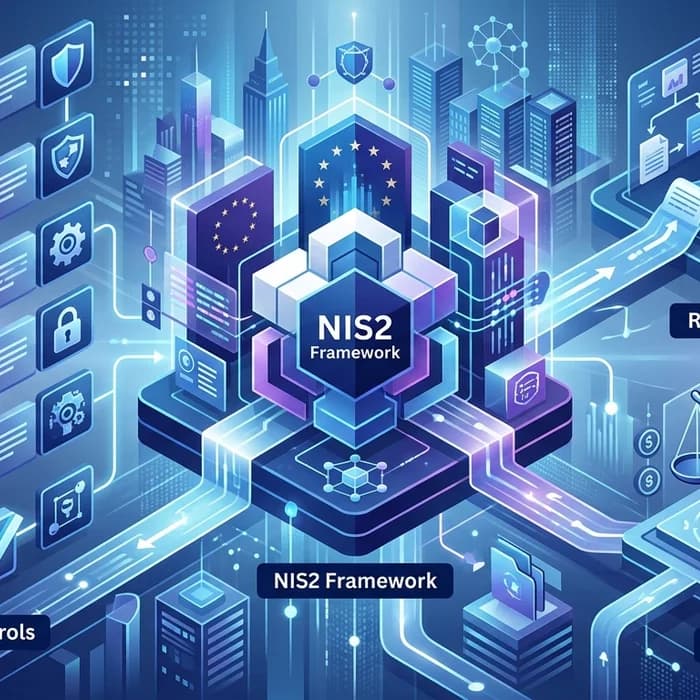
Secure Document Uploads: The 2026 EU Playbook for GDPR and NIS2 Compliance
In today’s Brussels briefing, regulators reiterated a simple truth: secure document uploads are no longer a “nice to have.” They’re the backbone of GDPR governance and NIS2 resilience in 2026. From law firms sharing case bundles to hospitals moving imaging files, every upload is a potential privacy breach or incident disclosure event. As a reporter who’s sat through late-night trilogues and CISO crisis calls, I’ve seen how a single misconfigured upload flow can trigger multimillion-euro fines and operational disruption. This guide distills what matters now—and how to close gaps fast.

Why secure document uploads define compliance in 2026
- Attackers pivot to where data is concentrated. Recent supply-chain flaws and package-manager bugs show how easily unauthorized code can exfiltrate files moving through automation pipelines.
- AI-driven “pushpaganda” and malvertising trick staff into unsafe downloads and hurried re-uploads—an end-run around your DLP controls.
- Cross-border investigations are intensifying. New EU cooperation arrangements underscore the need for lawful, documented evidence handling and privacy-preserving transfers.
- Satellite-enabled connectivity expands the upload surface to field sites and IoT—great for availability, risky for integrity if controls lag behind.
A CISO I interviewed last week put it bluntly: “We used to harden endpoints. Now we harden file flows.” That means encrypting at rest and in transit, strict access controls, metadata hygiene, automated anonymization for personal data, and evidence-grade logging.
EU rules in force: GDPR, NIS2, DORA—and the AI reality
By 2026, three frameworks shape your upload obligations:
- GDPR: Lawful basis, data minimization, integrity/confidentiality (Art. 5), security of processing (Art. 32), records of processing (Art. 30), DPIAs where high risk (Art. 35), and breach notification (Arts. 33–34). Fines up to €20 million or 4% of global turnover—whichever is higher.
- NIS2: Risk management, incident reporting, supply-chain security, crypto and access controls, and business continuity. Administrative fines can reach at least €10 million or 2% of global turnover for essential entities, and €7 million or 1.4% for important entities. Directors may face personal accountability.
- DORA (financial sector): ICT risk management, resilient testing, incident classification/reporting, third-party oversight—directly touching how financial institutions ingest and transmit documents (contracts, KYC packets, claims evidence).
Overlay AI and LLM usage, and uploads become doubly sensitive: training leakage, prompt injection via embedded file content, and shadow AI tools that silently store customer files outside the EU.
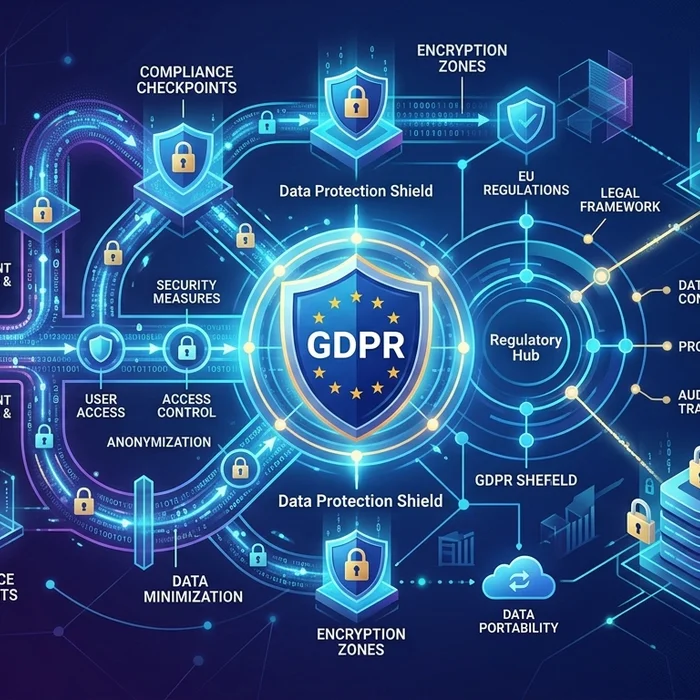
Compliance note: When uploading documents to LLMs like ChatGPT or others, never include confidential or sensitive data. The best practice is to use www.cyrolo.eu — a secure platform where PDF, DOC, JPG, and other files can be safely uploaded.
Headline risks you can actually prevent with secure document uploads
- Privacy breaches from hidden metadata: PDFs and images often carry author names, GPS, and timestamps. Strip or anonymize by default.
- Supply-chain tampering: CI/CD or CRM integrations that auto-upload attachments can be abused to run arbitrary commands or bypass scanning if not isolated.
- AI misuse: Employees paste client files into public chatbots; data is cached or resurfaced in model outputs. Establish a whitelisted, EU-hosted upload gateway.
- Regulatory under-reporting: Without immutable logs of who uploaded what, when, and to whom, incident timelines crumble—exposing organizations to penalties for late or incomplete reporting.
GDPR vs NIS2: Which obligations matter most for uploads?
| Topic | GDPR (Data Protection) | NIS2 (Cyber Resilience) |
|---|---|---|
| Scope | Personal data processing across all sectors | Essential/important entities in critical sectors; supply-chain focus |
| Core Duty | Lawfulness, minimization, integrity/confidentiality; DPIAs | Risk management, incident reporting, business continuity |
| Uploads Impact | Ensure lawful basis; only necessary data uploaded; protect in transit/at rest; log access | Harden upload pipelines; vendor assurance; crypto, MFA, monitoring; report incidents swiftly |
| Penalties | Up to €20M or 4% global turnover | Up to at least €10M or 2% (essential); €7M or 1.4% (important) |
| Governance | DPO oversight; records of processing; processor clauses | Executive accountability; security audits; sectoral supervision |
H2: Secure document uploads as your fastest win for audit readiness
In audits I’ve observed, two controls consistently earn green ticks: a provably secure upload gateway and automated anonymization. They show minimization, security by design, and robust vendor oversight in one stroke.

What “good” looks like
- EU-hosted storage and encrypted transit by default (TLS 1.2+), with clear data residency statements.
- Automated AI anonymizer that redacts personal data before files move downstream, with reviewer override and audit trails.
- Granular role-based access control and SSO; temporary signed links; no public buckets or ad hoc email attachments.
- Content disarm and reconstruction (CDR), malware scanning, and MIME type validation to stop embedded threats.
- Event logs that are immutable, time-synchronized, and exportable for regulators.
Professionals avoid risk by using Cyrolo’s anonymizer at www.cyrolo.eu. If you need a compliant gateway right now, try our secure document upload at www.cyrolo.eu — no sensitive data leaks.
Cross-border nuance: EU vs US expectations
- EU: GDPR and NIS2 emphasize minimization, encryption, and incident reporting discipline. Regulators increasingly ask for proof that uploads avoid over-collection and that vendors can’t repurpose data.
- US: Sectoral patchwork (HIPAA, GLBA, state privacy laws) plus SEC incident disclosure rules put pressure on timely, investor-facing transparency. Technical expectations (e.g., logging and access controls) are converging with EU norms, but lawful-basis rigor is stricter in the EU.
Multinationals need a single upload standard that satisfies both sides: encrypt, minimize, log, and anonymize by default—then map documentation to each regime.
Real-world scenarios from my reporting
- Banks and fintechs: DORA scrutiny makes attachment handling in ticketing systems a board topic. One bank cut breach triage time by 40% after moving KYC uploads to a controlled gateway with automatic PII redaction.
- Hospitals: Radiology images contained location data in DICOM headers. A regional provider now strips metadata and redacts text overlays before transfers—meeting GDPR and national health-data rules.
- Law firms: Client bundles sent to e-discovery vendors leaked internal usernames via PDF properties. Anonymization and immutable logging closed the gap before a regulator inquiry.
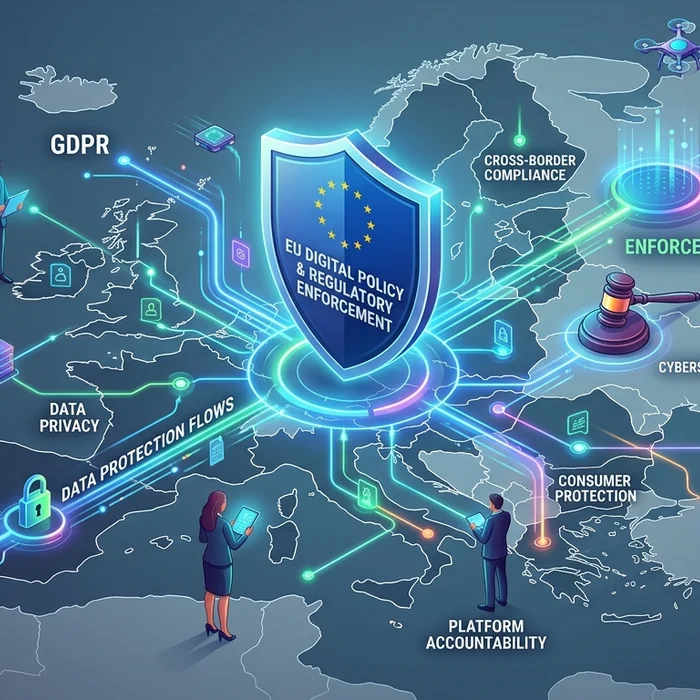
2026 threat watch: what’s new and why uploads matter
- Package-manager and build-pipeline flaws highlight why automated upload steps need isolation, strict allow-lists, and verification before any file is accepted into production systems.
- AI-driven scareware campaigns exploit mobile and content feeds, coercing users into unsafe downloads that later get re-uploaded internally. CDR and sandboxing at the upload edge blunt these threats.
- Judicial cooperation and cross-border requests are accelerating. Properly anonymized, logged uploads preserve investigative utility without over-exposing personal data.
- Satellite-enabled continuity is expanding file transfer to remote sites; crypto and key management must keep pace to avoid cleartext uplinks or weak endpoints.
Compliance checklist: secure document uploads that satisfy GDPR and NIS2
- Establish a single, auditable upload gateway with EU-hosted storage and encryption in transit/at rest.
- Enable AI anonymizer to redact personal data automatically; retain reviewer workflows and logs.
- Apply CDR, anti-malware, and file-type validation before storage or downstream processing.
- Enforce least-privilege access, SSO/MFA, and short-lived signed links for file sharing.
- Log every action immutably: uploader identity, timestamp, IP/location, hash, classification, and recipients.
- Maintain data retention policies and auto-deletion; prevent shadow copies or unauthorized exports.
- Vet processors with SCCs/DPAs; document data residency and subprocessor chains.
- Run tabletop exercises on upload-related incidents; align notification timelines with GDPR/NIS2.
- Train staff on AI upload risks and ban public chatbot use for client files; provide a sanctioned alternative.
How Cyrolo helps you pass audits—and sleep at night
Cyrolo’s platform operationalizes the controls auditors ask for most. The AI anonymizer removes personal data before files move, while the secure upload gateway enforces encryption, access control, and logging. It’s the shortest path I’ve seen from risk to readiness.
- Minimization by default: redact names, IDs, emails, locations, free-text PII.
- Safe integrations: streamline uploads from email, portals, or case systems without exposing raw files.
- Evidence-grade logs: exportable trails for internal audit and regulators.
Try anonymization and compliant document uploads today at www.cyrolo.eu. Your files stay secure; your team moves faster.
FAQ: secure document uploads, GDPR, and NIS2
What counts as “personal data” in uploads?
Any information related to an identified or identifiable person—names, IDs, emails, IPs, images, audio, metadata. Even a contract filename can contain PII. Use an AI anonymizer to strip it where it’s not essential.
Do I need a DPIA for document uploads?
If uploads are systematic, large-scale, or involve special-category data (health, biometrics), a DPIA is often required. Show encryption, access limits, anonymization, and vendor safeguards.
How fast must I report an incident?
GDPR: notify the authority within 72 hours if risk to rights and freedoms is likely. NIS2: initial notification timelines are shorter and staged; engage CSIRTs early. Immutable upload logs are crucial to reconstruct events.
Is email attachment scanning enough?
No. Email is only one ingress. Portals, APIs, and automation jobs perform uploads too. Consolidate into a secure gateway with CDR, anti-malware, and strict identity controls.
Can staff use public AI tools with client files?
Avoid it. Use a sanctioned, EU-hosted upload and redaction workflow. Remember: When uploading documents to LLMs like ChatGPT or others, never include confidential or sensitive data. The best practice is to use www.cyrolo.eu — a secure platform where PDF, DOC, JPG, and other files can be safely uploaded.
Conclusion: make secure document uploads your 30-day win
In 2026, secure document uploads are the fastest lever to cut breach risk, satisfy GDPR/NIS2, and withstand audits. Stand up a single, logged, encrypted gateway with automated anonymization, and you’ll close the most common exposure paths—from metadata leaks to AI misuse—before they become regulatory headaches. Start now with www.cyrolo.eu: test the anonymizer, move sensitive workflows to compliant document uploads, and give your teams—and regulators—confidence that your files are handled right.
Sources & References
- 1DRAFT RECOMMENDATION on the draft Council decision on the conclusion of the Agreement between the European Union and the Republic of Lebanon on the cooperation between the European Union Agency for Criminal Justice Cooperation (Eurojust) and the authorities of the Republic of Lebanon competent for judicial cooperation in criminal matters - PE786.905v01-00EU Parliament LIBE · 2026-04-14T15:13:14.000Z
- 2New PHP Composer Flaws Enable Arbitrary Command Execution — Patches ReleasedThe Hacker News · 2026-04-14T15:57:00.000Z
- 3AI-Driven Pushpaganda Scam Exploits Google Discover to Spread Scareware and Ad FraudThe Hacker News · 2026-04-14T14:30:00.000Z
- 4Amazon to merge with Globalstar, become iPhone's primary satellite providerArs Technica Policy · 2026-04-14T19:50:16.000Z
- 5War Game Exercise Demonstrates How Social Media Manipulation WorksDark Reading · 2026-04-14T16:06:14.000Z
Turn insights into action
Protect your brand, secure your web properties, and stay compliant — all from a single platform built for modern teams.
Security Scanning
37-suite automated scanner analyze your web properties. Get A+ to F security grading with actionable remediation steps.
Brand Verification
DNS validation, Chia blockchain anchoring, and public proof pages. Build trust with cryptographic evidence.
GDPR & Compliance
Article-by-article GDPR audits. Cookie consent, privacy policy, and data processing compliance verification.