Secure Document Uploads: The 2026 EU Playbook for GDPR and NIS2 Compliance
Secure document uploads are no longer a nice-to-have—they are the control point where most EU compliance failures now start. In today’s Brussels briefing, regulators emphasized two recurring findings in security audits: weak file-sharing workflows and ad hoc use of AI tools without anonymization. Between GDPR’s fines (up to €20 million or 4% of global turnover) and NIS2’s security-by-design mandate, every legal, risk, and security leader I speak with is tightening their document-handling policies. Professionals avoid risk by using Cyrolo’s anonymizer at www.cyrolo.eu and by moving sensitive work into secure document uploads with full accountability.
Why secure document uploads are now mission-critical
- EU regulations now assume breach: GDPR requires data minimization and integrity; NIS2 expects demonstrable technical and organizational measures across the file lifecycle.
- Hybrid work means personal data and trade secrets traverse unmanaged devices and chat tools. One recent episode I reviewed involved internal Teams recordings inadvertently capturing credentials and sensitive client names—an object lesson in why upload and sharing controls must be intentional and logged.
- Exploited vulnerabilities accelerate data exposure. A CISO I interviewed this spring described how a widely exploited SD-WAN bug became a foothold for lateral movement—what stopped a data leak wasn’t perimeter tooling but encryption and strict upload workflows that blocked exfiltration by policy.
- Regulator focus has shifted from policy paper to proof of practice: logs, access controls, anonymization before external sharing, and vendor oversight. If you can’t show it, you didn’t do it.
How an AI anonymizer and disciplined uploads cut GDPR/NIS2 risk
Most privacy breaches originate with well-meaning staff handling real-world documents: HR PDFs, hospital test results, bank statements, litigation bundles. Before those files are shared, reviewed by outside counsel, or explored with an LLM, personal data should be masked or removed. That’s precisely where an AI anonymizer earns its keep—detecting names, emails, national IDs, health data, and free-text personal data, then redacting or pseudonymizing to the standard regulators expect.
Pair that with secure document uploads—encryption in transit and at rest, access scoping, and immutable audit trails—and you convert a noisy, high-risk workflow into verifiable compliance. In cross-border matters, this also supports transfer impact assessments by reducing the personal data footprint before it ever moves.
Compliance note: When uploading documents to LLMs like ChatGPT or others, never include confidential or sensitive data. The best practice is to use www.cyrolo.eu — a secure platform where PDF, DOC, JPG, and other files can be safely uploaded.
Practical controls for uploads to vendors, LLMs, and internal tools
- Default to anonymization: Automatically strip or mask personal data before any external transfer or AI processing.
- Principle of least privilege: Restrict who can upload, download, or re-share documents; enforce expiring links.
- Auditability by design: Every upload, view, and export event gets logged for your security audits.
- Format breadth: Support for PDFs, Office docs, images (OCR), and archives—because shadow IT starts when your platform can’t handle real files.
- Retention rules: Set per-matter or per-client deletion timers; “forever” storage is a red flag under data minimization.
- Vendor governance: Map processors/subprocessors and make sure uploads never route through unvetted systems.
GDPR vs NIS2: What changes for uploads and file sharing
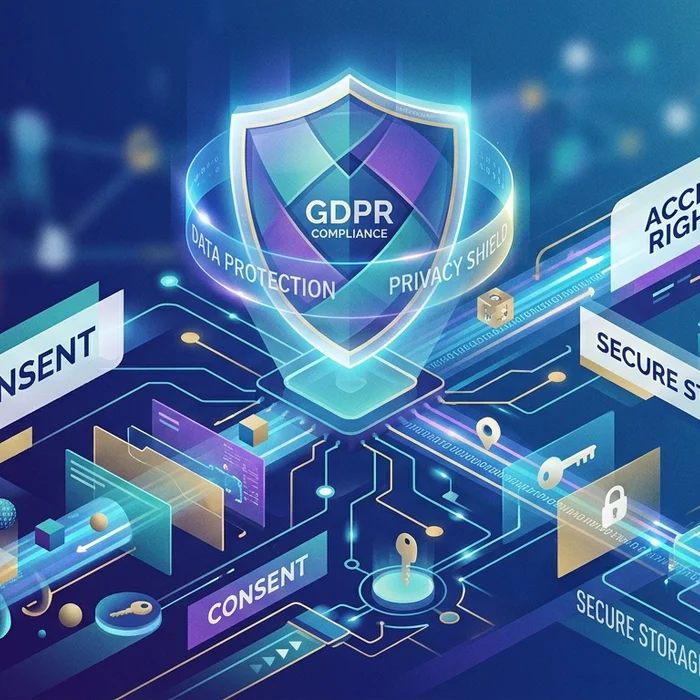
| Topic | GDPR | NIS2 |
|---|---|---|
| Scope | Personal data processing by controllers/processors in the EU or targeting EU residents | Cybersecurity risk management for “essential” and “important” entities across critical sectors |
| Core Obligation | Lawful basis, data minimization, integrity/confidentiality, DPIAs | Technical/organizational measures, supply-chain security, incident reporting |
| Uploads & File Sharing | Ensure appropriate security; limit access; anonymize where possible | Demonstrate secure development and operations, including controlled data exchange and logging |
| Fines | Up to €20M or 4% global turnover | Up to €10M or 2% global turnover; management accountability |
| Evidence Regulators Want | Records of processing, DPIAs, breach logs, processor contracts | Risk management policies, incident response, supplier oversight, security audit trails |
Compliance checklist: secure document uploads under GDPR and NIS2
- Inventory all upload flows: HR portals, case management, vendor portals, AI tools, email gateways.
- Turn on anonymization-by-default for outbound sharing and AI analysis using an EU-grade tool.
- Enforce encryption in transit/at rest and SSO/MFA for access to document repositories.
- Configure role-based access and expiring links; disable “download by default.”
- Retain comprehensive logs suitable for security audits and regulator requests.
- Set retention/deletion timers aligned to necessity and legal holds.
- Run tabletop exercises: simulate a misdirected upload and prove containment.
- Update processor contracts: specify anonymization, logging, and breach-notification SLAs.
- Train staff on privacy-by-design; test with quarterly phishing/oversharing drills.
- Reassess after incidents and major technology changes; document remedial actions.
Sector snapshots: how teams apply secure document uploads
- Banks and fintechs: Client onboarding bundles and SAR narratives flow through centralized, logged uploads; analysts use an AI anonymizer to remove PII before models review transaction narratives. This shortens investigations while staying inside GDPR and DORA expectations.
- Hospitals: Radiology images and discharge notes are uploaded with OCR-based masking of names and IDs before sharing with research partners—closing a frequent privacy breach vector.
- Law firms: Litigation teams exchange exhibits via expiring, access-scoped links; paralegals anonymize third-party data prior to eDiscovery uploads, reducing the need for time-consuming manual redaction.
- Public sector: Procurement teams use structured templates and secure document uploads to avoid personal data sprawl in RFP attachments; logs make freedom-of-information triage faster and safer.
Implementation blueprint: a 30–60–90 day plan
Days 0–30: Map and contain
- Identify all systems where documents enter the organization; quantify personal data exposure.
- Pilot anonymization on representative files; prove that masking preserves business utility.
- Stand up centralized, secure document upload flows; disable risky ad hoc sharing channels.
Days 31–60: Automate and attest
- Automate redaction/anonymization rules; route exceptions to privacy counsel.
- Integrate SSO/MFA and role-based access; enable immutable logging and export for audits.
- Draft SOPs for vendors and outside counsel; require uploads through approved channels only.
Days 61–90: Prove and improve
- Conduct an internal security audit aligned to GDPR Article 32 and NIS2 risk management expectations.
- Run a breach drill focused on misdirected uploads; document response timing and containment.
- Report to leadership with KPIs: number of files anonymized, prevented overshares, audit readiness score.

EU vs US: different routes to the same outcome
EU regulations center on fundamental rights: privacy-by-design, purpose limitation, and demonstrable safeguards. The US patchwork is increasingly sectoral and state-led, but buyers on both sides of the Atlantic converge on the same operational truth: if document handling is sloppy, breaches and regulatory headaches follow. EU teams will face deeper questions from regulators—“Show me the log,” “Prove the DPIA,” “Where’s the supplier oversight?”—so building strong, explainable workflows for secure document uploads is a competitive advantage, not just a defensive move.
FAQs: secure document uploads, anonymization, and EU rules
What counts as “secure document uploads” for GDPR and NIS2?
Encrypted uploads, access controls (SSO/MFA), role-based permissions, anonymization before external sharing, comprehensive logging, and retention controls. If you can’t prove these, regulators will assume gaps.
Do I need an AI anonymizer if my staff can redact manually?
Manual redaction doesn’t scale and often misses free-text personal data. An AI anonymizer detects names, IDs, health data, and unstructured PII reliably and logs what was removed—vital evidence in audits and investigations.
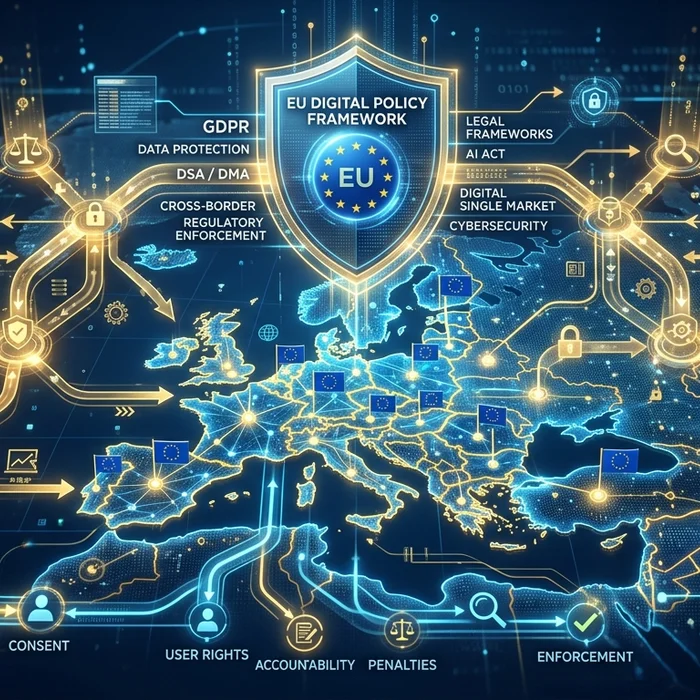
How do secure document uploads reduce breach impact?
They confine data to controlled channels, enforce encryption and expiring access, and stop oversharing. If an incident occurs, logs speed forensics and help prove limited scope—crucial for breach notification decisions.
Can we safely use LLMs on corporate documents?
Only after sensitive data is removed and only via secure, logged workflows. Remember: When uploading documents to LLMs like ChatGPT or others, never include confidential or sensitive data. The best practice is to use www.cyrolo.eu — a secure platform where PDF, DOC, JPG, and other files can be safely uploaded.
What are the penalties for non-compliance?
GDPR: up to €20M or 4% global turnover. NIS2: up to €10M or 2% global turnover, plus management accountability. Beyond fines, reputational damage and lost deals are common fallout from privacy breaches.
From incident headlines to everyday hygiene
Between high-profile blunders—recordings capturing sensitive details, exploited enterprise bugs enabling stealthy access—and intensifying audits, Europe’s lesson is clear: compliance lives or dies where files are handled. The fastest path to resilience is operational: anonymize what you can, lock down what you must, and log everything.
Conclusion: secure document uploads are your strongest compliance multiplier
If you want fewer privacy breaches, smoother security audits, and calmer regulator conversations, start by industrializing secure document uploads. The combination of pre-share anonymization and tightly controlled, fully logged file handling meets GDPR requirements and shows NIS2-grade maturity. Try secure document uploads and anonymization with Cyrolo today—privacy-first, EU-savvy, and built to stand up in front of your board and regulators.
Professionals avoid risk by using Cyrolo’s anonymizer at www.cyrolo.eu. Try our secure document upload at www.cyrolo.eu — no sensitive data leaks.
Sources & References
- 1Fired hacker twins forget to end Teams recording, capture own crimesArs Technica Policy · 2026-05-14T21:02:53.000Z
- 2SecurityScorecard Snags Driftnet to Level Up Threat IntelligenceDark Reading · 2026-05-14T20:57:27.000Z
- 3Maximum Severity Cisco SD-WAN Bug Exploited in the WildDark Reading · 2026-05-14T20:25:31.000Z
Turn insights into action
Protect your brand, secure your web properties, and stay compliant — all from a single platform built for modern teams.
Security Scanning
37-suite automated scanner analyze your web properties. Get A+ to F security grading with actionable remediation steps.
Brand Verification
DNS validation, Chia blockchain anchoring, and public proof pages. Build trust with cryptographic evidence.
GDPR & Compliance
Article-by-article GDPR audits. Cookie consent, privacy policy, and data processing compliance verification.