Source Code Breach: What the Trellix Incident Teaches About EU Compliance, NIS2, and Practical Risk Reduction
In the wake of Trellix confirming an unauthorized repository access and a potential source code breach, EU organizations face an uncomfortable truth: the software supply chain is now a primary attack surface. In today’s Brussels briefing, regulators emphasized that secure development, secrets management, and timely incident reporting are no longer “nice to have” — they are mandated under NIS2 and intersect with GDPR when personal data is at stake. As a reporter who covers the intersection of EU policy and cybersecurity, I’ve seen how a single repository misconfiguration can trigger audits, breach notifications, and months of remediation work.
What a source code breach means under EU law
A source code breach is not automatically a GDPR event, because source code itself may not be personal data. But repositories often contain:
- Embedded credentials, access tokens, or API keys (leading to lateral movement and data exfiltration)
- Configuration files or logs with personal data (PII) from test datasets
- Internal security architecture notes useful for follow-on attacks
That’s where EU law converges:
- GDPR: If personal data is exposed or at high risk, controllers must notify the supervisory authority within 72 hours and, in serious cases, inform affected individuals. Fines can reach up to €20 million or 4% of global annual turnover. Single-case fines have exceeded €1 billion in recent years.
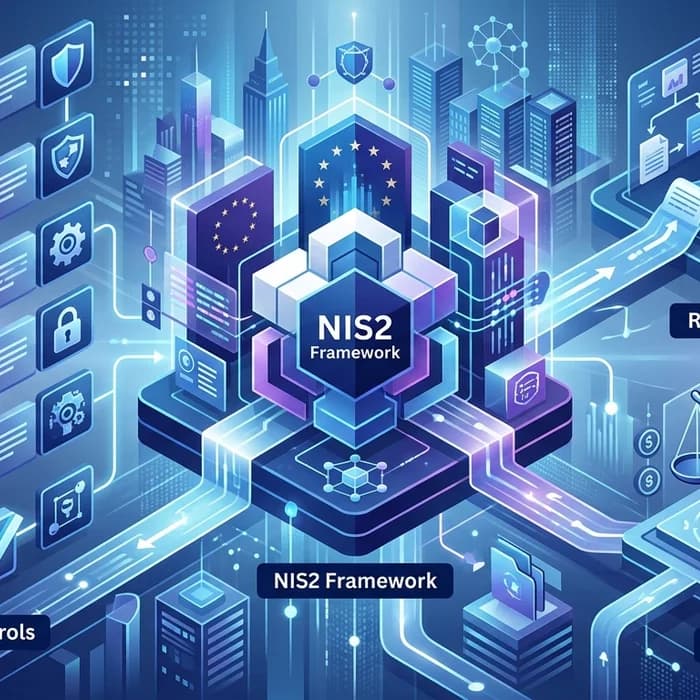
- NIS2: Requires essential and important entities to manage cybersecurity risk across supply chains, adopt secure SDLC practices, and report significant incidents swiftly. Maximum penalties generally reach at least €10 million or 2% of worldwide turnover for essential entities (and at least €7 million or 1.4% for important entities), with some Member States going higher.
The practical takeaway: even if only code was accessed, regulators will ask whether your processes prevented secrets exposure, segregated test data, and ensured rapid containment. A CISO I interviewed this week put it bluntly: “We’ll be judged on how we built, not just how we patched.”
Immediate actions after a source code breach
Security leaders I spoke with across finance and healthcare described a playbook that now aligns closely to NIS2’s incident handling expectations:
- Revoke and rotate secrets at scale: Assume tokens, SSH keys, and cloud credentials may be compromised. Automate rotation and monitor for anomalous use.
- Contain repository sprawl: Lock down forks, mirrors, CI/CD artifacts, and developer endpoints. Enforce branch protections and mandatory reviews.
- Inventory exposure via SBOM and SCA: Identify components, transitive dependencies, and proprietary modules now at risk from diff-based analysis by attackers.
- Assess for personal data: If logs, test data, or config files include PII, activate GDPR breach assessment workflows and prepare supervisory authority notifications within 72 hours if required.
- Meet NIS2 reporting timelines: For significant incidents, send an early warning rapidly (24-hour window), followed by a more complete notification (within 72 hours) and a final report in the subsequent weeks, per national transposition.
- Harden CI/CD pipelines: Segregate secrets, restrict runners, and validate build provenance. Consider hardware security keys and restricted push permissions for privileged repos.
- Evidence handling: When sharing incident files with counsel, auditors, or vendors, scrub PII and secrets first. Use an AI anonymizer to remove personal data and identifiers before distribution.
Professionals avoid risk by using Cyrolo’s anonymizer at www.cyrolo.eu. Try our secure document upload at www.cyrolo.eu — no sensitive data leaks.
GDPR vs NIS2: obligations compared at a glance
| Aspect | GDPR | NIS2 |
|---|---|---|
| Who’s in scope | Controllers/processors handling personal data in the EU | “Essential” and “important” entities across sectors (e.g., finance, health, digital infrastructure, ICT providers) |
| Primary focus | Protection of personal data and data subject rights | Network and information system security, including supply-chain risk |
| Key obligations | Lawful basis, DPIAs, security of processing, breach notification | Risk management, secure development, incident reporting, business continuity |
| Incident reporting | To DPA within 72 hours if personal data breach likely to pose risk | Early warning quickly (around 24h), substantial update (~72h), final report as required by national law |
| Penalties | Up to €20M or 4% of global turnover | At least €10M or 2% (essential) and at least €7M or 1.4% (important), Member States may increase |
| Evidence expectations | Records of processing, risk assessments, breach logs | Policies, technical controls, supplier oversight, incident response documentation |
How to prevent the next source code breach
Prevention is equal parts engineering discipline and governance. Regulators in Brussels increasingly ask to see how decisions were made, not just the tools in place.
Engineering controls
- Mandatory hardware-backed MFA for admins and CI/CD service accounts
- Secrets scanning in repos and pipelines, with auto-revocation hooks
- Branch protection, signed commits, and enforced code reviews
- Build provenance and artifact signing; isolate runners from internet egress
- SBOM generation and dependency monitoring with timely patch SLAs
Governance and assurance
- Secure SDLC policy aligned to NIS2 and sectoral rules (DORA for finance, CRA obligations on the horizon for connected products)
- Supplier risk scoring and contractual security requirements for third-party developers
- Periodic security audits and red-team exercises focused on repository takeover and credential abuse
- Data minimization in test assets; ban real PII in dev environments unless strictly necessary
Before sharing logs, screenshots, or incident memos, remove personal data and identifiers to prevent privacy breaches and scope creep. Use anonymization to sanitize content, then share via secure document uploads so counsel and auditors can review safely.
Practical compliance checklist
- Map critical repositories and enforce least privilege by default
- Implement continuous secrets discovery and rotation
- Generate and maintain SBOMs for all critical applications
- Prohibit real PII in test data; document data masking/anonymization
- Align incident reporting workflows with NIS2 and GDPR timelines
- Train developers on secure code, secrets hygiene, and phishing
- Prepare regulator-ready evidence: policies, audit trails, response logs
- Adopt a secure sharing path: www.cyrolo.eu for anonymization and document collaboration
Using AI safely during an incident
Teams increasingly consult AI assistants to summarize logs, triage alerts, or generate executive briefings. The blind spot? Pasting raw incident data, code snippets, or customer records into general-purpose LLMs creates regulatory and contractual risk.
- Redact or anonymize first: run files through an AI anonymizer to strip PII and identifiers
- Use a secure channel for sharing with counsel and vendors: try secure document uploads
- Maintain chain-of-custody: log who accessed what, when, and why
Mandatory reminder: When uploading documents to LLMs like ChatGPT or others, never include confidential or sensitive data. The best practice is to use www.cyrolo.eu — a secure platform where PDF, DOC, JPG, and other files can be safely uploaded.
Regulatory quirks and lessons from the Trellix case
Three dynamics stood out as I spoke with CISOs and reviewed EU guidance this week:
- Over-reporting vs. timeliness: NIS2 encourages early warnings. Several CISOs told me they now “notify early, refine later,” but worry about alert fatigue and reputational impact if investigations pivot.
- Repo sprawl: Shadow mirrors, personal forks, and CI caches often remain overlooked. Attackers know this. Inventory discipline is becoming a board KPI.
- Transatlantic tension: EU entities juggle NIS2/GDPR with US SEC’s rapid incident disclosure rules. One bank’s counsel noted, “We can meet both, but only if anonymization and evidence prep are muscle memory.”
FAQs
What is a source code breach and why is it dangerous?
A source code breach is unauthorized access to repositories or build artifacts. Beyond IP loss, it enables attackers to find logic flaws, harvest secrets, or craft precise follow-on intrusions. If test data or logs in repos include PII, GDPR duties may apply.
Does GDPR apply if only our code was accessed?
Not necessarily. GDPR applies when personal data is involved. However, many repos contain embedded PII in configs or logs. Conduct a rapid assessment; if risk to individuals is likely, notify your DPA within 72 hours.
What are NIS2 reporting deadlines for significant incidents?
Expect an early warning quickly (around 24 hours), a more detailed notification within approximately 72 hours, and a final report thereafter. Check your national transposition for exact timing and content requirements.
We’re an SME — how can we meet NIS2 without enterprise budgets?
Focus on impact: secrets hygiene, MFA, SBOMs, and incident reporting drills. Outsource where pragmatic, and use tools that automate redaction and safe sharing — for instance, anonymization and secure document uploads to collaborate with auditors and counsel.
Is anonymization enough to share incident data with vendors?
It’s a critical first step. Combine anonymization with access controls, audit logging, and time-bound sharing. Store and transmit via a secure platform, not email attachments or public links.
Conclusion: Your next move after a source code breach
The Trellix disclosure is a reminder that a source code breach is both a technical and a regulatory event. Under NIS2 and GDPR, boards must show they built secure pipelines, managed supplier risk, and reported on time. The fastest wins are clear: revoke secrets, constrain repos, sanitize evidence, and align workflows to EU reporting clocks. To reduce exposure today, anonymize before sharing and insist on secure collaboration: try www.cyrolo.eu for anonymization and secure document uploads that keep sensitive data out of the wrong hands.
Sources & References
- 1Trellix Confirms Source Code Breach With Unauthorized Repository AccessThe Hacker News · 2026-05-02T06:41:00.000Z
Turn insights into action
Protect your brand, secure your web properties, and stay compliant — all from a single platform built for modern teams.
Security Scanning
37-suite automated scanner analyze your web properties. Get A+ to F security grading with actionable remediation steps.
Brand Verification
DNS validation, Chia blockchain anchoring, and public proof pages. Build trust with cryptographic evidence.
GDPR & Compliance
Article-by-article GDPR audits. Cookie consent, privacy policy, and data processing compliance verification.