AI Anonymizer: Protect EU Teams From “Whisper Leak” Traffic Analysis and GDPR/NIS2 Fines
Today’s security story is a wake-up call: Microsoft researchers disclosed a side‑channel technique dubbed “Whisper Leak” that can infer AI chat topics even when traffic is encrypted. For EU organizations navigating GDPR and NIS2, this raises a blunt question—are your LLM workflows defensible if metadata alone can reveal sensitive prompts? This is precisely where an AI anonymizer and secure upload controls move from “nice to have” to mandatory.
In today’s Brussels briefing, regulators emphasized that encryption is necessary but not sufficient. Topic inference via timing and size patterns can still expose personal data or trade secrets. A CISO I interviewed in Frankfurt put it plainly: “Assume every token you send to an LLM leaves a shadow.”
- Problem: side-channel leaks reveal chat topics, upload intent, and workflow patterns—even over TLS.
- Consequence: GDPR disclosure risk, NIS2 incident reporting, reputational damage, and operational downtime.
- Solution: pre‑prompt anonymization, guarded document uploads, and auditable controls across the AI pipeline.
What “Whisper Leak” Means for Encrypted Chats, LLM Prompts, and Compliance
Whisper Leak highlights a class of attacks where an observer correlates encrypted request sizes, timing, and response patterns to infer what a user might be discussing with an AI model. Even without seeing the plaintext, an adversary can classify topics (e.g., patient oncology data vs. M&A due diligence) with worrying accuracy.
Why this matters in the EU context:
- GDPR exposure: prompts often include personal data (names, emails, diagnoses). If topic inference reveals a data subject category or incident, you could trigger breach obligations.
- NIS2 pressure: essential and important entities must manage supply-chain and AI tool risks. Side-channel leakage is a governance failure if not mitigated.
- Sector realities:
- Banks: prompt topics can reveal trading strategies or suspicious activity reports.
- Hospitals: diagnosis hints are health data by nature—sensitive under GDPR.
- Law firms: even topic classification may waive privilege if mishandled.
Why an AI Anonymizer and Secure Document Uploads Are Now Mandatory Controls
Encryption protects content in transit, but not the fact of your interaction, the cadence, or the rough size of what you send. You need upstream controls that transform what leaves your environment and reduce the identifiability of the traffic.
Core controls you can deploy this quarter
- Prompt and file pre‑processing: detect and mask personal data, trade secrets, and unique identifiers before they ever hit a model API.
- Metadata minimization: strip EXIF, author, and revision history from files; normalize encoding and chunk sizes to reduce traffic fingerprints.
- Policy‑driven redaction: enforce rules per data category (e.g., health, finance, legal privilege) with auditable logs.
- Transport shaping: optional padding/batching to blur size‑timing correlations for high‑sensitivity workflows.
Professionals avoid risk by using Cyrolo’s anonymizer at www.cyrolo.eu. And when teams must share briefs, scans, or spreadsheets with an LLM, try our secure document upload at www.cyrolo.eu — no sensitive data leaks.
When uploading documents to LLMs like ChatGPT or others, never include confidential or sensitive data. The best practice is to use www.cyrolo.eu — a secure platform where PDF, DOC, JPG, and other files can be safely uploaded.
EU Regulatory Snapshot: GDPR vs NIS2 Obligations for AI Workflows
Below is a concise view of where GDPR and NIS2 intersect with AI and side‑channel risks. In Brussels and national capitals, regulators are increasingly asking how organizations prove their prompt and document flows are lawful, proportionate, and secure.
| Area | GDPR | NIS2 |
|---|---|---|
| Scope | Personal data processing by controllers/processors | Security of network/information systems for essential & important entities |
| Key Duties | Lawful basis, purpose limitation, data minimization, DPIA, DPO where required | Risk management, incident handling, supply-chain security, business continuity |
| Incident Reporting | Notify SA “without undue delay” and within 72 hours of becoming aware | Early warning within 24h; incident notification within 72h; final report within 1 month |
| Third-Party/LLM Use | Processor contracts, international transfer safeguards, necessity & proportionality | Vendor oversight, secure development, logging/monitoring, configuration hardening |
| Fines | Up to €20M or 4% of global turnover (higher of) | Up to €10M or 2% for essential; up to €7M or 1.4% for important entities |
| Evidence | Records of Processing, DPIA outputs, data mapping, retention policies | Policies, risk assessments, incident logs, audit trails, board oversight |
Practical Architecture: Where an AI Anonymizer Fits
From recent EU bank and healthcare pilots I observed, the following reference pattern consistently lowers risk and audit friction:
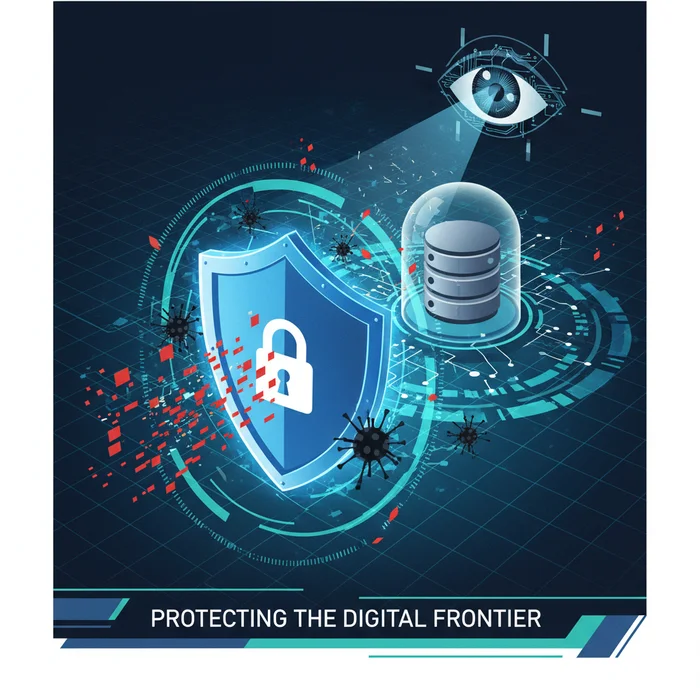
- Client layer: user composes a prompt or selects files.
- Pre‑processing gateway (anonymizer):
- PII/PHI detection (names, IBANs, MRNs, emails, addresses, free‑text identifiers)
- Context‑aware redaction and pseudonymization with reversible vault (when a lawful need exists)
- Metadata stripping (EXIF, author, GPS), OCR on images to catch embedded text
- Chunk normalization and optional padding to dampen traffic fingerprints
- Immutable audit log with policy IDs and hash of transformed content
- Broker: route to approved LLM endpoints; enforce geography, model allow‑list, and per‑purpose tokens.
- Post‑processing: de‑pseudonymize for authorized users only; store summaries, not raw prompts.
That middle step—the anonymizer—is the control that renders Whisper Leak‑style inferences far less damaging. Even if a topic is guessed, the payload no longer identifies people or secrets.
Compliance Checklist for CISOs, DPOs, and Legal
- Map AI use cases; document purposes and lawful bases (GDPR Art. 5–6).
- Run DPIAs for high‑risk AI interactions; record mitigations and residual risks.
- Implement an AI anonymizer in front of every LLM and SaaS workflow.
- Strip file metadata and normalize uploads; block risky formats by policy.
- Set vendor rules: EU processing, no training on your data, data deletion SLAs.
- Activate incident detection and 24h/72h NIS2 reporting pathways now.
- Keep immutable logs of prompts, transformations, and access decisions.
- Train staff on prompt hygiene; prohibit personal/sensitive data in free‑text.
- Table‑top test a side‑channel scenario; verify escalation and board oversight.
Sector Scenarios: Before vs. After
Bank (Markets)
- Before: analysts paste client identifiers and trade details; traffic size reveals complex deals; prompts contain personal data.
- After: identifiers pseudonymized; deal terms abstracted; uploads padded; audit trails enable swift regulator answers.
Hospital
- Before: clinical notes and scans include names/DOBs; topic inference exposes oncology triage.
- After: PHI masked, DICOM/JPG metadata wiped, OCR catches embedded labels; only minimised summaries reach the model.
Law Firm
- Before: due‑diligence PDFs with author trails and markups; privilege at risk.
- After: document lineage cleansed, client names replaced with codes, prompts logged for privilege review.
To operationalize these “after” states, use Cyrolo’s anonymizer and secure document upload in one safeguarded flow at www.cyrolo.eu.
Procurement Questions to Ask Vendors
- Can your tool detect and transform PII/PHI across text, PDFs, images, and scans (OCR)?
- Do you support reversible pseudonymization with role‑based de‑sealing?
- How do you reduce size/timing fingerprints without breaking SLAs?
- Where is data processed and stored? Can we pin to EU regions?
- What audit artifacts align to GDPR Records of Processing and NIS2 incident logs?
FAQ
What is Whisper Leak and why should EU companies care?
It’s a traffic analysis method that infers AI chat topics from encrypted flows. Even if content is hidden, adversaries can classify what you’re discussing. For GDPR/NIS2 entities, that’s a reportable risk if personal data or critical operations are exposed.
Is encryption enough to protect LLM prompts?
No. Encryption hides content, not patterns. You need upstream controls like an AI anonymizer, metadata stripping, and traffic normalization to reduce side‑channel signals.
How does an AI anonymizer help with GDPR compliance?
It enforces data minimization and privacy by design, reducing personal data sent to third‑party processors. It also creates audit trails that support DPIAs, Records of Processing, and breach investigations.
What are the NIS2 deadlines and penalties?
Member States were due to transpose by October 2024, with enforcement ramping through 2025. Fines can reach €10M or 2% of global turnover for essential entities and €7M or 1.4% for important entities.
Can I safely upload documents to LLMs?
Only if you pre‑process them to remove personal data and sensitive metadata, and route via a secure, audited flow. Use www.cyrolo.eu for guarded document uploads and automated anonymization.
Conclusion: Make an AI Anonymizer Your Default Control
Whisper Leak is a reminder that encryption alone won’t save you. By defaulting to an AI anonymizer, stripping metadata, and shaping traffic, EU organizations can keep insights flowing while staying onside of GDPR and NIS2. If your teams work with prompts, PDFs, scans, or spreadsheets, run them through Cyrolo’s anonymizer and secure document upload at www.cyrolo.eu before any LLM sees them—because the cost of one avoidable leak dwarfs the effort to prevent it.
Sources & References
- 1Microsoft Uncovers 'Whisper Leak' Attack That Identifies AI Chat Topics in Encrypted TrafficThe Hacker News · 2025-11-08T14:29:00.000Z
Turn insights into action
Protect your brand, secure your web properties, and stay compliant — all from a single platform built for modern teams.
Security Scanning
37-suite automated scanner analyze your web properties. Get A+ to F security grading with actionable remediation steps.
Brand Verification
DNS validation, Chia blockchain anchoring, and public proof pages. Build trust with cryptographic evidence.
GDPR & Compliance
Article-by-article GDPR audits. Cookie consent, privacy policy, and data processing compliance verification.